Recovering joints and managing chronic pain often depends less on intense exercise than on the spaces you move through.
Thoughtful changes at home can reduce strain, prevent slips, and make everyday tasks less taxing.
You don’t need costly equipment to limit awkward reaching, twisting, or bending that aggravate joints.
This piece covers straightforward layout, surface, and habit tweaks that ease movement and protect healing.
Clear paths and purposeful furniture placement
Start by scanning main routes from bedroom to bathroom and kitchen for obstacles that force quick pivots or long reaches. Keep furniture arranged so chairs and sofas allow a natural rise and sit without twisting, and place frequently used items within easy arm’s reach. Maintain a consistent route through the house so you avoid improvising around obstacles when tired or sore. Lighting along these paths matters as much as layout to prevent sudden movements that jar joints.
Small shifts—angling a chair, moving a side table, or relocating a plant—can change how often you twist. These tweaks reduce the cumulative strain on hips, knees, and shoulders every day.
Soften impact: floors, rugs and footwear
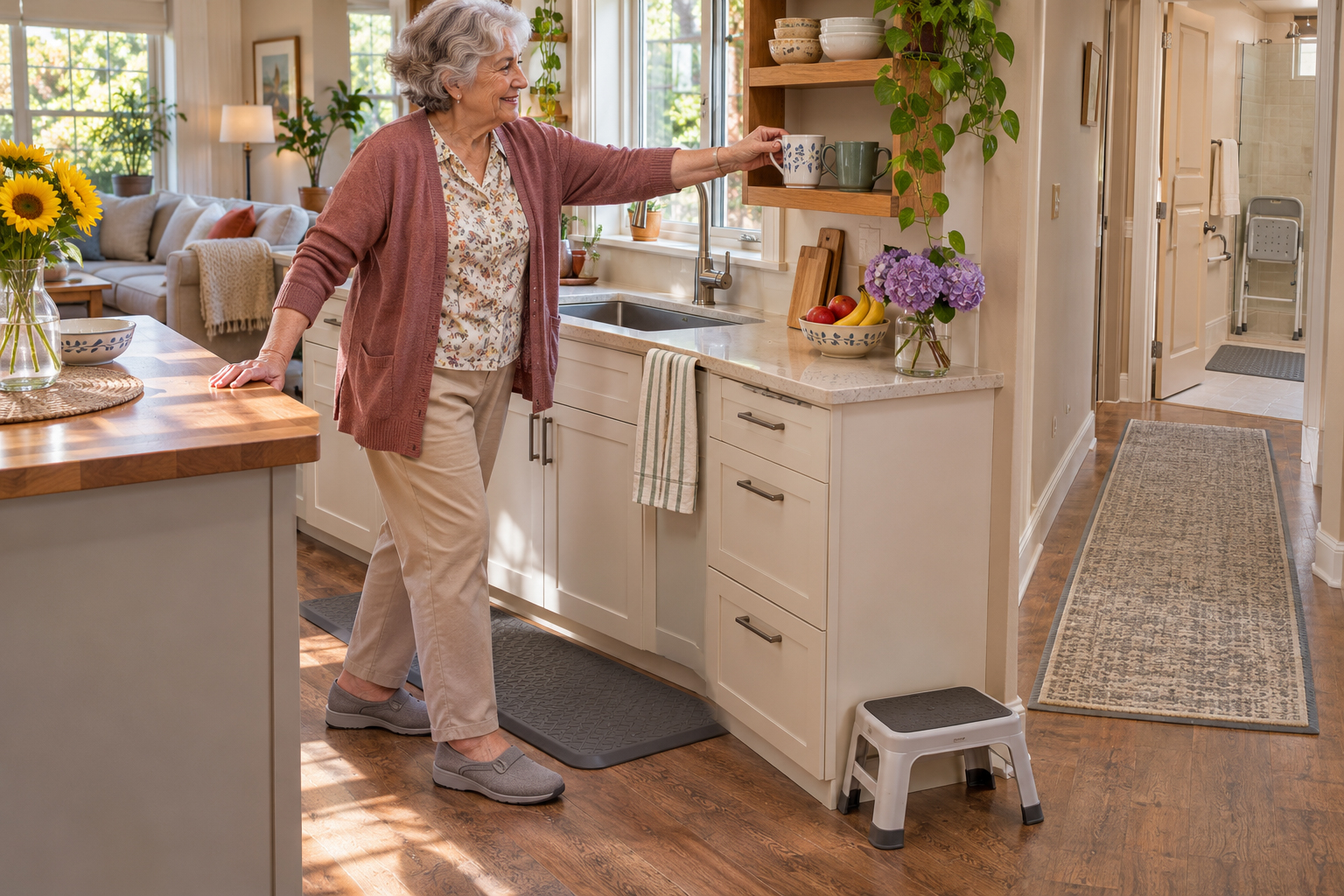
Hard floors transmit shock to knees and hips with each step, so add low-profile rugs with non-slip backing where you stand often. Choose runner rugs in hallways and cushioned mats at sinks to minimize standing fatigue and joint pounding. Secure edges and replace frayed mats that can catch toes and cause stumbles. Wear supportive, low-heeled shoes or slippers indoors rather than barefoot on slick surfaces.
These changes are inexpensive but cut the repeated micro-trauma joints experience. Over weeks, lower impact translates into less irritation and more comfortable mobility.
Kitchen and bathroom work-zone adjustments
Rearrange countertops and storage so daily items live at waist-to-shoulder height to limit bending and reaching. Use a sturdy step stool with a wide base rather than stretching to reach high shelves, and keep commonly used toiletries on a tray at sink level. In the shower, add a non-slip mat and a shower chair if standing causes pain, and swap twisting cabinet doors for pull-out drawers where possible. Faucets with single-lever handles reduce wrist strain when opening and closing.
Thoughtful placement of tools and fixtures turns repetitive tasks into joint-friendly routines. Small investments here yield steady reductions in daily discomfort.
Movement habits and sensible pacing
Break tasks into short segments with planned rest, and alternate heavier chores with lighter ones to avoid overloading one joint group. When lifting, keep loads close to your body and use your stronger leg to bear weight rather than bending at the waist. Build brief mobility checks into the day—gentle range-of-motion movements help prevent stiffness before it turns into compensatory patterns. If a movement causes sharp pain, stop and modify the task to protect the joint.
Pacing and tiny technique adjustments preserve energy and limit flare-ups. Over time these habits make moving around home steadier and less painful.
Conclusion
Rearranging rooms and routines reduces strain without dramatic lifestyle change.
Small, practical adjustments protect joints and keep daily life manageable.
Consistent tweaks add up into real improvements in comfort and mobility.