Why evening meals shape your training gains
Your evening plate plays a quiet but steady role in how you feel during tomorrow’s session. Choose foods that help refill glycogen, deliver amino acids for repair, and support sleep quality without fuss. Small shifts—adding a palm-sized serving of protein, or a modest starchy side—often beat drastic overhauls. Treat dinner as a predictable tool, not a nutritional experiment on workout days.
What to put on the plate
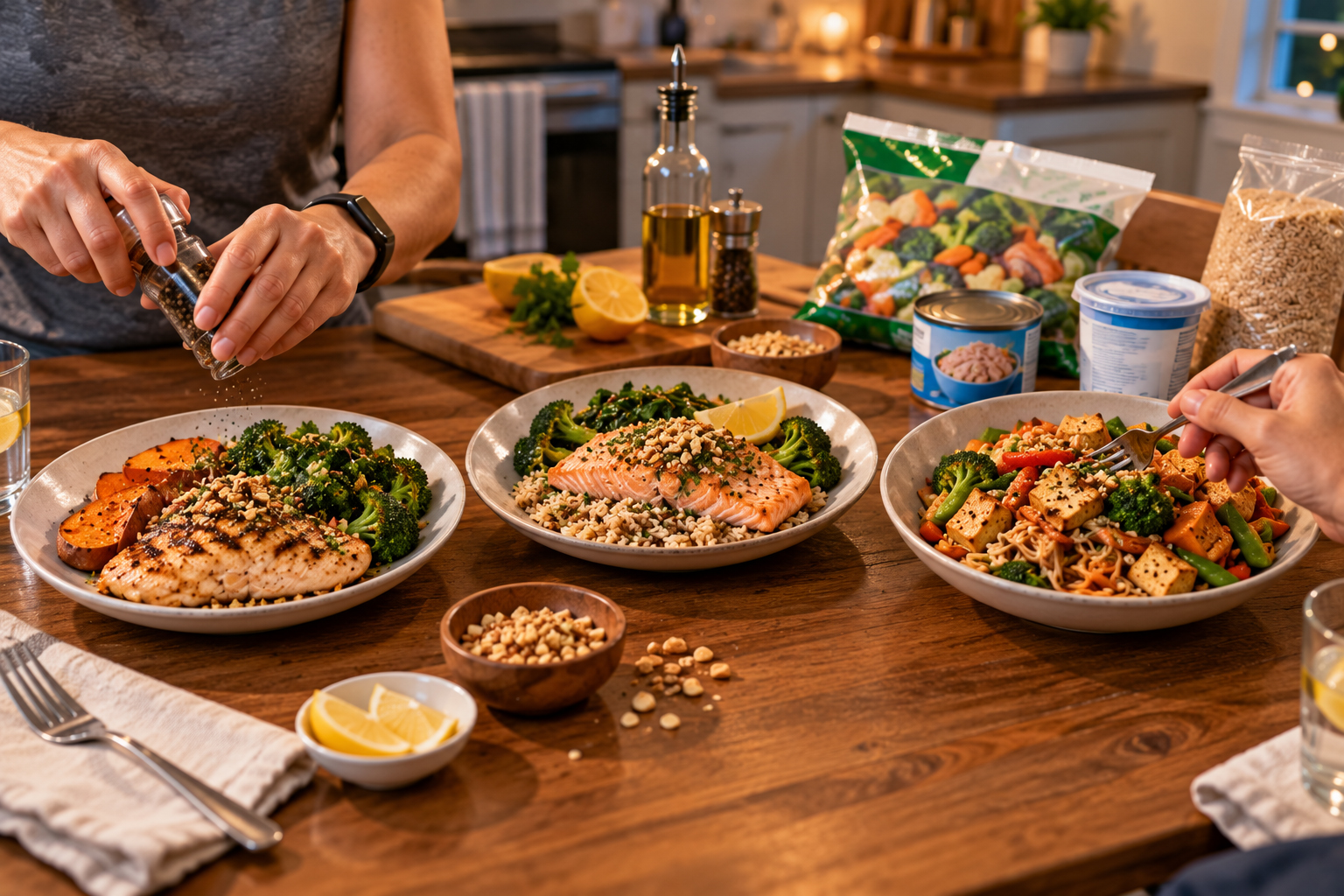
Start with a protein you enjoy: grilled fish, baked tofu, or a simply seasoned chicken breast all work. Add one concentrated carbohydrate source like roasted sweet potato, a cup of rice, or a hearty slice of whole-grain bread to replenish energy. Finish with vegetables and a bit of healthy fat—olive oil, avocado, or a sprinkle of nuts—to aid absorption and satiety.
- Protein (20–40 g): eggs, legumes, dairy, or lean meat.
- Carb (1 palm to 1 cup): potatoes, rice, quinoa, or whole-grain pasta.
- Veg + fat: leafy greens, roasted veg, olive oil, or a small handful of nuts.
These building blocks let you scale portions by workout intensity without needing new recipes. Keep spices, lemon, and a simple sauce ready so even basic combos feel finished.
Quick, realistic combos from a small grocery list
You don’t need long shopping lists to get meals that support training. A bag of frozen vegetables, a pack of chicken or canned beans, a tub of yogurt, and a grain will cover most evenings. Rotate three reliable combos so cooking stays fast and predictable.
- Grilled chicken + roasted sweet potato + steamed greens.
- Salmon or canned tuna + brown rice + salad with olive oil.
- Stir-fried tofu + mixed frozen veg + whole-grain noodles.
These patterns take 20–30 minutes and require minimal skill, which helps you actually eat the meals you plan. When time is tight, a bowl with warmed protein, microwaveable grain, and veggies gets the job done.
Timing and portion sense
Aim to finish a full dinner about 1.5–3 hours before bed so digestion won’t disrupt sleep. If you train in the evening, a lighter dinner immediately after with a slightly larger snack before bed can aid recovery. Listen to hunger rather than strict rules: adjust the starch and protein up on hard training days and scale back on rest days.
- Hard sessions: add an extra palm-sized carb portion.
- Light days: keep the vegetable portion generous and carbs modest.
Practical timing and portion tweaks make it easier to train often without overthinking every meal. Consistency matters more than perfection.
Conclusion
Simple, repeatable dinner habits reduce decision fatigue and keep your energy available for workouts. Use a steady template—protein, carb, veg, fat—and adjust portions to match effort levels. Over time, those small choices compound into more consistent training and better recovery.