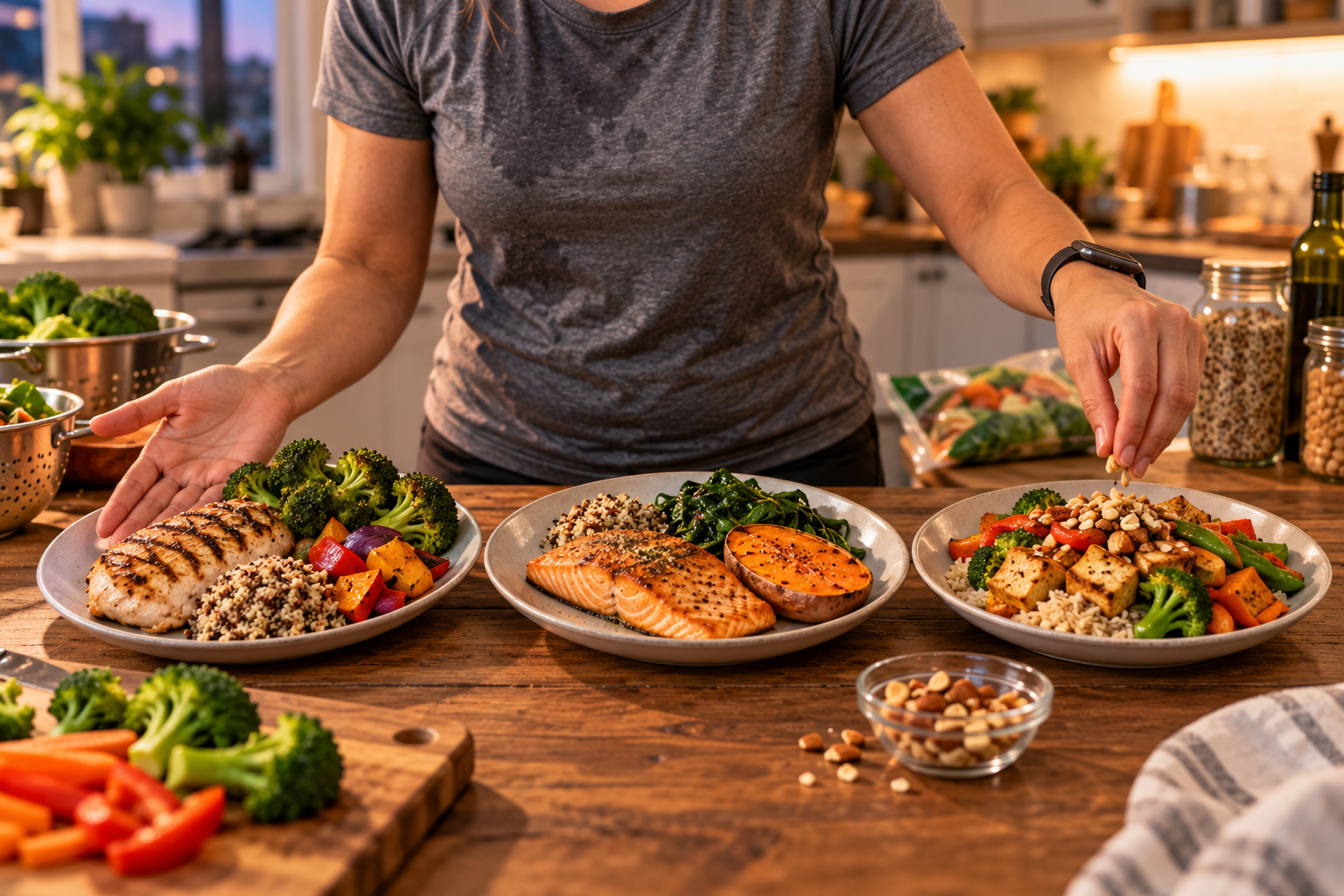
Good evening meals can determine how well you recover from at-home workouts.
You don’t need complicated recipes or exotic ingredients to refuel effectively.
Focus on protein, vegetables, and a smart carb portion to restore energy and support repair.
This article shows simple, repeatable plates you can make any weeknight.
What to prioritize
Start by putting protein at the center of the plate. Aim for a palm-sized portion of cooked lean meat, fish, tofu, or legumes at most dinners. Vegetables add micronutrients and fiber; pick two colors to keep meals interesting. Moderate starchy carbohydrates—sweet potato, brown rice, or whole-grain pasta—refill glycogen without overloading.
Add a small handful of healthy fats—olive oil, avocado, or a scattering of nuts—to support inflammation control overnight. Keep portion sizes relative to workout intensity: longer or harder sessions call for larger carbs and protein.
Quick plate formulas
Use a few repeatable templates to cut decision time. Example templates deliver balanced nutrition without measuring: protein + veg + carb; protein + grain bowl with leafy base; one-pan roast with veg and a grain on the side. Rotate sauces and spices so plates feel different even when components repeat. These templates work whether you’re cooking for one or for a family.
- Grilled chicken, roasted broccoli, and quinoa with lemon zest.
- Pan-seared salmon, wilted spinach, and a small baked sweet potato.
- Stir-fried tofu, mixed vegetables, and brown rice with a soy-ginger sauce.
Prep one element ahead—cook a grain or roast vegetables on Sunday—to streamline weeknight assembly. Small habits like that keep healthy dinners realistic after training.
Timing and portion tweaks
When you eat matters as much as what you eat. Aim to finish larger meals one to two hours before bed when possible, or choose lighter versions if you train late. If you had a high-intensity session, increase protein and carbs within 30–60 minutes post-exercise with a modest snack, then a regular dinner later. Hydration and a pinch of salt can also help restore electrolytes lost during sweat.
Listen to hunger and adjust portions across the week—some nights will need more, some less. Consistency over perfection is what supports gains.
Simple swaps and pantry tips
A well-stocked pantry lets you assemble balanced plates in minutes. Keep canned beans, canned tomatoes, quick grains like couscous or microwavable brown rice, and shelf-stable tuna or salmon. Frozen vegetables and mixed greens reduce prep time and keep nutrition high. Spices, a jar of preserved lemon or chili paste, and a good oil allow quick flavoring without many fresh ingredients.
Use one or two swaps to adapt a template when something’s missing: beans instead of meat, or quinoa instead of rice. This flexibility keeps healthy dinners possible on busy evenings.
Conclusion
Balanced weeknight meals make recovery straightforward.
Choose protein first, aim for colorful veg, and add carbs based on effort.
Small, repeatable templates keep cooking simple and results consistent.