When a workout at home goes wrong, the details you collect in the first hours can shape how smoothly an insurance claim moves forward. Start by securing your safety, then focus on documenting what happened while memories are fresh and evidence is intact. Clear notes, dated photos, and timely medical records are the sort of items insurers expect when assessing responsibility and coverage. This guide walks through practical steps to record an injury and communicate effectively with your insurer.
Immediate actions to protect your case
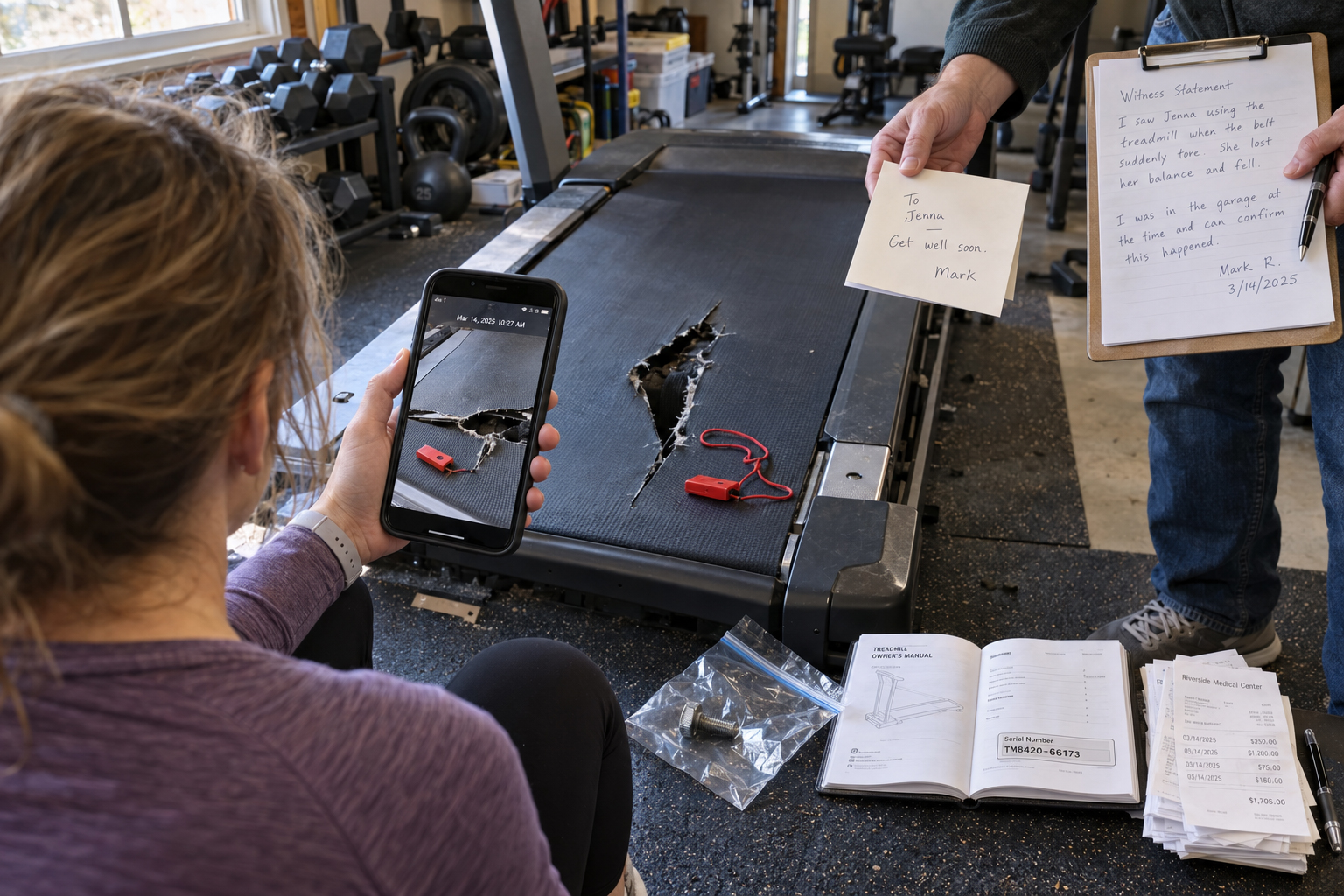
After you stabilize the injury, take a few practical steps that make later paperwork easier. Photograph the scene and any equipment involved from multiple angles and include close-ups of damage, wear, or hazards that contributed to the incident. If anyone witnessed the event, get their contact information and a short written statement while details remain fresh. Finally, seek medical attention promptly and ask the provider to note the cause of injury in your records.
- Take time-stamped photos and keep the camera file names or metadata intact.
- Save any broken equipment, packaging, or manuals if safe to do so.
These steps convert a messy event into a factual record you can present to medical staff and your insurer. Quick action reduces disputes about timing and cause.
Collecting the paperwork insurers expect
Insurers rely on objective documentation more than detailed narratives. Medical reports, emergency room records, and any diagnostic imaging form the backbone of a claim. Pair those documents with your incident notes: date, time, what exercise or movement you were doing, and how the injury occurred. If you paid out of pocket for urgent care, keep receipts and add them to the file.
- Medical records and billing statements
- Photographs and witness statements
- Receipts for equipment and medical payments
Organize these documents chronologically and make both digital and physical copies. A clear packet speeds up conversations with adjusters and providers.
Choosing providers and tracking costs
When possible, use in-network providers to limit out-of-pocket costs, but do not delay care to check coverage. Ask each clinician to include the injury mechanism in their notes and to supply itemized bills. Keep a running log of appointments, communications with providers, and any referrals to specialists or rehabilitation. This log helps you estimate deductibles, co-pays, and potential long-term expenses.
- Request itemized bills that match medical codes whenever available.
- Note prior authorizations, claim numbers, and provider names.
Consistent record-keeping makes it easier to compare what you were billed against what the insurer agrees to pay. It also supports appeals if a charge is denied.
Filing the claim and managing timelines
Report the injury to your insurer as soon as practical and follow their submission checklist exactly. Include your organized packet, copies of medical reports, photographs, and receipts. Ask the insurer for a claim reference number and an expected timeline for review, and note the name and role of anyone you speak with. Keep a duplicate set of everything you submit and record dates of calls and letters.
- Submit claims digitally when available, and save confirmation emails.
- If a claim is denied, request a written explanation and appeal instructions.
Timely, thorough submissions reduce back-and-forth and accelerate decisions. If complications arise, organized records give you the best foundation for an appeal.
Conclusion
Promptly documenting a home gym injury—photos, witness details, and medical records—creates a clear narrative for insurers. Keep organized copies, track communications, and follow claim procedures to avoid delays. Well-prepared documentation is the simplest way to protect coverage and resolve disputes efficiently.