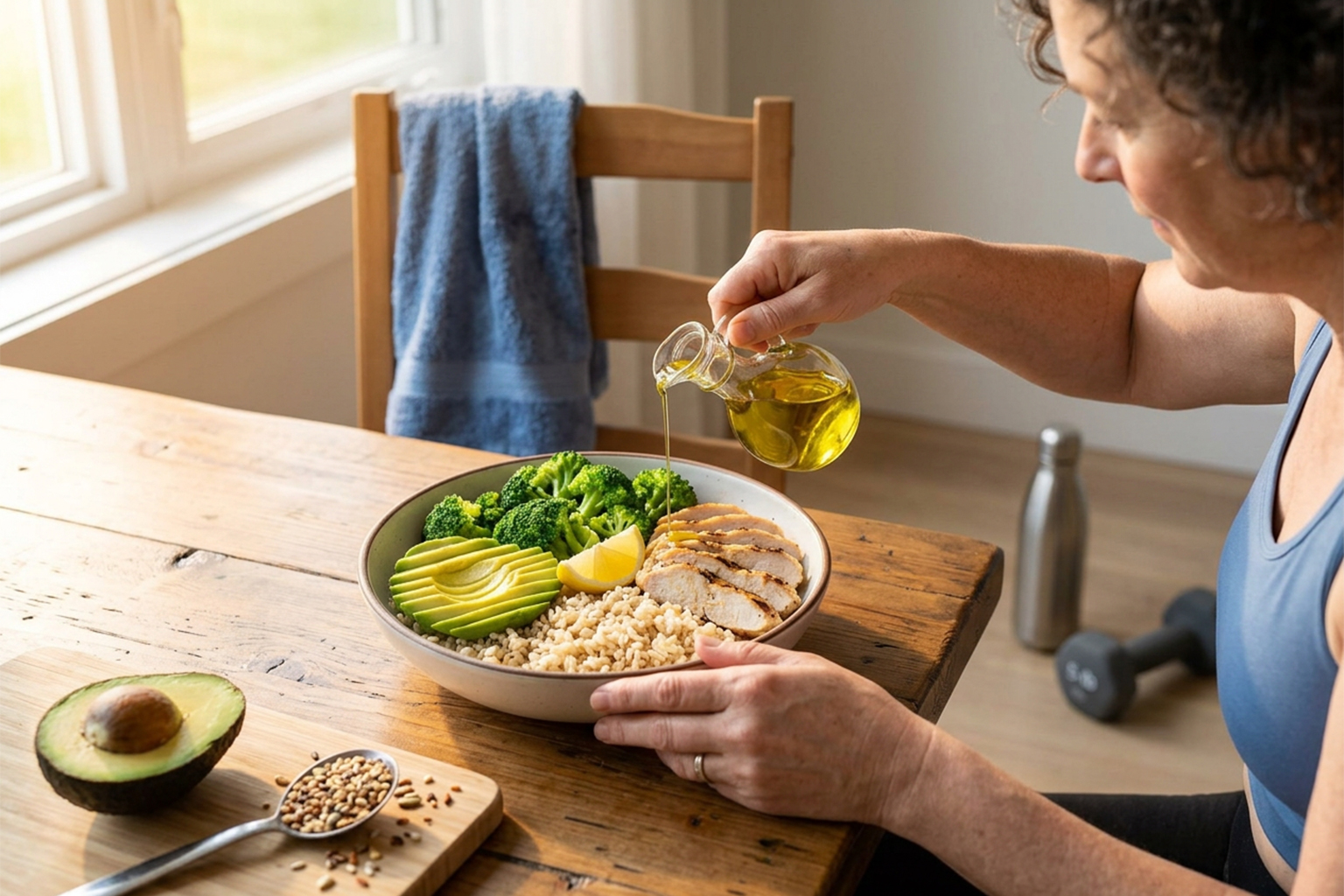
After an at-home workout, a single, balanced dinner bowl can be the simplest path from fatigue back to function. Choose ingredients that combine protein, a digestible carbohydrate, and a bit of healthy fat to support muscle repair and restore energy. Bowls are forgiving: swap in what you have and keep portions sensible. This piece explains straightforward choices and templates you can use any weeknight.
Why bowls work so well after training
Bowl meals concentrate the nutrients your body needs into one convenient plate, which makes them easy to time and portion after exercise. They mix a solid protein source with a carbohydrate for glycogen replenishment and vegetables for vitamins and minerals. That variety helps avoid overloading one macronutrient while keeping meal prep manageable. Bowls also make it simpler to scale calorie and protein amounts depending on the intensity of your session.
Because everything sits together, you won’t skip critical components when you’re tired. A single bowl can be adapted whether you need a light refuel or a fuller recovery meal.
Protein choices that aid muscle repair
Select proteins that are easy to prepare and digest: lean meats, fish, eggs, tofu, tempeh, legumes, or a dairy alternative with adequate protein. Aim for a portion roughly the size of your palm for most people, and increase that if you had a particularly long or intense workout. Variety across the week keeps meals interesting and ensures a broader spread of amino acids. Quick-cook options like canned tuna, rotisserie chicken, or pre-cooked lentils cut time without sacrificing results.
Protein doesn’t need to be elaborate; well-prepared simple choices often deliver the best recovery payoff. Pair them with a colorful vegetable to round out the micronutrient picture.
Smart carbs, fats, and sensible timing
After exercise, choose carbs that are familiar to your stomach: rice, potatoes, oats, or whole-grain pasta work well. Include modest healthy fats—olive oil, avocado, or a few nuts—to support satiety and nutrient absorption without slowing digestion excessively. Try to eat within an hour or two after training when possible, but prioritize having a balanced meal over strict timing. Hydration matters too; include broth-based components or water-rich vegetables to help replace sweat losses.
Small adjustments to portion size and carb choice can tailor bowls for endurance sessions versus short strength workouts. Keep a few staple carbs on hand to streamline decisions on busy nights.
Four easy bowl templates to assemble tonight
Use these templates as starting points and swap ingredients you already have. Each template balances protein, carbohydrate, and vegetables so you don’t have to overthink portioning. They’re designed for 20–30 minute prep using mostly pantry or fridge staples.
- Grilled chicken, brown rice, steamed broccoli, olive oil, lemon.
- Baked salmon, quinoa, spinach, avocado, toasted seeds.
- Tofu stir-fry, mixed vegetables, soba noodles, a light soy-ginger sauce.
- Black bean bowl with roasted sweet potato, salsa, Greek yogurt, cilantro.
Rotate these templates across the week and adjust quantities to match hunger and workout load. With minimal planning, bowls become a reliable recovery habit.
Conclusion
Dinner bowls make post-workout recovery simpler by packaging protein, carbs, and produce in one dish. Keep quick protein sources, a couple of staple carbs, and colorful vegetables on hand to assemble meals fast. Small adjustments in portion and timing let these bowls support both light sessions and harder training days.