

A sustainable at-home fitness plan rests on consistent, simple meals that supply steady energy and recovery support.
You don’t need exotic ingredients or strict diets to make progress; you need repeatable patterns that match your schedule and goals.
This article outlines practical meal building blocks, timing tips, and light prep habits to keep nutrition predictable and effective.
Use these ideas to streamline choices and reduce decision fatigue around training days.
Core Meal Building Blocks
Start by dividing meals into three functional blocks: lean protein, a quality carbohydrate, and fiber-rich vegetables or fruits.
Protein supports repair and satiety while carbohydrates fuel sessions and replenish glycogen stores between workouts.
Including healthy fats in moderation helps with absorption of fat-soluble nutrients and keeps meals satisfying.
Aim for whole-food versions of each block, adjusting portion sizes to your energy needs and training intensity.
These blocks can be mixed across the day to form balanced plates quickly.
Mastering the basic ratio for your needs makes meal decisions fast and adaptable.
Timing, Portions, and Simple Macros
Meal timing doesn’t have to be rigid, but aligning larger carbohydrate portions around your most intense sessions typically improves performance and recovery.
Smaller, protein-focused snacks work well before light sessions or in the evening to curb hunger without weighing you down.
Portion control is a practical tool: use your hand as a guide—protein roughly palm-sized, carbs a cupped hand, fats a thumb-sized portion.
Tracking a few days of patterns can reveal where to reduce or add calories to support progress.
- Greek yogurt, berries, and granola
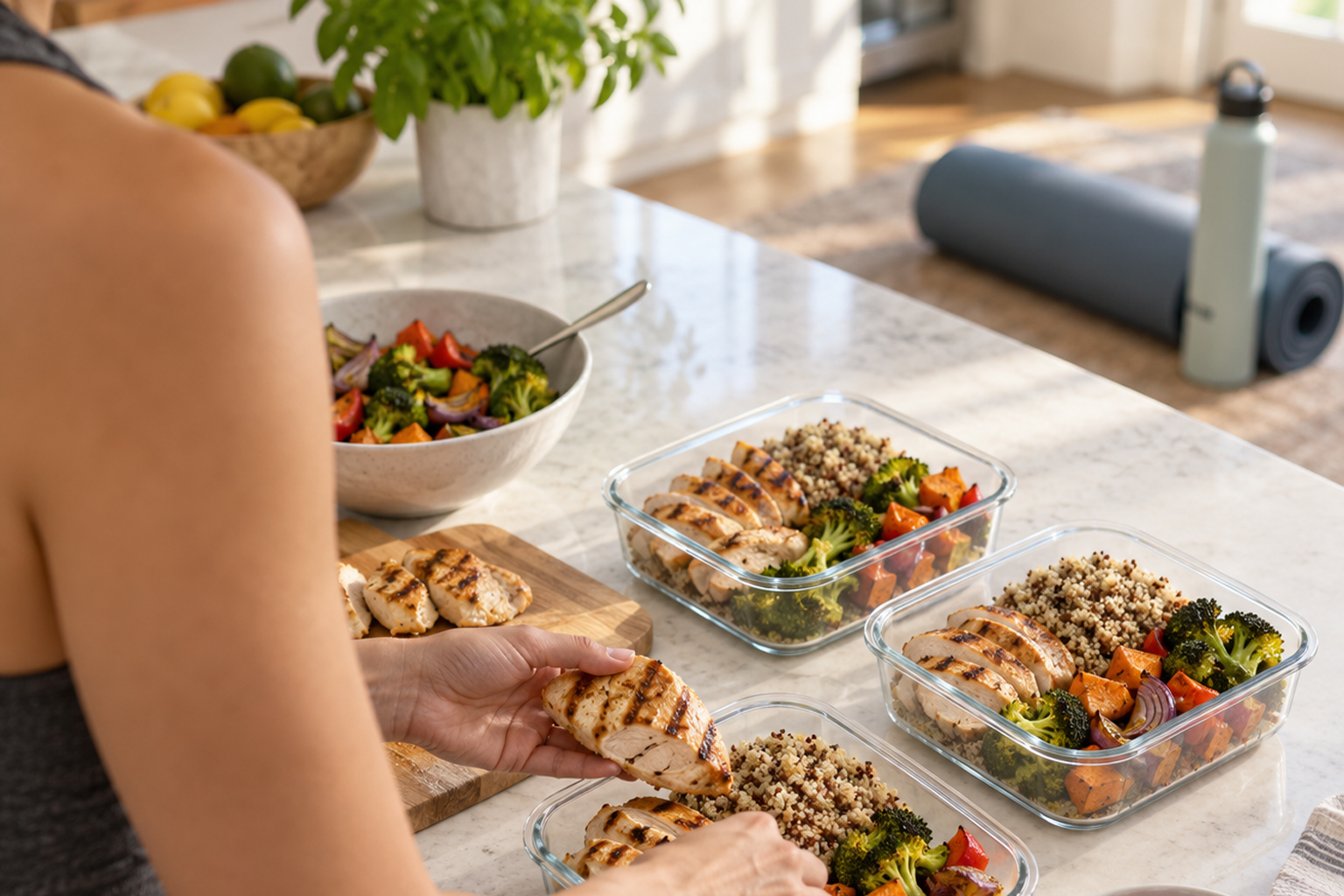
- Grilled chicken, quinoa, and roasted vegetables
- Egg scramble, whole-grain toast, and avocado
Small, consistent tweaks to timing and portions compound over weeks.
They reduce energy swings and make progress easier to monitor.
Weekly Prep Strategies for Consistency
Weekly prep decreases friction and keeps you on plan when time is limited.
Batch-cook one protein, roast a pan of vegetables, and portion grains into ready-to-go containers to assemble meals in minutes.
Invest ten to forty-five minutes twice a week to maintain a refrigerated or frozen set of staples that simplify every day.
Rotate flavors with simple sauces and spices to avoid monotony.
A flexible prep habit makes nutrition reliable without extra stress.
Snack and Recovery Examples
Post-workout recovery is simple: a source of protein plus some carbohydrates helps replenish and repair without excess effort.
Examples include a protein shake with a banana, turkey and hummus wrap, or cottage cheese with fruit and a sprinkle of nuts.
Keep portion sizes proportional to workout intensity—short sessions need less carbohydrate than long or high-intensity efforts.
Hydration and a mix of electrolytes can matter after heavy sweat sessions, but most days water and balanced meals suffice.
Prepare a few grab-and-go options so recovery doesn’t depend on willpower.
Small, consistent recovery habits speed adaptation and keep you feeling steady.
Conclusion
Start small and build a meal rhythm that matches your training.
Focus on repeatable blocks, sensible timing, and minimal weekly prep.
Over time these patterns will support steady energy, recovery, and adherence.










