

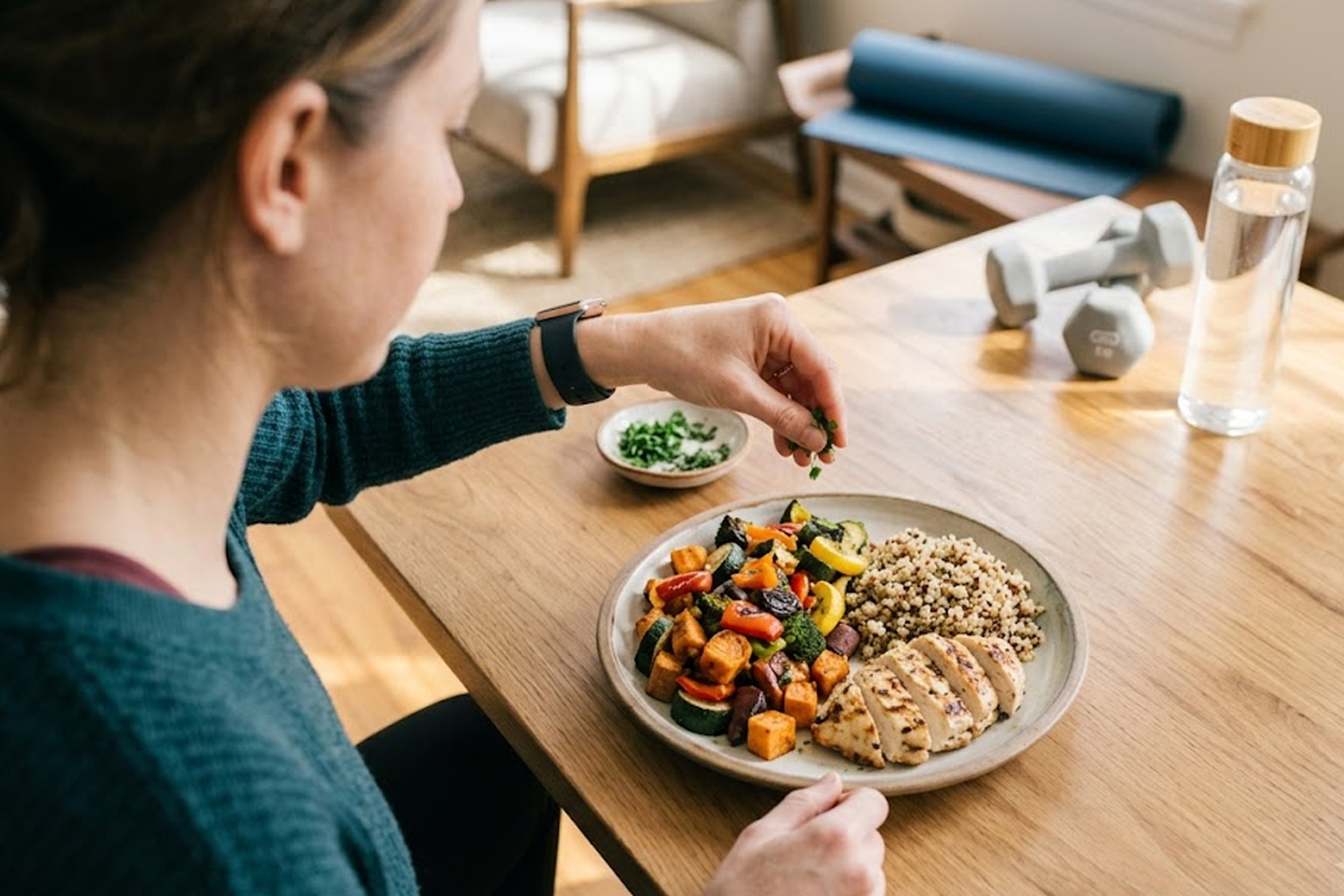
Achieving better results from home workouts often starts with what you put on your plate.
Balanced meals support energy, recovery, and steady progress without complicated recipes.
A few simple rules let you build reliable plates from common ingredients you already enjoy.
This article lays out practical components, meal templates, and habits to keep nutrition consistent and manageable.
Core components of a balanced plate
At the center of every effective meal are three components: protein, vegetables, and a source of carbohydrate or healthy fat. Protein supports muscle repair and satiety, vegetables provide micronutrients and fiber, and carbs or fats supply usable energy for training and recovery. Aim for modest portions tuned to your training intensity—more carbs on higher-intensity days, and slightly more fats or vegetables on lighter days to control calories. Including a variety of colors and textures helps cover vitamins and keeps meals interesting. Adjusting portion sizes and meal timing around workouts helps manage energy and recovery and supports consistent performance.
A simple rule is half the plate vegetables, a quarter lean protein, and a quarter whole grains or starchy vegetables. This pattern is easy to remember, scales to different calorie needs, and can be adapted to almost any cuisine or flavor profile.
Simple templates you can use
With staples on hand you can assemble meals quickly to fit pre- or post-workout needs, reducing decision fatigue. A breakfast template might combine scrambled eggs, sautéed greens, and a piece of fruit for fast energy and protein. For lunch, think grilled chicken, a mixed salad, and whole grain rice or roasted potatoes to balance macros and keep you full. Dinner templates can swap in beans, roasted vegetables, and a side of quinoa for a plant-forward option that still supplies complete nutrition. Batch-cook a protein and a grain once or twice weekly to simplify assembly and free up time for training.
Keep portions consistent and adjust seasoning to taste. These templates adapt easily for batch cooking or one-pan meals. Rotate spices and dressings to avoid monotony and keep flavors fresh.
Consistency habits that matter
Small habits drive consistency: plan a few meals each week, prioritize protein at every sitting, and keep hydrated throughout the day. Store pre-cut vegetables and cooked grains so assembling meals takes minutes rather than an hour, lowering the barrier to eating well. When time is tight, shift to portable options like yogurt with nuts or a whole fruit and nut butter to maintain protein and energy targets. Regularly rotating ingredients prevents boredom and ensures a range of nutrients to support long-term training. Note how different combinations affect your sleep, mood, and training quality, and tweak accordingly.
Track how meals affect performance and recovery and make incremental changes. Over weeks, consistent choices produce steady training gains and better workout quality.
Conclusion
Balancing protein, vegetables, and sensible carbs creates plates that support at-home training.
Simple templates and small consistency habits make healthy eating sustainable.
Focus on patterns rather than perfection to keep making progress.









