Recovering movement at home requires a practical, stepwise approach that balances safety with steady progress.
Starting small and tracking daily improvements helps build confidence and reduces the risk of setbacks.
Thoughtful planning and minor environmental changes can make everyday tasks easier while supporting rehabilitation.
This article outlines straightforward strategies you can apply without specialized equipment to restore mobility.
Assess Your Starting Point
Begin by evaluating what you can do safely right now, noting specific limitations and pain triggers to inform your plan. Consider simple tests such as timed walks across a hallway, ability to sit and stand, and balance while holding a stable surface. Record baseline notes about fatigue, pain, and any assistance needed so you can measure progress objectively. Consulting a healthcare provider or therapist for initial guidance adds clarity about precautions and realistic goals.
Use those observations to set short, measurable targets you can revisit weekly. Clear, small goals reduce frustration and create momentum for gradual improvement.
Design Gentle Daily Progressions
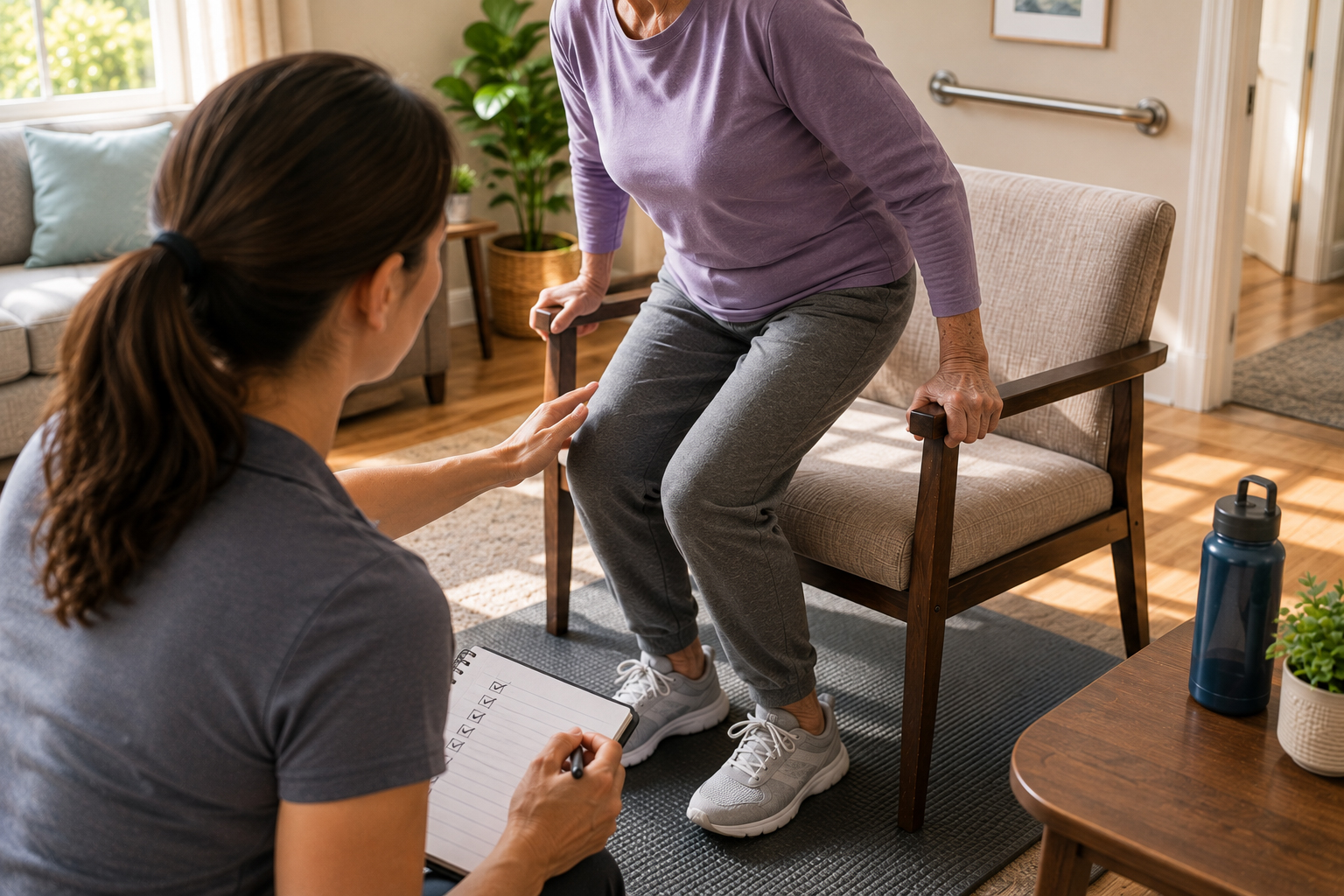
Create a routine that emphasizes consistency over intensity, focusing on mobility, strength, and balance in short sessions. For example, three daily sessions of five to ten minutes can include sit-to-stand repetitions, gentle marching in place, and supported single-leg stands. Increase repetitions or duration by small increments each week; avoid sudden jumps that provoke pain or excessive fatigue. Incorporating breathing and pacing techniques helps manage exertion and keeps movements controlled.
Keep a simple log of exercises, repetitions, and how you feel afterward to guide gradual increases. Gradual progression supports sustainable gains without overwhelming your body.
Create a Safer Home Environment
Small home modifications reduce barriers to movement and lower fall risk, making practice safer and more frequent. Ensure clear walkways, secure loose rugs, add stable grab points near steps or in the bathroom, and position commonly used items at reachable heights. Good footwear and adequate lighting also support stable movement and confidence during daily tasks. These adaptations let you focus on movement rather than compensating for hazards.
Simple adjustments often yield immediate benefits and encourage more independent activity. Reassess the space as mobility changes to match evolving needs.
Conclusion
Consistent, manageable steps paired with modest home adjustments create a safer path to improved mobility.
Track small wins and modify the plan based on how your body responds to avoid setbacks.
With patience and clear goals, daily practice can restore function and confidence at home.