Understanding how your health plan handles injuries and treatment from home workouts helps you plan safer routines and avoid unexpected bills.
This guide outlines practical steps to review coverage, document incidents, and choose in-network care when needed.
It is aimed at active people who exercise independently and want clarity on policy details, limits, and out-of-pocket risks.
Use these strategies to reduce surprises and make informed decisions about when to seek care after a home workout incident.
Know What Your Plan Covers
Start by reading your policy summary and benefit booklet to identify coverage for emergency visits, diagnostic imaging, physical therapy, and specialist consultations.
Pay attention to exclusions, preauthorization requirements, visit limits, and whether rehabilitation services after an injury are covered under medical benefits or a separate rider.
Also check cost-sharing details like deductibles, co-pays, and coinsurance that apply to different care settings because out-of-pocket costs can vary widely.
If language is unclear, contact customer service and ask for written confirmation about specific scenarios related to home exercise injuries.
Keep a clear summary of what is and is not covered for quick reference.
That helps you decide where to seek care when an injury occurs.
Documenting and Filing Claims
Proper documentation makes claim processing smoother and reduces the risk of denials for plausible exercise-related injuries.
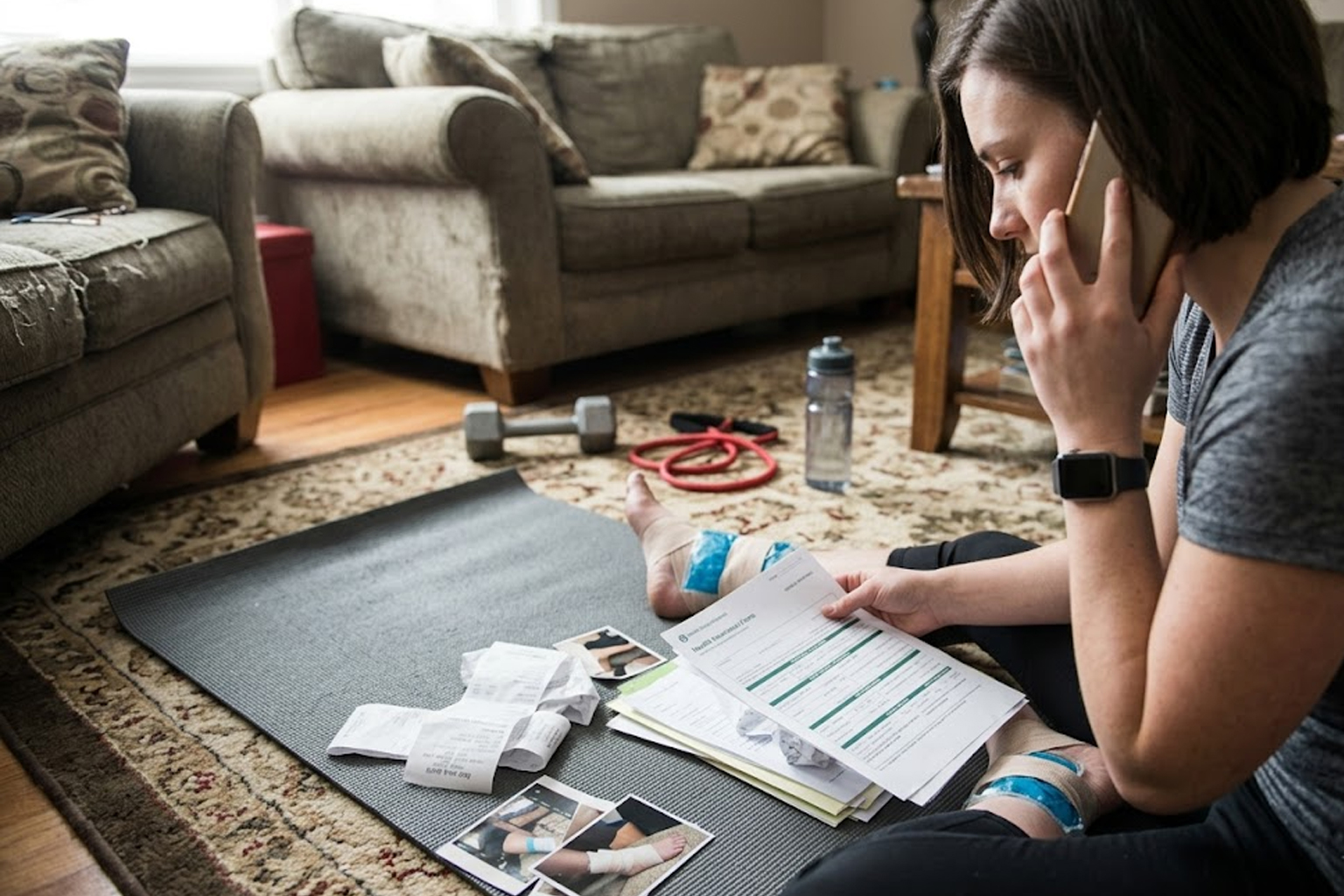
After an incident, record the date, time, activity, symptoms, and any immediate first aid or home remedies applied.
Take photos of the environment and injury, save receipts for over-the-counter supplies, and request visit notes from providers for medical records.
When filing, include a concise narrative and relevant billing codes if available, and follow insurer timelines for submission and appeals.
- Incident log with dates and a short description
- Photos and receipts tied to the event
- Provider notes and imaging or therapy records
Organized records strengthen your case and speed reimbursements.
Keep digital and physical copies in a dedicated folder for claims.
Choosing Providers and Networks
Selecting in-network urgent care, imaging centers, and rehabilitation providers typically leads to lower costs and simpler claims processing.
Telemedicine can be useful for triage advice after minor strains, while physical therapists or sports medicine specialists may be necessary for persistent issues.
If you receive out-of-network care in an emergency, document why it was required and notify your insurer promptly to explore coverage options.
Verify prior authorization rules for specialist referrals and advanced imaging to avoid surprise denials.
A small phone call to a provider or insurer can save significant expense later.
Compare network directories and keep a list of preferred, covered providers near you.
Conclusion
Review policies before ramping up a home routine.
Document incidents carefully and choose in-network care when possible.
Clear preparation reduces financial and health risks from home workouts.