Recovering or protecting joint function at home works best when steps are deliberate and sustainable. Small, consistent changes to movement, sleep, and setup reduce strain and improve comfort over weeks and months. This article outlines practical strategies you can adopt without equipment or clinical supervision, focusing on realistic daily habits. These suggestions emphasize safety, gradual progression, and tracking progress so adjustments are evidence-based. Keeping changes modest and repeatable increases the chance they become lasting habits.
Assess and Set Practical Goals
Begin by noting current limitations, pain patterns, and daily tasks that trigger discomfort, and include brief notes about timing and severity. Use simple measures like walking distance, ability to climb stairs, or symptoms after household tasks to create baseline notes you can revisit weekly. Watch for signs such as swelling, morning stiffness, or changes in balance to guide what to prioritize. Set realistic short-term goals that focus on function — for example, sitting more comfortably or increasing walking time by five minutes.
Clear, measurable goals guide safe progression and reduce the risk of overdoing. Share these goals with a clinician if you have complex medical needs or uncertain red flags. Adjust targets based on how your body responds rather than pushing to match arbitrary timelines.
Design a Gentle Movement Routine
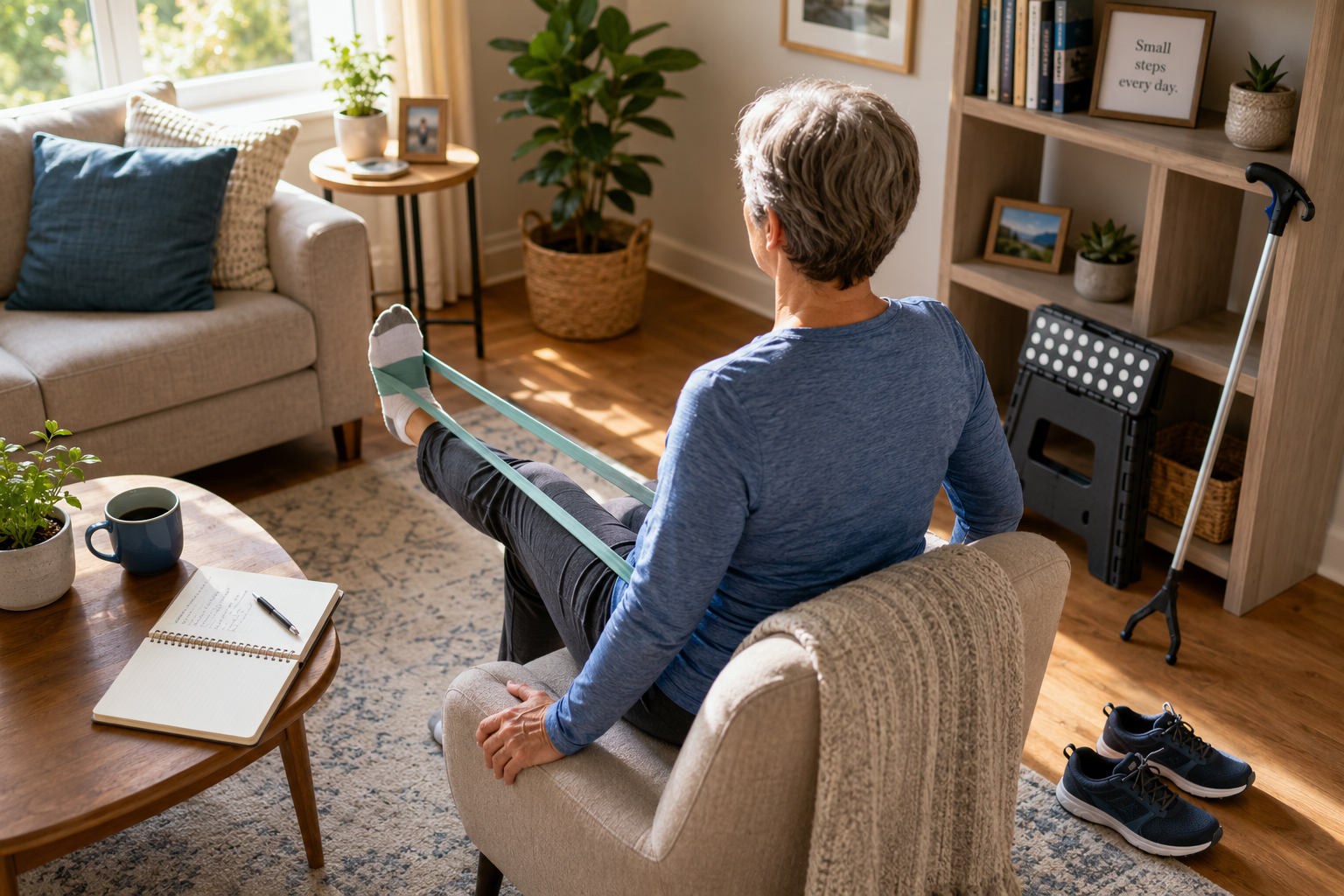
A balanced home routine combines mobility, low-load strengthening, and paced aerobic activity tailored to current ability. Start sessions with joint-friendly mobility work, follow with two to three strengthening exercises using body weight or resistance bands, and finish with light aerobic movement such as brisk walking or cycling. Keep sessions short at first — ten to twenty minutes — and build time or intensity slowly while allowing recovery days. Pay attention to tempo and give adequate rest between sets to avoid accumulated fatigue.
Consistency is more important than intensity when improving joint function. Prioritize quality of movement and stop if you notice unusual or worsening symptoms. Include gentle breathing and a brief warm-up to reduce tension and prepare joints for activity.
Adjust Your Environment and Daily Habits
Small setup changes reduce repetitive strain: raise work surfaces, choose supportive seating, and use small stools or reachers to avoid awkward posture. Pay attention to sleep position and mattress support, and choose footwear with good cushioning and stability for daily tasks. Improve lighting and storage placement to avoid frequent bending, and incorporate micro-breaks during repetitive chores to change loading patterns on joints. Simple aids like grabbers or a step stool can limit unnecessary strain when used appropriately.
Habit changes are easier when tied to existing routines, like doing mobility work after morning hygiene. Track changes in comfort and function weekly to see what adjustments help most. Celebrate small improvements to maintain motivation and gradually expand activity.
Conclusion
Improving joint function at home is a gradual process that rewards patience and consistent effort. Small, measurable steps in movement and environment add up over weeks and months. If you have persistent or severe pain, consult a healthcare professional for personalized guidance.