Small, consistent home habits can make a measurable difference in joint comfort and muscle function over time. Creating gentle routines that fit daily life helps prevent setbacks and supports steady improvement. This article outlines practical adjustments to movement, rest, and your environment to encourage resilience. The guidance focuses on safe, repeatable approaches rather than one-time fixes.
Assessing Daily Demands
Begin by identifying the regular activities that strain your body, from chores to device use. Note positions you hold frequently and transitions that feel difficult or painful. Observing patterns helps prioritize which tasks to modify first and where to conserve energy. This assessment does not require clinical testing—just honest self-observation and simple notes.
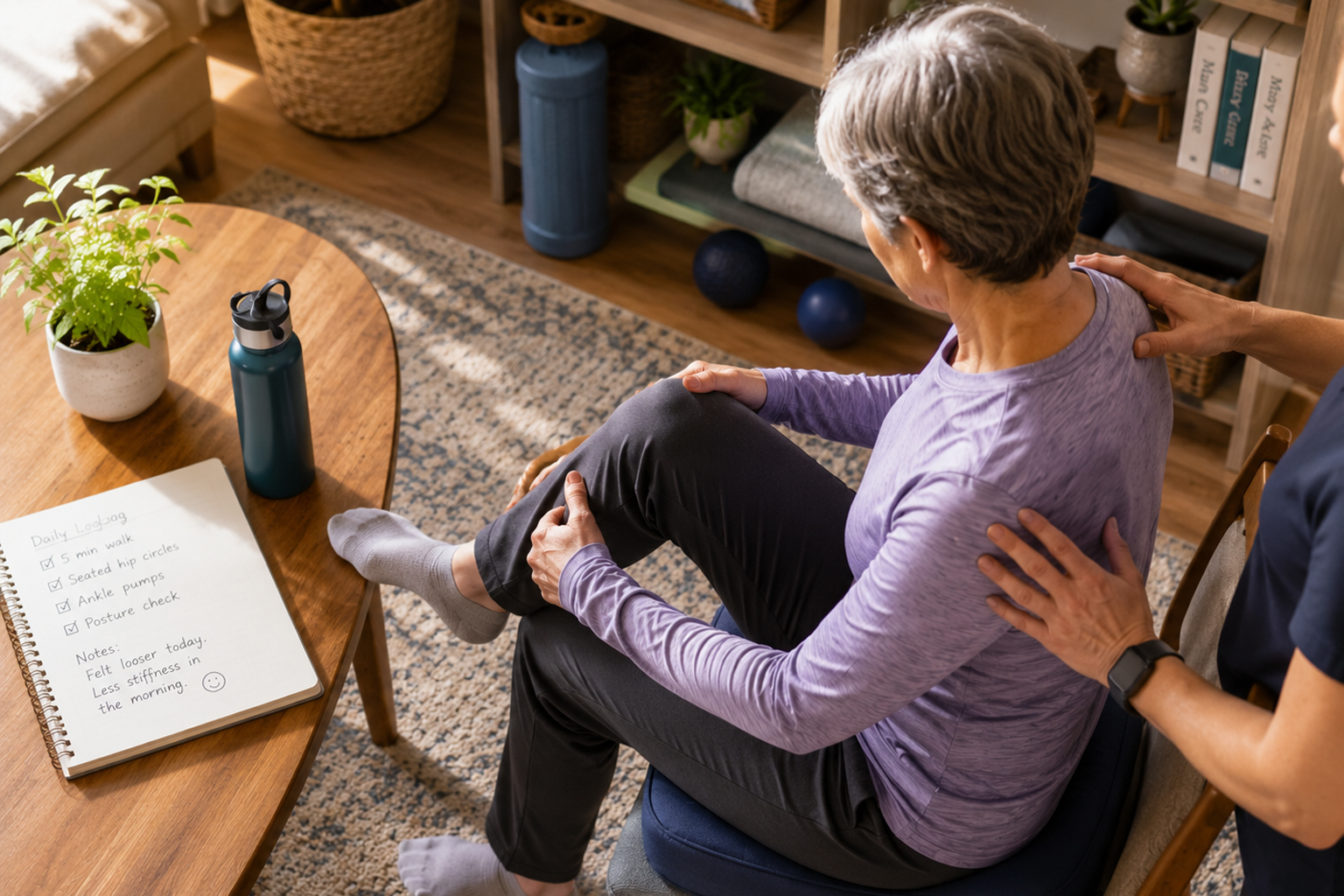
Use a brief daily log to capture three to five activities that feel challenging. Over two weeks you will start to see trends and can target the most impactful changes. Small awareness habits often reveal the easiest opportunities for improvement.
Designing Gentle Movement Routines
Integrate short, low-load movement sessions into the day to maintain joint range and muscle readiness. Aim for brief repetitions of controlled motion rather than prolonged static holds; quality matters more than quantity. Include mobility work, gentle strengthening, and pacing strategies to reduce the chance of flare-ups. Consistency—five to ten minutes several times daily—builds tolerance and function.
Choose movements that feel manageable and relevant to your daily tasks. Gradual progression and regular scheduling are key to lasting change. Celebrate small gains to maintain motivation.
Ergonomics and Small Environmental Adjustments
Adjust surfaces, seating, and device angles to support neutral posture and reduce unnecessary strain. Minor changes, such as seat height, cushion placement, or work surface arrangement, can limit repetitive stress on sensitive areas. Thoughtful organization of frequently used items prevents awkward reaches and reduces load on joints and muscles. These changes are inexpensive and often reversible as you refine what works.
- Raise or lower seating to keep hips and knees at comfortable angles.
- Place commonly used items within easy reach to avoid repetitive overreaching.
- Use supportive cushions or rolled towels to maintain neutral spine alignment.
Test one change at a time and track how it affects comfort during routine activities. Small adjustments compound when combined with movement and rest strategies.
Tracking Progress and Pacing
Monitor symptoms and functional changes weekly to guide gradual progression of activities. Pacing means balancing activity and rest so that gains build without triggering setbacks. Simple measures such as step counts, tolerated standing time, or ability to lift household items can be useful indicators. Adjust goals based on real-world feedback rather than expectation alone.
Keep routines flexible and patient-focused; progress often happens slowly but steadily. Regular reassessment ensures routines remain aligned with your capabilities and goals.
Conclusion
Adopting small, sustainable habits at home supports long-term musculoskeletal health and function. Combine gentle movement, ergonomic adjustments, and mindful pacing to reduce strain and build resilience. Consistent, realistic steps produce meaningful improvements over time.