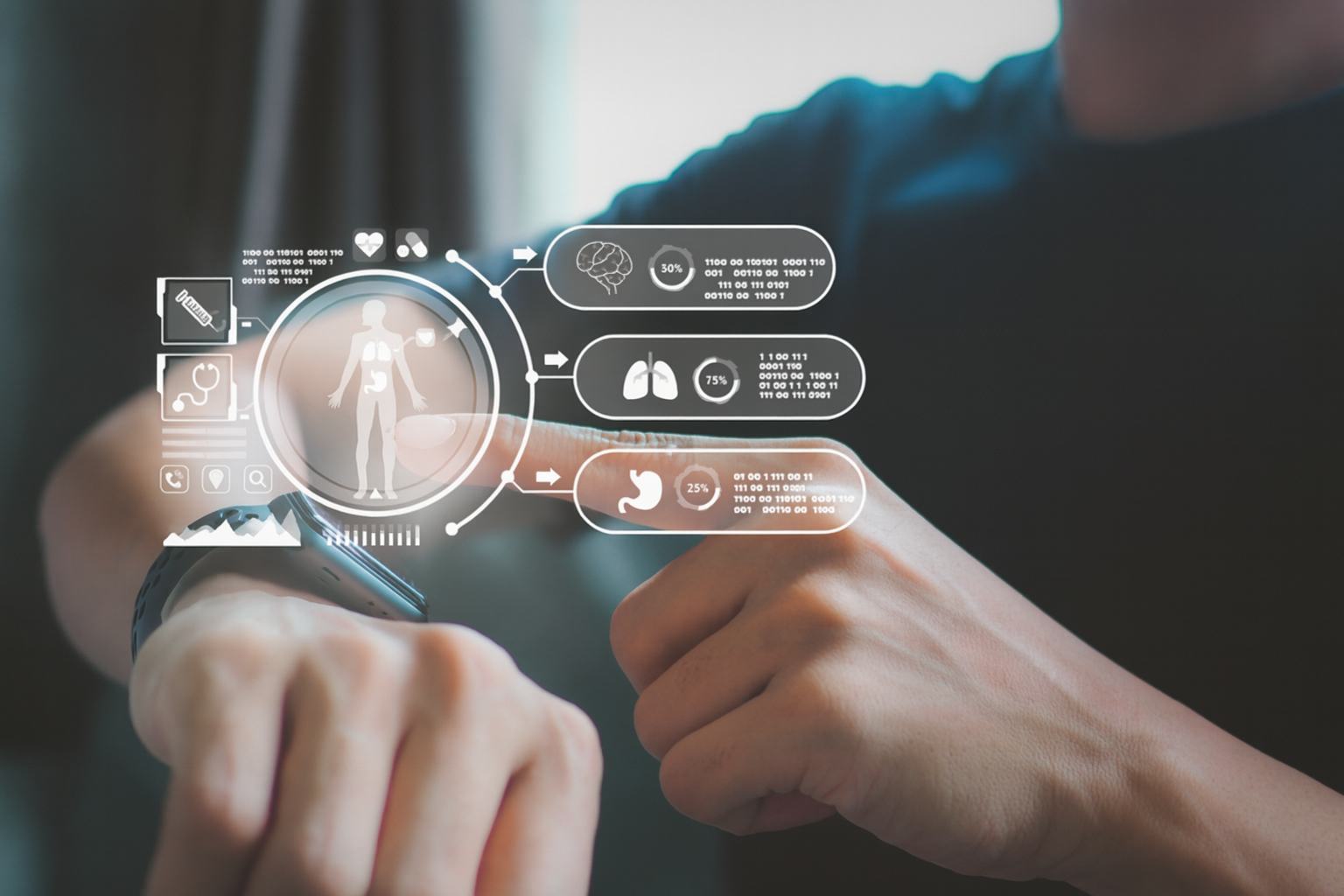
Wearable health technology has seen tremendous growth, changing how individuals monitor and manage their well-being. Devices like smartwatches, fitness bands, and advanced biosensors provide users with continuous real-time data on vital signs such as heart rate, sleep quality, oxygen saturation, and physical activity levels.
Wearables integrate seamlessly with telehealth services and electronic health records to enable remote patient monitoring, facilitating early detection of health issues and proactive interventions. Innovations include AI-driven anomaly detection that alerts users and healthcare providers to irregularities such as arrhythmias or elevated stress markers.
This technology empowers users to track lifestyle habits, adhere to prescribed regimens, and receive personalized health insights. The shift toward connected, data-driven healthcare is reducing hospital visits, improving chronic disease management, and promoting preventive care, reflecting a move from reactive to proactive health management models.