Setting up a safer home workout area doesn’t require a major renovation or expensive gear. Small changes in layout, flooring, and equipment choices can reduce the chance of trips, falls, and strains. Paying attention to lighting, ventilation, and clear walking paths improves both comfort and injury prevention. With a few targeted upgrades you can create a consistent, low-risk space for regular exercise.
These recommendations focus on practical, affordable steps that most people can implement quickly. They are useful for beginners and experienced exercisers alike. Read on for actionable guidance to make your home workouts safer and more sustainable.
Assess the Space
Begin by evaluating the area you use most for exercise: note ceiling height, floor stability, and any nearby furniture or cords. Look for uneven rugs, slick surfaces, or narrow passages that could interfere with movement patterns. Measure daily clearances to ensure you have room for dynamic exercises and safe landing space for jumps or steps. This assessment helps you prioritize fixes that will have the biggest safety impact.
Documenting hazards on a simple checklist makes follow-up easier. Revisit the list periodically as your routine or equipment changes.
Choose Safer Equipment
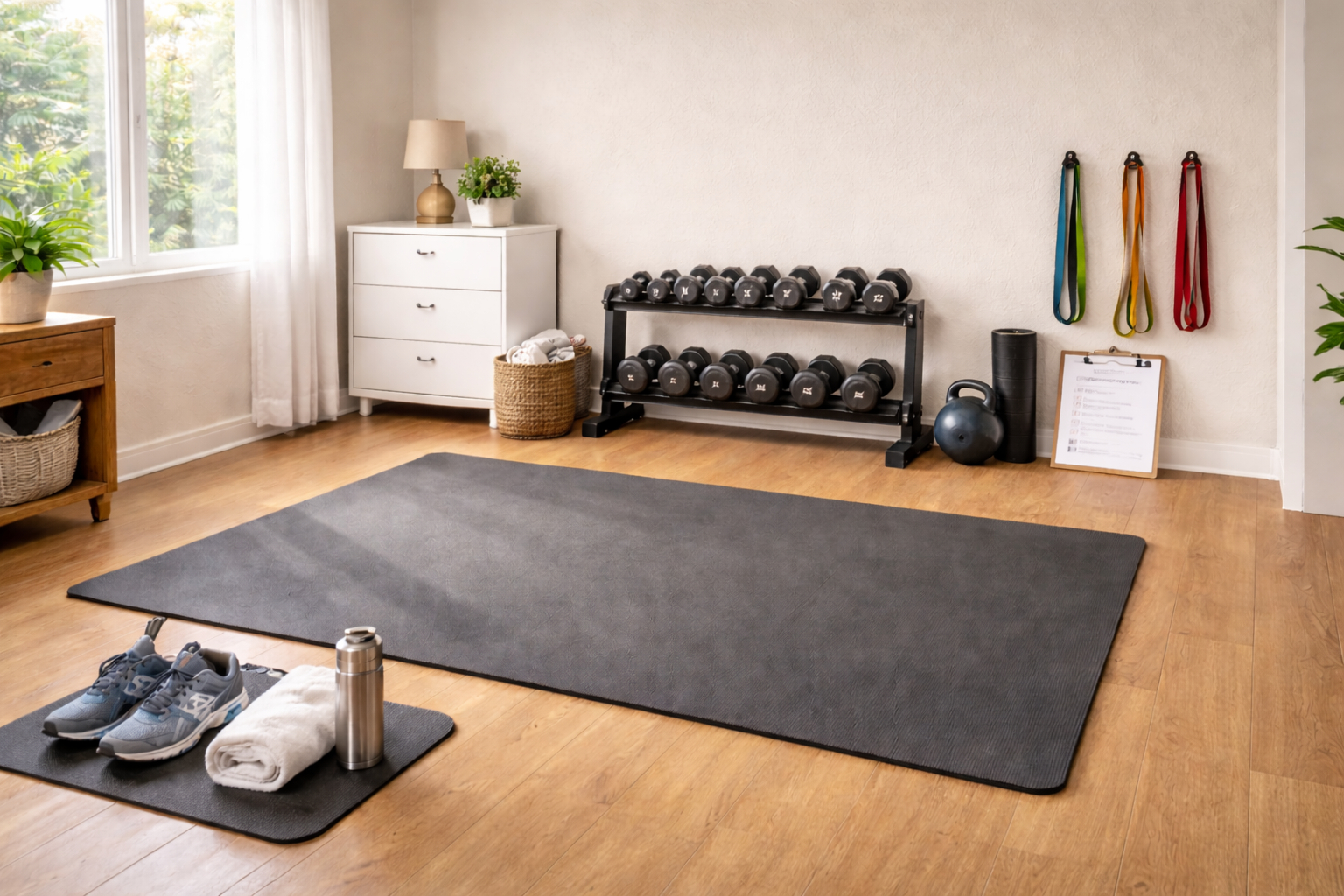
Opt for tools and surfaces that match your workouts and skill level, starting with a quality exercise mat and sturdy shoes. Replace frayed resistance bands and inspect weights for cracks or loose handles before each session. Select adjustable equipment when possible to reduce awkward positions and allow gradual progression. Properly sized equipment reduces compensatory movements that often lead to overuse injuries.
- Use a non-slip mat for floor work.
- Secure loose weights with collars or store them safely.
- Choose bands with rated resistance and good condition.
Small investments in durable equipment pay off by lowering injury risk and increasing confidence while training.
Create Movement Flow
Arrange the room so transitions between exercises are smooth and unobstructed; avoid zigzagging around furniture. Mark a clear workout boundary and keep a dedicated spot for a water bottle and towel to minimize interruptions. Consider adding mirrors or a camera for form checks, but position them so you’re not distracted or tempted to crowd the space. A logical flow reduces unexpected trips and supports better technique.
Consistent routines in a predictable layout also help maintain focus and allow safer progression of exercise intensity. Keep frequently used items within easy reach.
Recovery and Maintenance
Include a short cooldown area and basic recovery tools like foam rollers or a massage ball to help muscles recover and reduce soreness. Schedule regular equipment inspections and replace items showing clear wear. Maintain flooring by cleaning spills promptly and securing loose edges or corners of mats. Preventive maintenance reduces sudden failures that can cause accidents.
Promote recovery by ensuring good sleep, hydration, and mobility work as part of your routine. Small habits compound into long-term safety gains.
Conclusion
Implementing a few targeted upgrades dramatically lowers the risk of home workout injuries. Start with a space assessment, choose appropriate equipment, and design a clear movement flow. Regular maintenance and recovery practices help sustain a safe, effective training environment.