Safe Home Exercise Practices for Injury Prevention
Regular physical activity at home is an effective way to maintain health and mobility, but it carries risks when basic safety measures are overlooked. Establishing consistent habits reduces the chance of acute injuries and supports long-term adherence to a routine. This introduction highlights practical steps to prepare your space, choose appropriate equipment, and recognize warning signs during workouts. These guidelines aim to help people exercise safely and confidently without specialized supervision.
Assess Your Environment
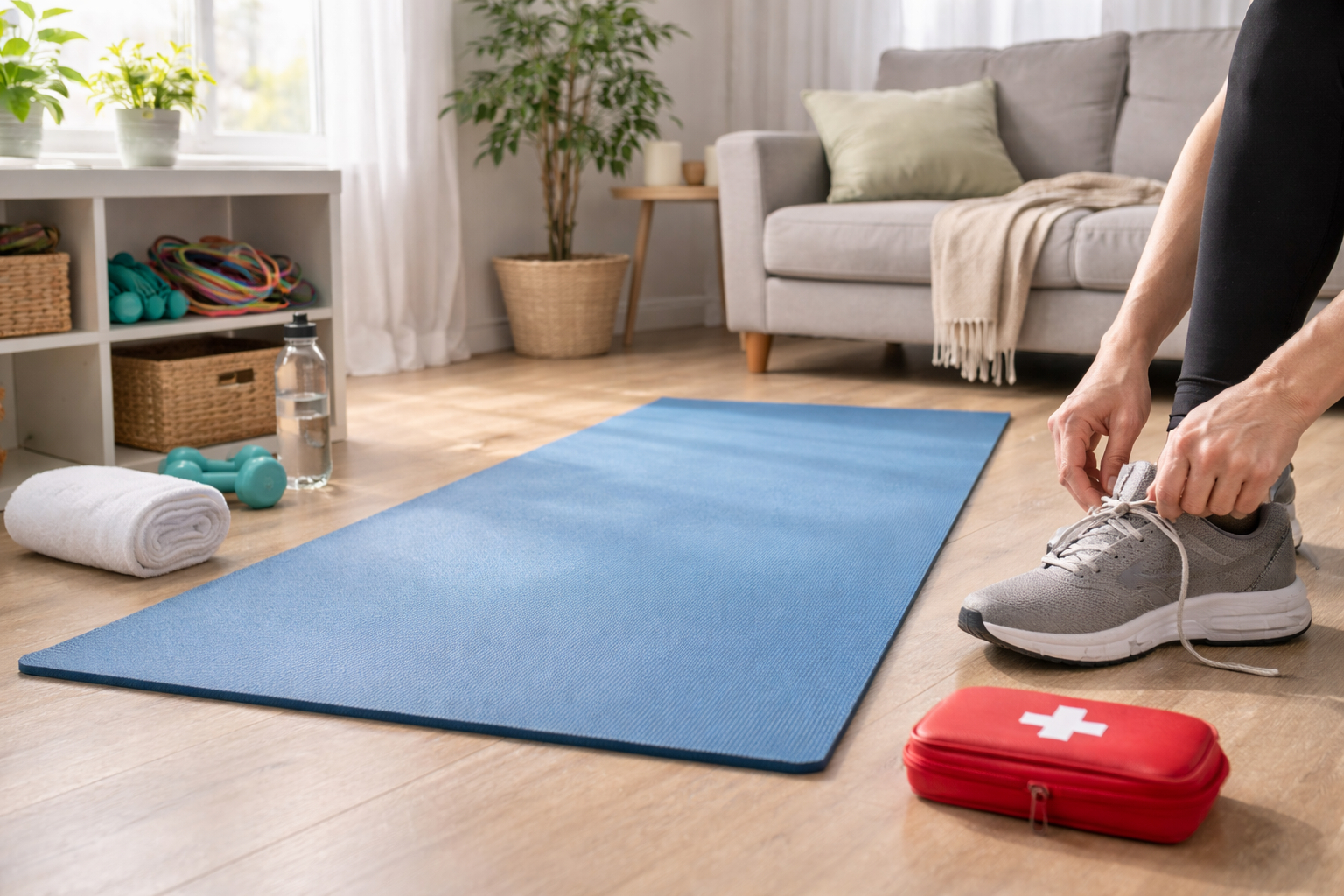
Begin by evaluating the area where you plan to exercise, ensuring adequate space and stable flooring. Remove tripping hazards, secure rugs, and position yourself away from furniture edges or sharp corners. Pay attention to lighting and ventilation so movements are performed with clear visibility and comfortable airflow. Small adjustments to the environment can markedly reduce the risk of falls and collisions.
Consistency in checking the environment before each session builds a safer routine and helps prevent accidents. Make a quick pre-workout scan a habit to sustain safe practices over time.
Choose and Maintain Appropriate Equipment
Select equipment that matches your fitness level and the intended exercises, prioritizing items with clear safety features and stable construction. For resistance bands, inspect for fraying; for weights, confirm secure grips and intact collars; for cardio machines, follow manufacturer setup and clearance recommendations. Proper footwear and comfortable, non-restrictive clothing also support balance and joint protection during activity. When equipment is used correctly, it enhances effectiveness while lowering injury risk.
- Inspect gear regularly for wear and damage.
- Store equipment safely to avoid clutter and hazards.
Routine maintenance and sensible storage extend equipment life and keep your exercise area functional. Replace or repair items that show signs of compromise.
Warm-up, Technique, and Progression
Start every session with a brief warm-up that raises heart rate and mobilizes major joints to prepare tissues for exertion. Focus on proper technique over intensity; efficient movement patterns reduce undue stress on muscles and joints. Increase load, duration, or complexity gradually to allow adaptation and minimize overuse injuries. Incorporate cool-down and basic stretching at the end of workouts to aid recovery.
Consider guided tutorials or certified instruction when learning new movements to reinforce safe mechanics. Progress measuredly and listen to your body’s signals.
Recognize Warning Signs and When to Pause
Know the difference between expected discomfort from effort and pain that signals injury; sharp, sudden, or unusual pain warrants immediate cessation. Watch for symptoms such as dizziness, chest tightness, joint swelling, or persistent breathlessness, which indicate the need to stop and seek evaluation. Keep a plan for emergencies, including accessible contact numbers and a clear path for first aid if needed. Awareness and timely response prevent minor problems from becoming more serious.
When in doubt, reduce intensity and consult a qualified professional for assessment and tailored guidance. Prioritizing safety preserves the ability to exercise consistently.
Conclusion
Adopting these practical safety measures makes home exercise more sustainable and reduces injury risk. Simple habits—environment checks, correct equipment use, proper technique, and attention to warning signs—offer strong protection. Integrating them into your routine supports long-term health and confidence while exercising at home.