

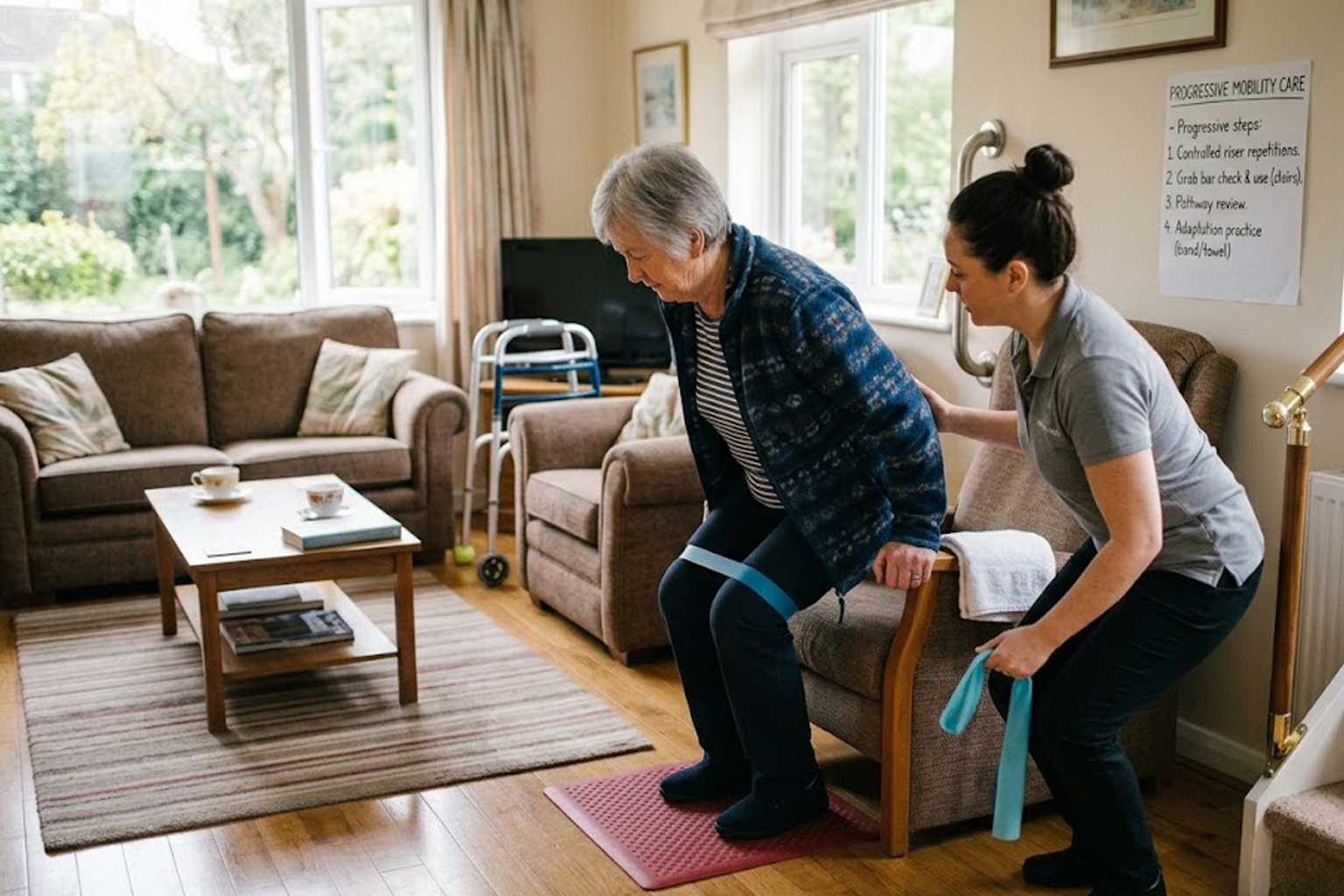
Recovering mobility at home requires planning, patience, and realistic goals.
Small, consistent steps reduce risk and build confidence as strength returns.
This guide outlines practical strategies to progress safely in everyday movement.
Use it alongside professional advice tailored to your condition and pace.
Begin With a Clear Assessment
Start by evaluating current abilities: balance, range of motion, pain levels, and endurance. Keep a simple log of how long activities take and what triggers fatigue. Note environmental barriers in common areas like bathrooms and stairs. This baseline makes it easier to set realistic short-term targets and measure progress.
Consider consulting a physical therapist for a focused assessment and safe targets. Their input can prevent setbacks and speed purposeful recovery.
Designing Progressive Daily Movement
Structure short sessions of focused movement several times a day rather than long workouts. Start with gentle range-of-motion and weight-bearing tasks, gradually increasing repetitions. Prioritize functional tasks like sit-to-stand, stair stepping, and controlled walking. Incorporate breathing and posture checks to support stability and reduce compensations.
Progress slowly: increase challenge only when tasks feel consistently manageable. Track perceived exertion to avoid overloading healing tissues.
Optimize Your Home Environment
Small modifications reduce risk: secure rugs, improve lighting, and add grab points where needed. Rearrange daily essentials to minimize unnecessary bending, twisting, or reaching. Consider temporary aids such as shower chairs, non-slip mats, or a bedside commode. These changes help practice mobility safely while independence improves.
Prioritize solutions that match your current function and can be adjusted as you progress. Removing hazards often produces immediate gains in confidence.
Monitoring Progress and Seeking Support
Use simple metrics: step counts, timed walks, pain-free repetitions, or daily activity logs. Celebrate small achievements and adjust goals monthly based on performance and symptoms. When pain increases, swelling appears, or progress stalls, reach out to a clinician promptly. Social support or supervised sessions can boost adherence and correct form for safer gains.
A steady, monitored approach reduces the chance of setbacks. Combining self-management with professional guidance yields the best outcomes.
Consistency and Adapting Over Time
Establish a simple routine anchored to daily activities like morning grooming or evening walks. Use reminders, habit stacking, and modest rewards to maintain consistency without pressure. Reassess goals every few weeks and be prepared to modify intensity when life or symptoms change.
Flexibility in planning helps sustain progress long term. Small, repeated efforts often outpace sporadic intense sessions.
Conclusion
Steady, incremental home strategies restore strength, balance, and confidence.
Start with assessment, progress deliberately, adapt your environment, and monitor consistently.
With patience and appropriate support, everyday mobility can improve safely.










