Recovering mobility at home is a gradual process that balances safe activity with consistent progress. Establishing routines, adapting the environment, and listening to your body help rebuild strength and confidence. Small, repeatable habits reduce risk and make daily tasks easier over time. This article outlines practical steps to structure recovery-focused movement at home.
Begin with modest goals and adjust as your capacity improves. Consistency matters more than intensity in early stages.
Assessing Your Starting Point
Before increasing activity, take stock of current abilities and limitations in a calm, objective way. Note pain levels, balance challenges, endurance, and any restrictions from recent treatment or advice from clinicians. Track simple metrics like how far you can walk, how many steps you tolerate, or how long you can stand without support. Use these observations to shape realistic, measurable short-term goals.
Regular reassessment every few days or weeks ensures your plan remains appropriate. Small data points guide safe progression without overexertion.
Structuring Progressive Movement Sessions
Create brief, focused sessions that combine mobility, strength, and balance tasks tailored to your current state. Start with gentle range-of-motion and flexibility exercises for warm-up, add short bouts of strengthening using body weight or light resistance, then finish with balance and controlled breathing. Keep sessions short—often 10 to 20 minutes—and repeat two to four times daily as tolerated. Incrementally increase repetitions, duration, or complexity based on comfort and observable improvement.
Consistency and gradual increases reduce setbacks and support steady gains. Prioritize quality of movement over speed or quantity.
Adapting the Home Environment
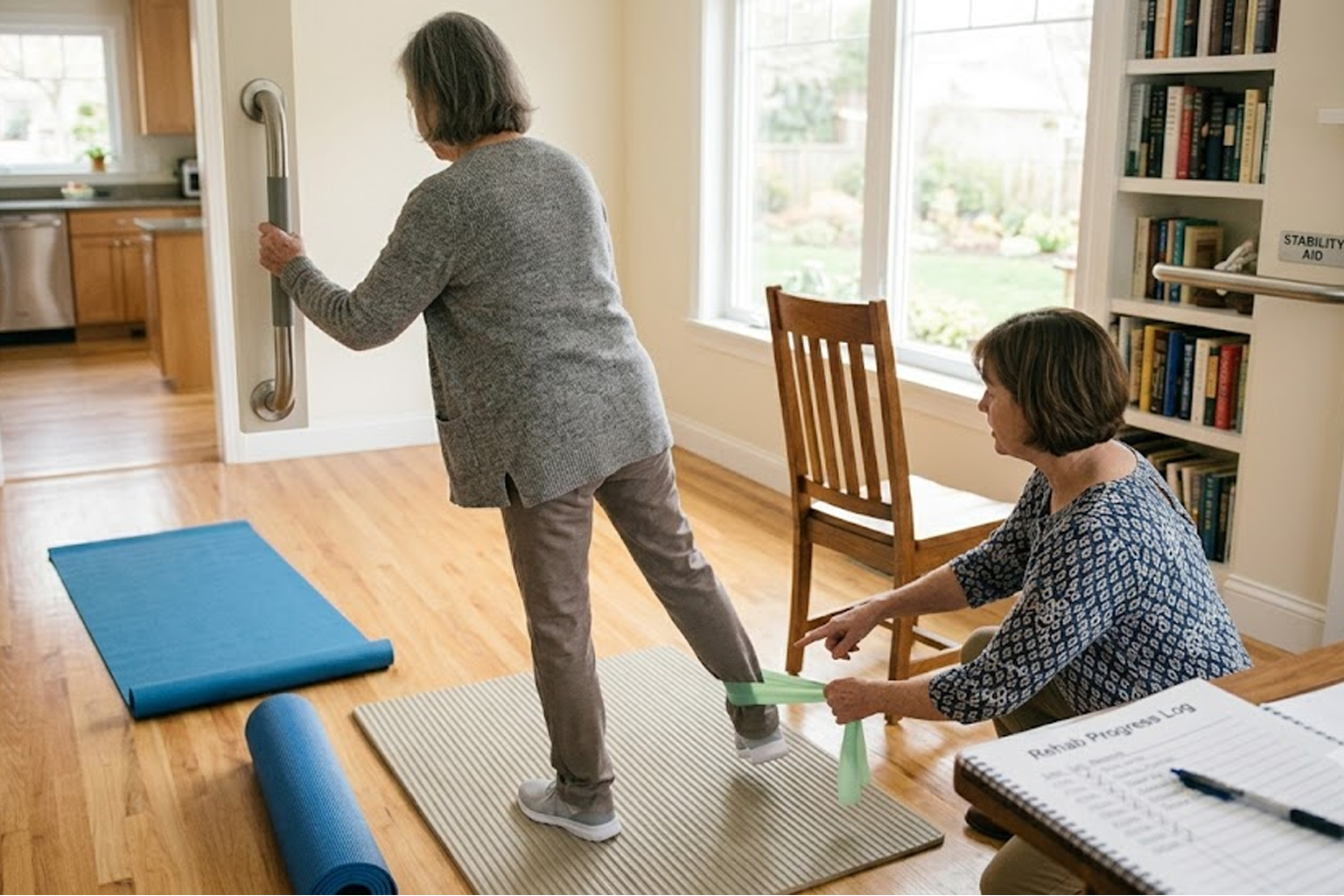
Modify commonly used spaces to reduce barriers and encourage safe practice throughout the day. Ensure clear walkways, stable seating at key locations, and non-slip surfaces in high-risk areas. Place frequently used items within easy reach and add simple supports like grab bars or sturdy chairs near practice zones. Environmental tweaks remove friction and make it easier to choose movement over prolonged immobility.
- Clear rugs and cords from walking paths.
- Use night lighting for safe evening mobility.
- Create a dedicated area for exercises with a stable chair and mat.
Small changes have outsized effects on daily safety and independence. They also help maintain momentum by making practice convenient.
Monitoring Progress and Safety Cues
Track improvements and warning signs by keeping a short daily log of activities, symptoms, and recovery notes. Note factors like increased fatigue, swelling, or new pain and adjust your plan accordingly. If you observe persistent negative signs, pause progression and seek advice from a healthcare professional. Celebrate incremental wins to maintain motivation and resilience through the recovery journey.
Objective tracking and attention to symptoms protect progress while supporting confidence. Use what you learn to refine goals and routines.
Conclusion
Recovery at home is achievable through small, consistent practices that prioritize safety and steady progression. Adapt your environment, structure short movement sessions, and monitor responses to guide improvement. With patience and practical adjustments, you can rebuild movement and independence over time.