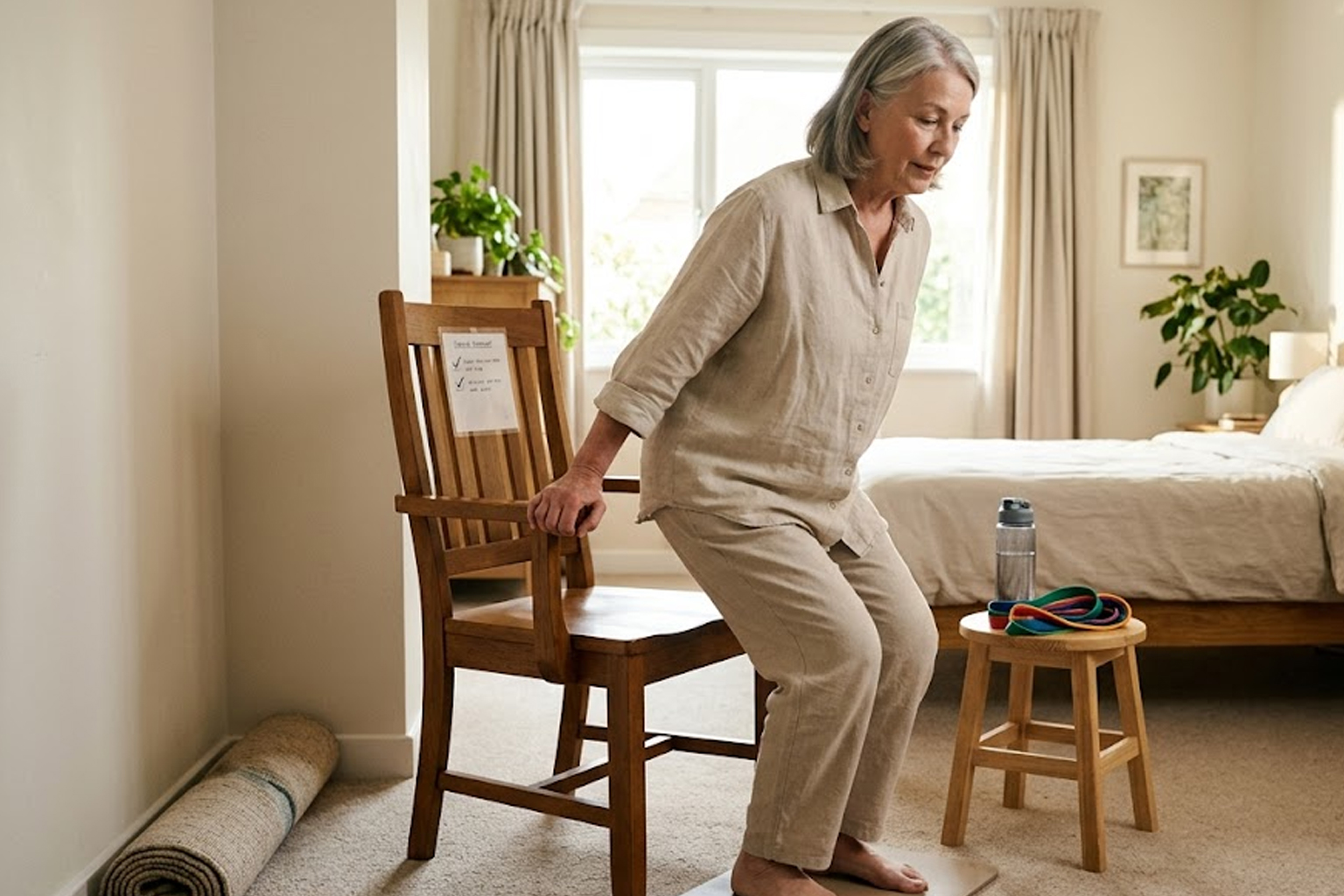
Recovering movement after medical treatment asks for patience and purpose. Small, repeatable habits matter more than long workouts in the early stages. Focus on stability, controlled range, and short practice rather than pushing through discomfort. These approaches help preserve function while protecting healing tissues.
Start Small and Specific
Begin with focused, short sessions that target everyday tasks you want to reclaim. Choose two or three movements—standing from a chair, a controlled step, or reaching overhead—and repeat them in brief sets to build consistency. Aim for quality: steady tempo, clear alignment, and a few deliberate breaths with each rep. Short sessions lower fatigue and make progress measurable over days rather than weeks.
Keep a simple checklist by a chair or on the phone to track which actions you practiced. This makes it easier to notice small wins and keeps routine manageable without overwhelming energy reserves.
Prioritize Pain-Guided Progress
Let sensation guide how much to do, not a preset number or a clock. Sharp or unusual pain is a signal to stop or regress; mild, familiar soreness can be part of rebuilding strength. Use gradual overload: increase repetitions, range, or resistance by tiny increments each few days. This slow progression reduces setbacks and builds confidence in your body’s capacity.
Document how each movement feels after a session so you can adjust intensity the next time. That record prevents repeating what hurt and reinforces what helped.
Make Your Space an Ally
Adapt the immediate environment to support safer practice and daily function. Keep seating at a comfortable height, tuck rugs that trip, and place commonly used items within easy reach to reduce strain. Good lighting and clear walking paths cut down balance demands and help you focus on technique. Small changes remove obstacles and create consistent opportunities to practice.
Combine environmental tweaks with simple equipment—like a stable chair or a non-slip mat—to enhance practice without complicating routines. The fewer barriers, the more likely the habits stick.
Conclusion
Respecting healing with gentle, repeatable movement builds durable progress over time. Track sensations and small gains, and adjust your plan according to how your body responds. Consistent, cautious practice wins more often than occasional effort pushed too hard.