Recovery after treatment often feels uncertain, and small wins matter more than dramatic leaps. Establishing clear, manageable checkpoints at home can keep progress steady without overwhelming the body or the schedule. This approach favors repetition, modest increase, and attention to how each day feels. Over time, these steady steps rebuild capacity and confidence.
Set clear, achievable checkpoints
Begin by choosing two or three simple goals that fit into daily life, such as standing for a few minutes while making tea or walking to the mailbox and back. Frame each checkpoint in specific, observable terms so you can track them and notice improvement. Keep expectations conservative: the intent is consistency rather than intensity, and missing a target should be viewed as data, not failure. Reassess weekly and adjust duration or repetitions by a small margin when the current level feels comfortable.
Write checkpoints on a visible list and celebrate when you hit them, even with small acknowledgments. This structure reduces guesswork and makes progress obvious.
Keep sessions short and focused
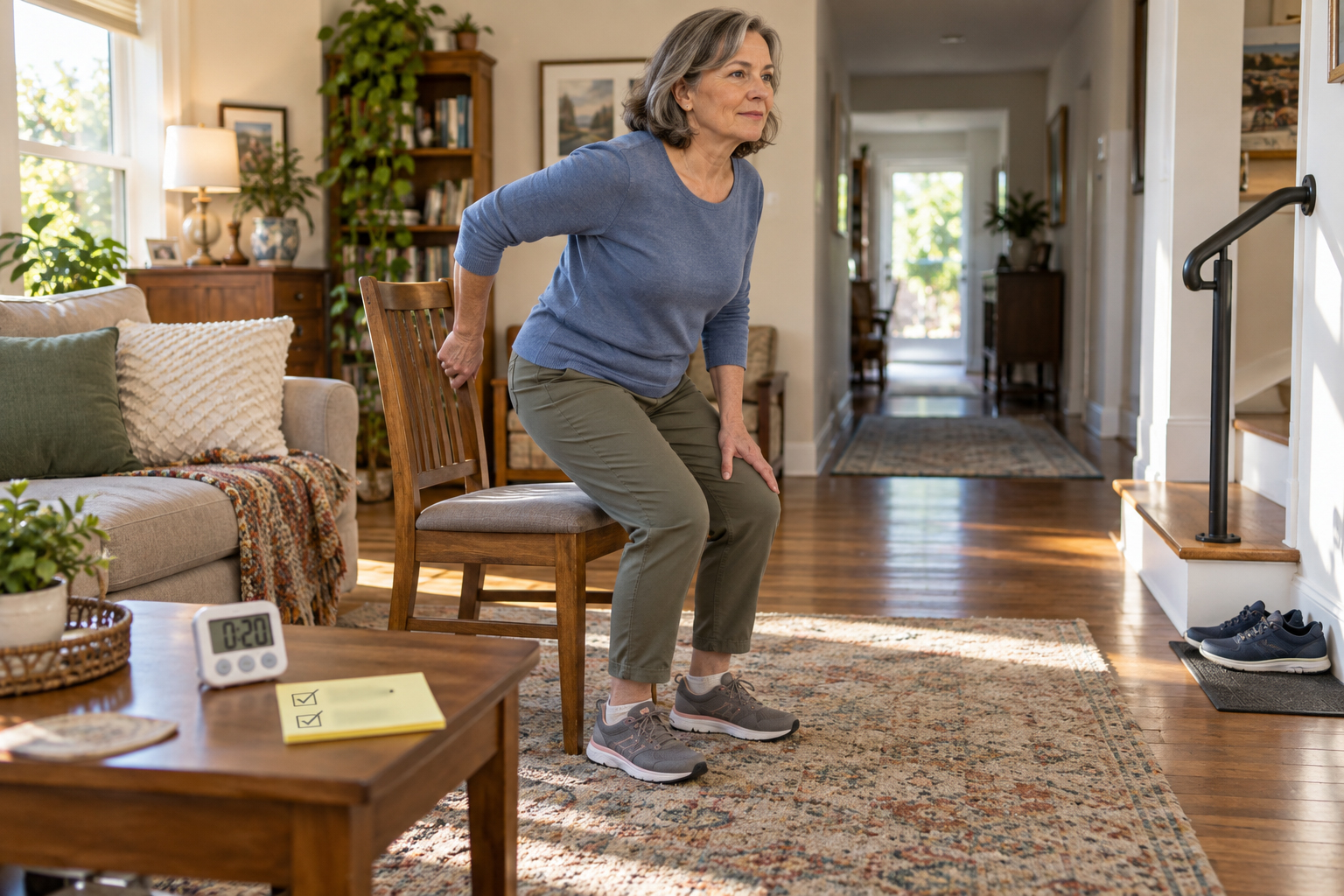
Short sessions reduce fatigue and lower the chance of overdoing it while still delivering meaningful stimulus to muscles and balance systems. Aim for multiple two- to ten-minute micro-sessions spread through the day instead of one long effort, and include a brief warm-up movement to prepare the body. Choose movements that mirror daily tasks—sit-to-stand, gentle heel raises, or controlled steps up a single stair—to build functional capacity. Track perceived exertion rather than pushing to pain; steady, comfortable challenge is what helps adaptation.
Consistency wins over occasional intensity, so schedule sessions like any other appointment. Repeating small, purposeful efforts creates lasting improvements without demanding big blocks of time.
Make the home movement-friendly
Small environmental changes pay off: clear a safe walking path in the living room, add a stable chair near areas you stand, and place commonly used items within easy reach so movement stays practical. These adjustments remove friction and reduce the risk of trips or awkward motions that can stall recovery. Lighting, non-slip rugs, and a simple grab point near steps or the tub all support safer daily movement. Think of the home as an ally that invites short, regular practice rather than a barrier to it.
- Keep shoes accessible and supportive.
- Store frequently used items at waist height.
- Use a timer to prompt micro-sessions.
Small changes in the environment make it easier to meet checkpoints and help you preserve energy. They turn intention into habit by making safer choices the obvious ones.
Conclusion
Start with tiny, trackable checkpoints and build from there. Favor short, frequent sessions and simple home tweaks that support regular movement. Over weeks, these habits add up into meaningful recovery gains.