Regular home exercise delivers clear health benefits, but it also introduces potential injury and care needs that intersect with your medical insurance. Reviewing how a policy responds to sprains, acute strains, telehealth consults, and rehabilitative care helps you avoid surprises when you need treatment. This article outlines practical steps to interpret coverage, document incidents, and reduce out-of-pocket costs after a home workout injury. Use these insights to make informed choices about plans and everyday safety practices.
Taking time to understand policy language now can speed care later and protect your finances. Small documentation habits and a basic claims plan make a measurable difference.
Know What Your Policy Actually Covers
Start by identifying core categories: emergency services, urgent care, primary care, telehealth, physical therapy, and durable medical equipment. Pay attention to network restrictions and prior-authorization requirements that affect where you can seek care and which services are covered. Also review copays, deductibles, and any rehabilitation day limits that could apply after an injury. If the policy includes telehealth benefits, note whether initial consultations or follow-up therapy sessions qualify for lower cost-sharing.
Comparing these elements side-by-side for current and alternative plans clarifies gaps and trade-offs. Keep a concise summary of key limits you are likely to encounter.
Documenting Incidents and Care
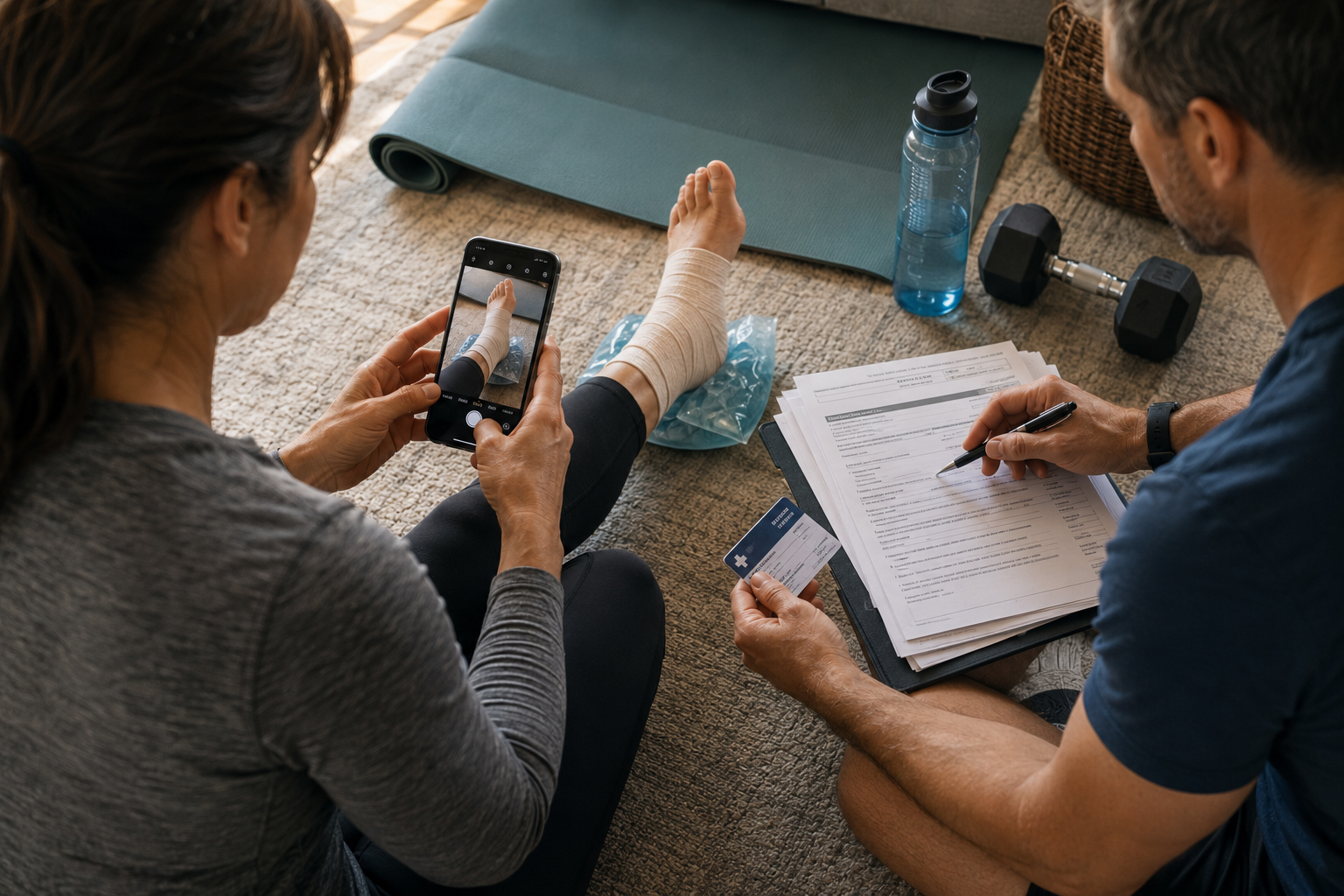
Accurate documentation helps claims and appeals. Record the date, time, activity, and circumstances of the incident, and take photographs of visible injuries or the equipment area when relevant. Save receipts for any immediate care, transport, or interim treatments and obtain medical notes that describe diagnosis and recommended follow-up care.
- Incident summary with timestamps.
- Photos of the scene and injury.
- Receipts, provider notes, and referral paperwork.
Consistent records reduce friction with insurers and speed reimbursement. Share organized documentation with your provider when filing claims.
Practical Steps to Reduce Costs and Hassles
Before an incident, verify in-network urgent care options and telehealth availability so you can select lower-cost entry points for treatment. Ask your primary care provider how to coordinate referrals for imaging or rehabilitation to avoid surprise denials. Consider adjusting elective plan features—like copays and out-of-pocket maximums—only if the change aligns with your typical care utilization and budget.
Finally, maintain routine equipment checks and basic first-aid training to prevent common incidents. Prevention coupled with an organized claims approach will limit disruptions from most workout-related injuries.
Conclusion
Understanding policy details, documenting incidents carefully, and planning cost-saving care pathways strengthen your preparedness for home exercise injuries. These practical steps reduce surprises and help you access timely treatment. Take small proactive actions now to protect your health and finances.