Health emergencies can strike at any time, and medical expenses often come unexpectedly. That’s why health insurance is so important. Among the many options available, family floater insurance has become popular for those who want to cover their entire family under a single plan. But is it the right choice for you? Let’s break it down.
What Is Family Floater Insurance?
A family floater plan is a type of health insurance where one sum insured covers all family members. Instead of buying individual policies, the coverage is shared among everyone included in the plan—usually the policyholder, spouse, and dependent children (sometimes even parents).
Example: If you have a family floater with a sum insured of ₹10 lakh, all family members collectively share this coverage.
Benefits of Family Floater Insurance
-
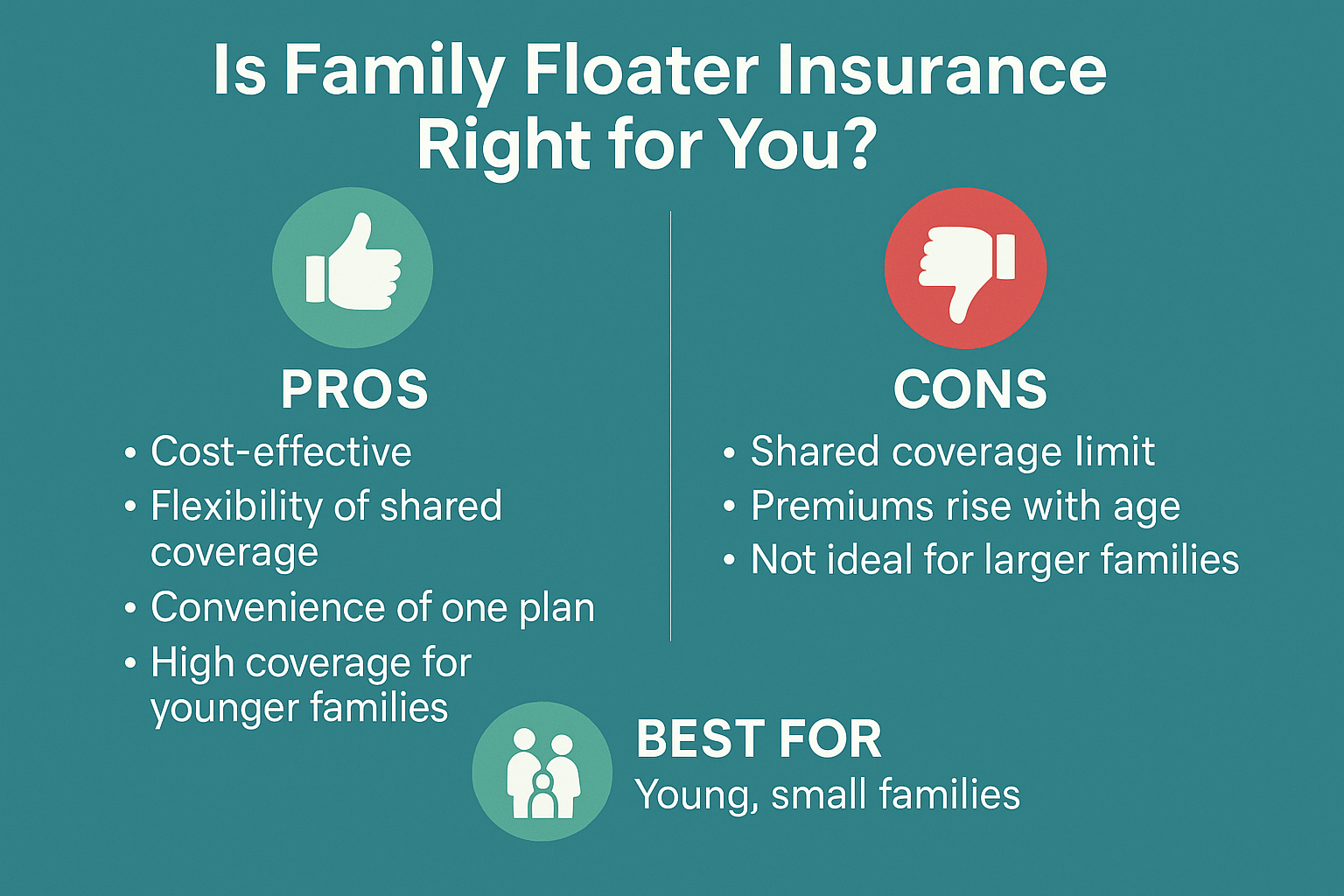
Cost-Effective
Buying one family floater policy is usually cheaper than buying separate individual policies for each member. -
Flexibility
Any member can use the sum insured, depending on who needs medical treatment. -
Convenience
Managing a single plan (renewals, premium payments, paperwork) is easier than handling multiple policies. -
High Coverage for Younger Families
Since younger family members are generally healthier, the risk is lower, making premiums more affordable.
Drawbacks to Consider
-
Shared Coverage
If multiple family members fall sick in the same year, the coverage might get exhausted quickly. -
Premiums Rise with Age
The premium is calculated based on the age of the oldest insured person. Adding elderly parents can significantly increase costs. -
Not Always Suitable for Larger Families
In bigger families with higher health risks, individual policies might provide better security.
Who Should Opt for Family Floater Insurance?
-
Ideal for: Young couples or nuclear families with dependent children.
-
Avoid if: You want to cover elderly parents or have family members with high medical needs—individual policies may be safer.
Final Thoughts
Family floater insurance is a smart, affordable choice for small, young families who want the simplicity of one plan and the flexibility of shared coverage. However, it may not be the best fit for larger families or those with elderly members.