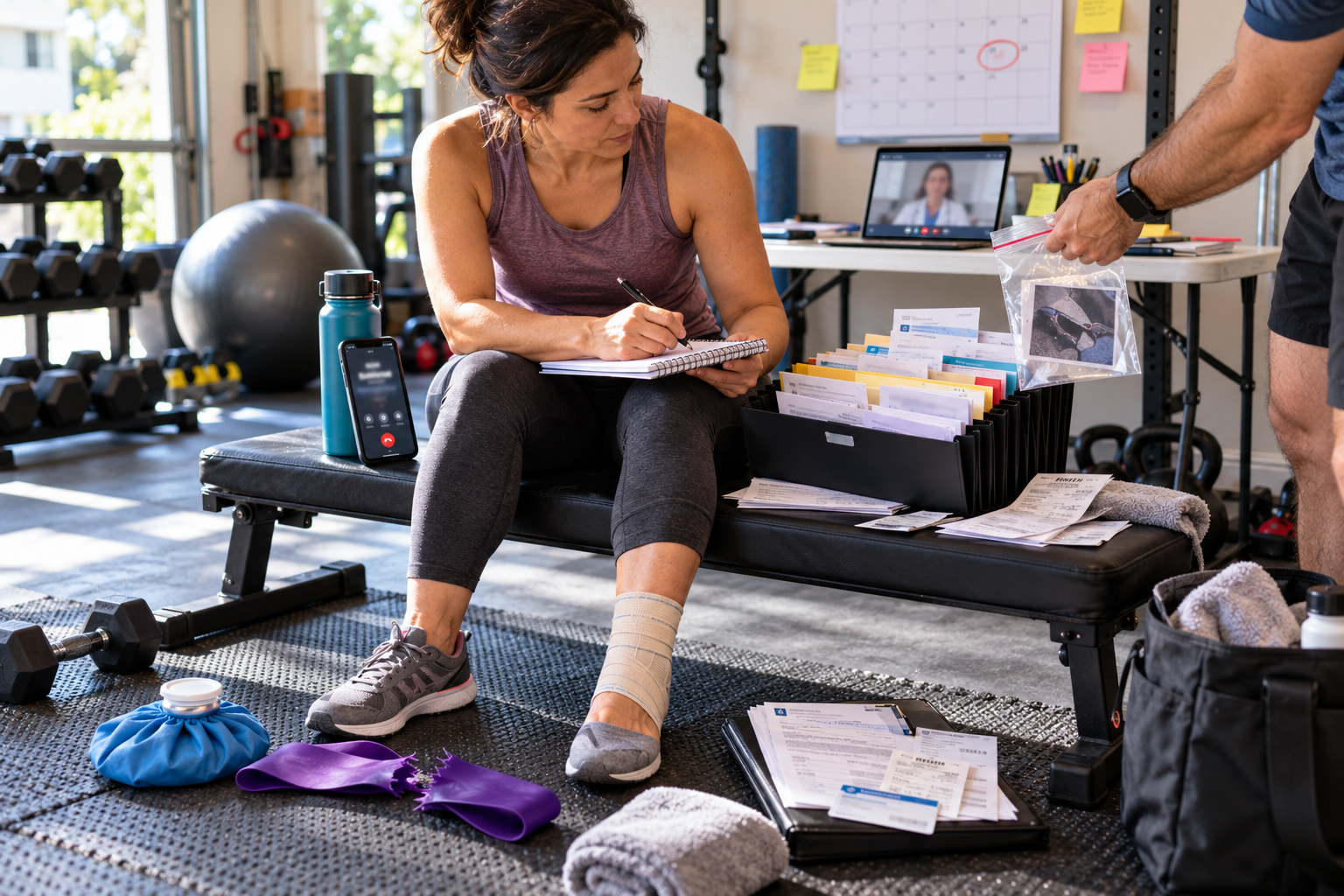
Setting up a home gym is empowering, but an injury can turn routine sweat time into an insurance headache. Before you need care, it helps to know what your plan covers and which bills fall on you. This short guide explains practical steps to reduce surprises and speed up any claim. Keep these tips handy so a single misstep doesn’t become weeks of calls and confusion.
Right After an Injury
Start by getting the level of care the injury needs — urgent care, primary care, or emergency services — and keep receipts and diagnosis notes. Document what happened with timestamps and photos of the scene and the equipment involved. Call your insurer’s non-emergency line to verify how they classify the visit and whether preauthorization is required for imaging or specialist referrals. That initial call won’t guarantee coverage, but it frames the claim correctly and gives you immediate next steps.
Keep copies of every document you receive, and ask providers for itemized bills. These documents make appeals and bill negotiations far easier if coverage is limited or denied.
Know What Your Plan Pays For
Health plans vary on in-network rules, deductibles, copays, and therapy or durable medical equipment benefits — all things that commonly affect home gym injury costs. Check whether physical therapy sessions, braces, or prosthetics require prior authorization and whether telehealth follow-ups are covered. Understand out-of-network penalties and whether an in-network referral is necessary for specialists. Knowing typical cost-sharing for these services helps you choose care that keeps bills manageable.
- Deductible and out-of-pocket max — how close are you?
- Network restrictions — will providers be in-network?
- Rehab limits — number of PT visits covered and authorization rules.
Write down plan phone numbers, claim submission addresses, and any reference numbers from earlier calls. This record speeds up future conversations and clarifies coverage limits when decisions about care arise.
Filing the Claim and Following Up
Submit claims promptly and include supporting documents: visit notes, imaging reports, photos, and receipts. If a claim is denied, ask for a written explanation and the exact reason for denial so you can address it directly. Keep a log of every call with dates, names, and what was said to build a clear timeline. If needed, request an internal review before escalating to formal appeal processes your plan outlines.
When bills arrive, compare them to your Explanation of Benefits and dispute discrepancies with both the provider and insurer. Persistence and organized records often recover mistakes or reduce out-of-pocket responsibility.
Conclusion
Small preparation prevents big surprises when an at-home workout goes wrong. Know your plan’s limits, keep meticulous records, and act quickly after an injury. Those three habits will protect both your health and your finances.