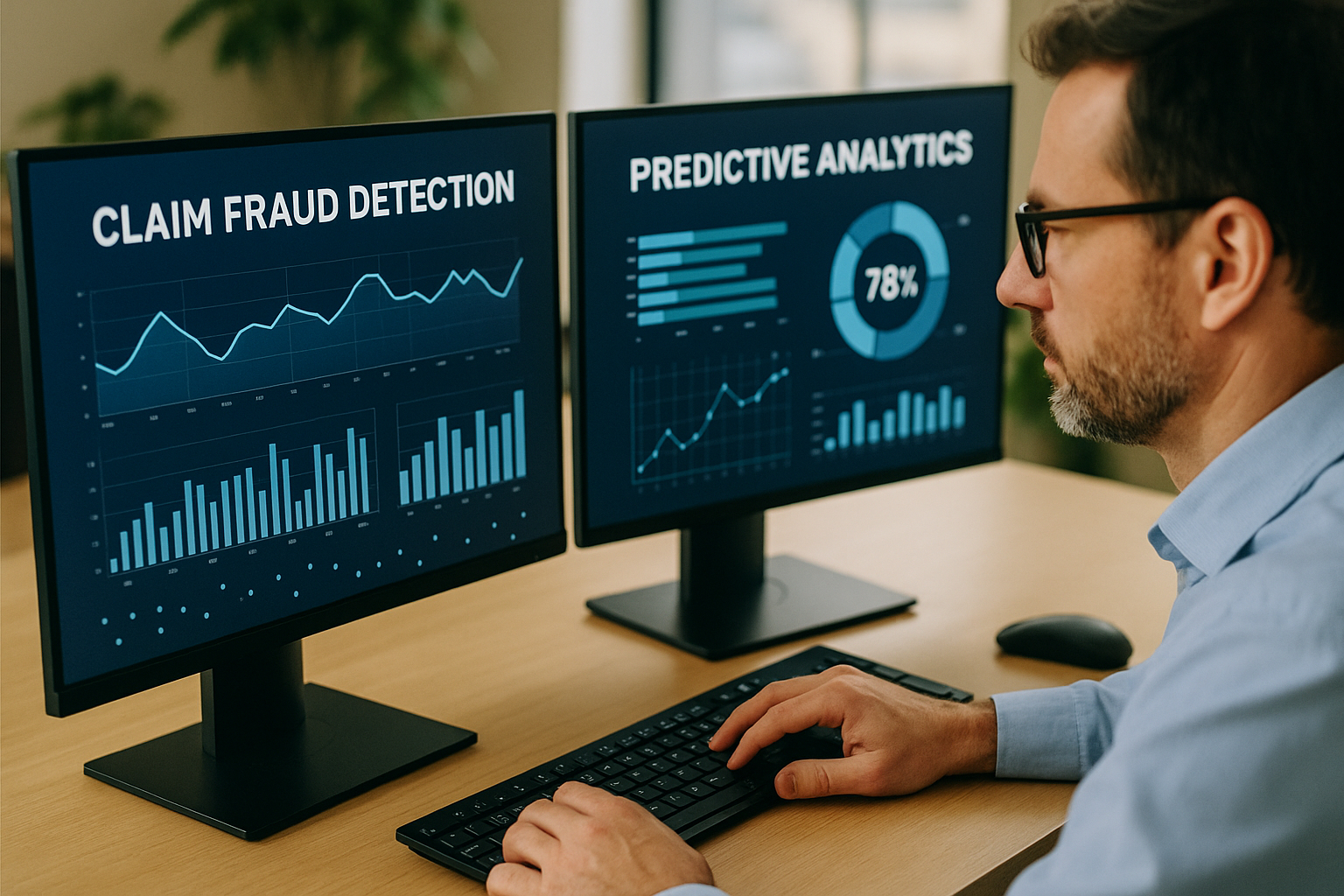
AI-driven predictive analytics is transforming the insurance industry by offering faster, smarter, and more reliable ways to detect fraudulent claims. Traditional fraud detection methods often rely on manual reviews, historical patterns, and time-consuming investigations. Today, AI brings real-time analysis, automated alerts, and deep insights that help insurers identify suspicious activity before it becomes costly. As fraud schemes grow more sophisticated, predictive analytics has become a powerful tool for protecting both insurers and honest policyholders.
Identifying Fraud Patterns With Real-Time Insights
AI systems can analyze thousands of data points instantly—far beyond human capability. These tools detect unusual patterns, inconsistent behaviors, and red flags across claims data. Whether it’s repeated submissions, inflated losses, or mismatched documentation, predictive analytics flags anomalies within seconds. This real-time detection helps insurers react quickly and prevent fraudulent payouts before they occur.
Strengthening Accuracy With Machine Learning Models
Machine learning models continuously improve as they process new information. Instead of relying solely on historical cases, they learn from ongoing claim trends, emerging fraud tactics, and behavioral data. Over time, these models become more accurate, reducing false positives and ensuring genuine claims are processed smoothly. This adaptability allows insurers to stay ahead of evolving fraud methods and maintain strong protection for customers.
Enhancing Investigations With Risk Scoring
AI assigns risk scores to incoming claims, highlighting which ones need deeper investigation. High-risk claims may be routed to specialized teams, while low-risk cases can be approved more efficiently. This prioritization saves time, reduces operational costs, and improves overall decision-making. By focusing resources on the most suspicious activities, insurers boost their efficiency while maintaining fairness.
Improving Customer Trust and Transparency
Predictive analytics doesn’t just protect insurers—it protects customers, too. Faster claim approvals, fewer delays, and reduced instances of fraud create a better experience for policyholders. When insurers use advanced tools to safeguard their systems, customers can feel confident that their premiums support legitimate claims and not fraudulent losses. This builds long-term trust and strengthens the insurer–customer relationship.
Conclusion
AI predictive analytics is redefining how insurers detect and prevent claim fraud. With real-time analysis, machine learning improvements, and smart risk scoring, insurers can protect their operations and deliver a smoother experience for honest customers. As technology continues to advance, predictive analytics will remain a vital tool in creating a more secure, transparent, and reliable insurance ecosystem.