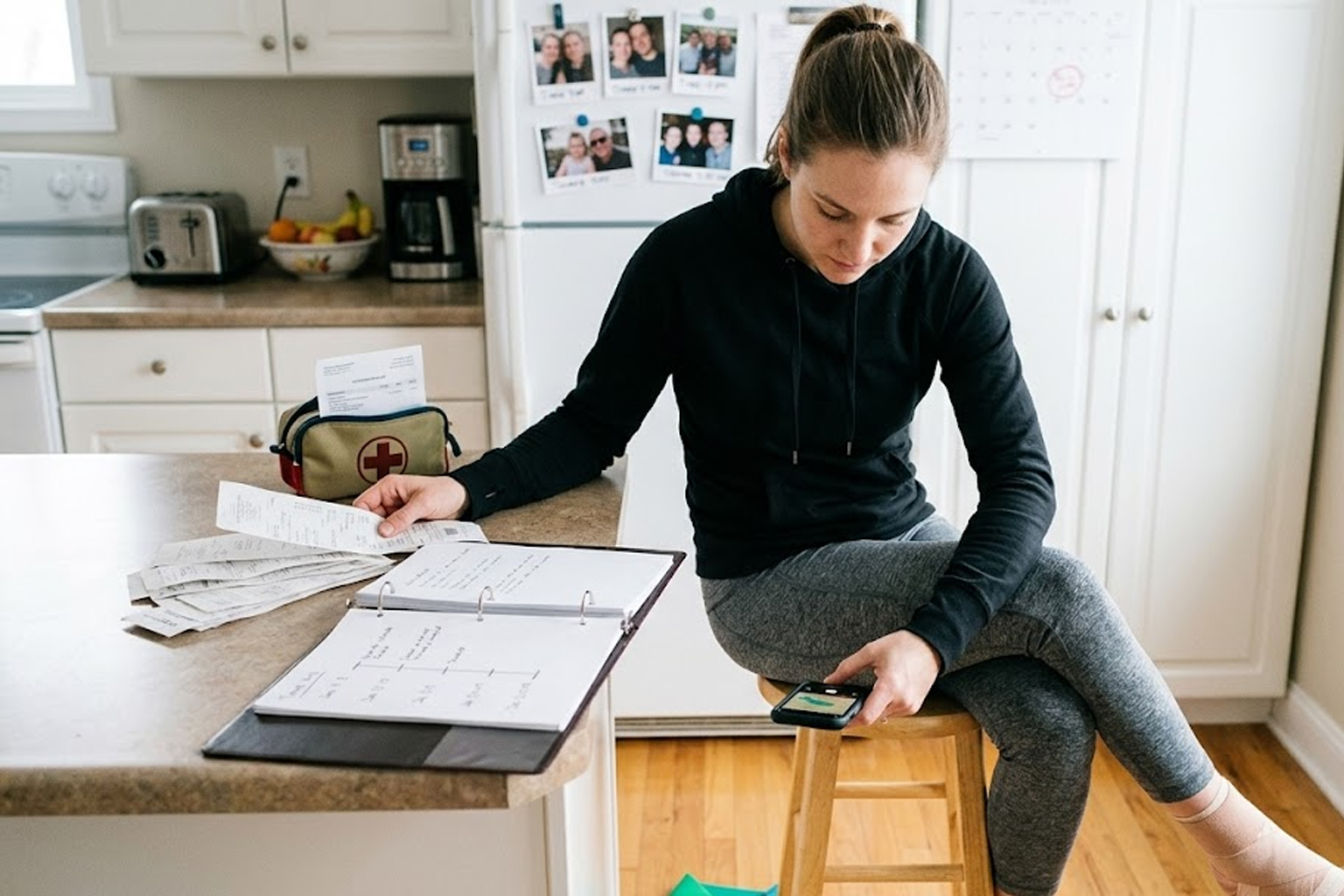
Getting hurt during a home exercise session is unsettling, and the paperwork that follows can feel worse than the injury. This guide breaks the process into clear, practical steps so you can focus on recovery while protecting your finances. Follow a few simple documentation and communication habits and you’ll reduce delays and increase the odds of a successful claim. The goal is to turn a chaotic episode into an organized sequence that insurers can evaluate efficiently.
Immediate actions after an injury
Right after an incident, prioritize health first: seek emergency care if needed, or schedule an appointment with a primary care provider within a day or two. Take photographs of the scene, any damaged equipment, and visible injuries; timestamped images are especially useful. Record the names and contact details of any witnesses and jot down how the injury happened while the details are fresh. These steps create a credible, time-stamped narrative that insurers look for when assessing causation and responsibility.
Keep receipts and invoices from every visit, test, or medication, even for telehealth consultations or over-the-counter purchases. Store digital copies in a single folder — most insurers accept emailed or uploaded documents when you file a claim.
Gathering and organizing evidence
Beyond photos and witness notes, assemble medical notes, imaging reports, and any referrals or recommendations for rehab. A well-organized claim packet shows the chronology: incident date, first treatment, follow-up care, and ongoing needs. Summarize the timeline in a brief cover letter for the insurer that points to each document by name and date; this small step reduces back-and-forth and clarifies your case. Clear labeling and a short index make review faster for claims adjusters.
- Incident note: date, time, brief description
- Medical records: provider names and dates
- Receipts: all medical and equipment-related costs
- Photos: scene, equipment, injuries (timestamped)
Keep originals and make multiple digital copies; upload one set to your insurer portal and email another to yourself for redundancy.
Working with insurers and providers
Notify your insurer promptly according to policy timelines and be prepared to provide the organized packet you created. When speaking with adjusters, stick to facts: dates, names, and brief descriptions — avoid speculation about fault. Ask which forms or authorizations the insurer needs, and obtain prior authorization for services that require it, such as specialist visits or extended physical therapy. If a claim is denied, request a written explanation and the appeals process timeline so you can respond in an informed way.
Maintain polite, concise records of every call or correspondence including date, representative name, and summary. Those notes can be valuable during appeals or when clarifying billing disputes with providers.
Conclusion
Organize early, document thoroughly, and communicate clearly with both providers and your insurer to smooth the path from treatment to payment. Small habits—timestamped photos, a simple timeline, and prompt notifications—cut processing time and reduce disputes. With preparation you protect your recovery and your wallet when at-home exercise goes wrong.