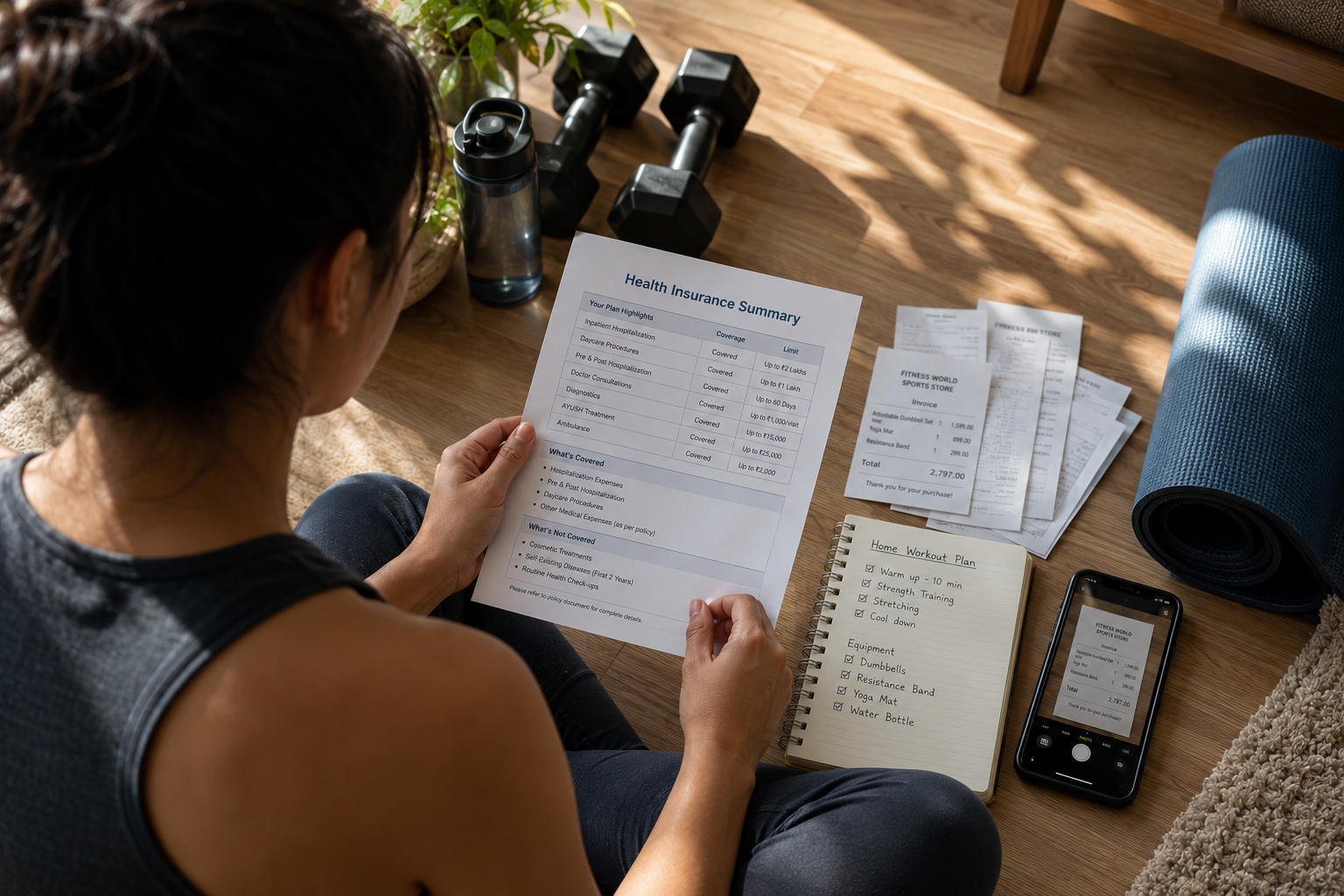
Before launching a home fitness routine, a focused review of your health insurance reduces surprises and helps protect your finances. A quick policy check clarifies what types of care are covered if an injury or strain occurs during exercise. Prioritize understanding emergency care, outpatient visits, rehabilitation services, and durable medical equipment provisions. Taking a few practical steps now gives you confidence to build a safe plan and avoid later delays or unexpected bills.
Assess Your Current Policy
Start by locating your primary policy documents, benefits summary, and any recent plan updates so you know the baseline coverage. Note deductible levels, network restrictions, copay structures, and whether telehealth options or urgent care clinics affect out-of-pocket costs. Identify preauthorization requirements for imaging, specialist referrals, or extended therapy so you can avoid claim denials. Also check whether accident riders or supplemental plans are already part of your coverage package.
- Find member ID, plan year limits, and contact numbers for customer service.
- Keep PDF copies of your Summary of Benefits for quick reference.
If wording seems unclear, call member services and request written confirmation of verbal answers. Keep a dated note of that conversation and the representative’s name for future reference.
Understand Coverage Limits and Exclusions
Exclusions and benefit caps determine whether workout-related incidents are paid and how much you will owe. Look for common exclusions such as activities deemed high risk or treatments labeled elective; these may affect claims after a home exercise injury. Check limits on physical therapy visits, coverage for prosthetics or bracing, and whether diagnostic imaging has separate authorization steps. Reviewing these limits lets you choose safer activities and estimate potential out-of-pocket costs if treatment is needed.
- Common items to review: therapy session caps, per-incident maximums, and excluded services.
- Note any preexisting condition clauses that could influence eligibility for coverage.
If you identify significant gaps, compare the cost and benefit of adding a rider or a short-term accident policy. Balance premium increases against likely needs based on your exercise intensity and equipment.
Document Risks and Prepare to File Claims
Good documentation accelerates claims and reduces disputes when a covered event occurs. Keep a simple workout log that records dates, activities, and when any symptoms first appeared, and preserve receipts for equipment, trainer sessions, and medical visits. Photograph visible injuries and save copies of clinician notes and test results to support a claim or appeal. Organized records help member services verify incident timelines and make the claims process smoother.
- What to include: dates, locations, witnesses, and receipts.
- Store digital copies with timestamps in a secure folder for easy retrieval.
When filing, submit all supporting documents promptly and follow up in writing if any information is requested. Clear records reduce the chance of delays or denials and improve the outcome of appeals.
Conclusion
Reviewing your insurance before starting home fitness is a practical step that lowers financial risk and builds confidence. Simple actions—calling member services, documenting conversations, and keeping receipts—can protect your recovery options and avoid surprises. Make policy review a routine part of planning your workouts as your routine or equipment changes.