Making healthier meals at home doesn’t require a rigid plan or fancy ingredients. Small, intentional adjustments can improve nutrition, save time, and support fitness goals without adding stress. This article outlines practical tips for composing balanced plates, organizing your pantry, and building habits that keep meals both satisfying and nourishing. Read on for straightforward, sustainable ideas you can apply this week.
Practical Meal Composition
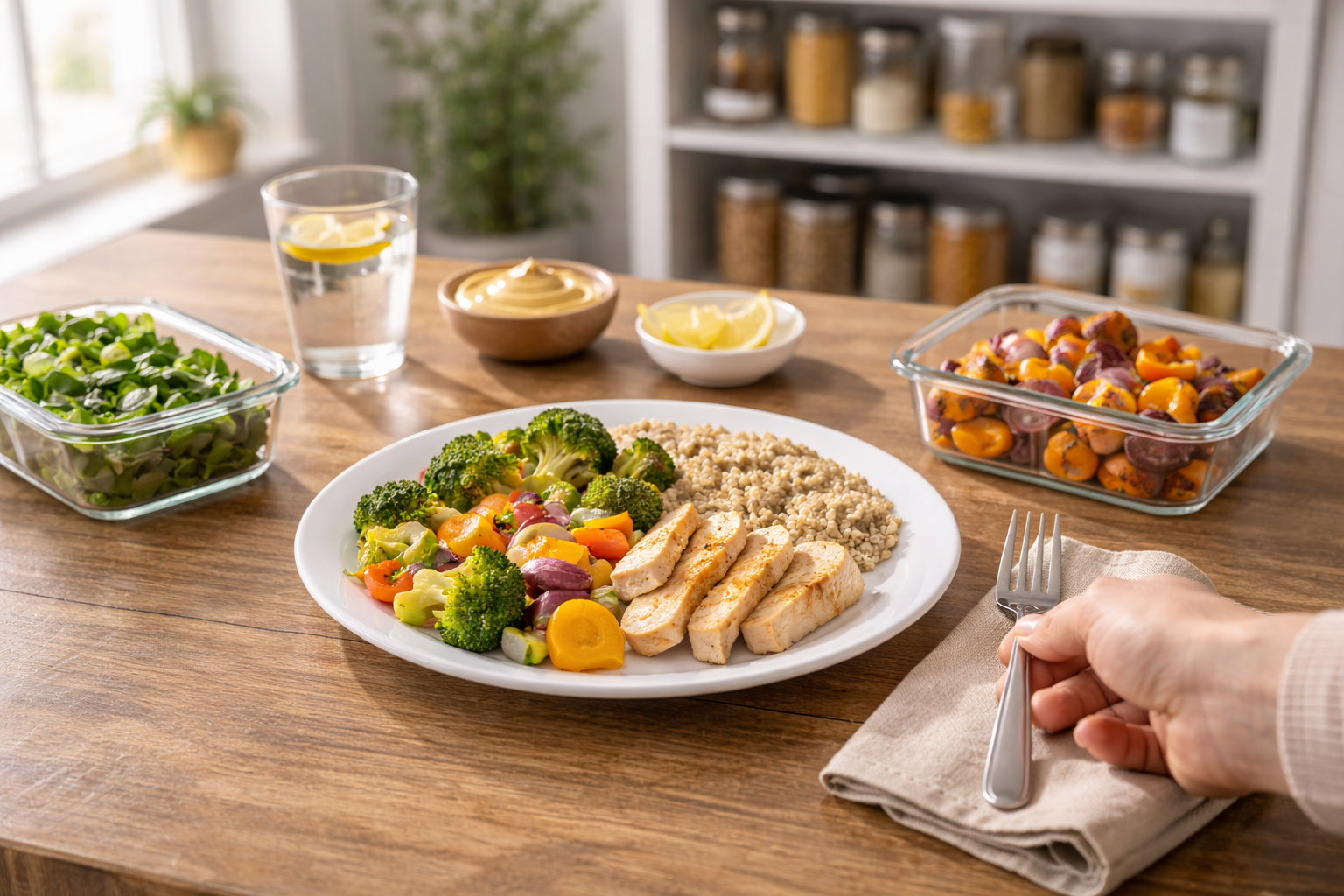
Start with a simple framework: prioritize vegetables, add a lean protein, choose a whole-grain or starchy vegetable, and include a healthy fat. That balance helps stabilize energy and makes plates more visually appealing and nutrient-dense. Aim for variety across the week so you cover different vitamins and textures without overcomplicating grocery runs. Keep portions reasonable by using smaller plates and filling half the plate with vegetables.
When shopping, pick items that can cross over into multiple meals—spinach for salads and omelets, beans for bowls and soups. Building meals from interchangeable components reduces decision fatigue and wastes less food.
Smart Pantry and Prep Habits
Organize a pantry with staples that support quick, healthy meals: canned tomatoes, whole grains, canned beans, nuts, and simple spices. Those basics make it possible to assemble balanced dishes even on busy nights. Batch-cooking grains or roasting a tray of mixed vegetables on the weekend saves time and encourages consistent home cooking. Store prepped ingredients in clear containers so they are visible and more likely to be used.
- Keep versatile proteins like eggs, canned fish, or tofu on hand.
- Freeze portions of soups or stews for easy reheating.
- Limit highly processed convenience foods to occasional treats.
Over time, a well-stocked pantry and a few prep routines make healthier choices the path of least resistance. You’ll end up cooking more and relying less on takeout.
Consistency and Mindful Eating
Consistent meal timing and mindful portions support energy levels and help avoid overeating. Slow down during meals, notice flavors and fullness signals, and try to eat without screens when possible. Planning simple meals ahead reduces impulsive choices and makes it easier to stick to goals without feeling deprived. Swap one ingredient at a time rather than overhauling your entire diet at once.
Small, repeatable habits compound over weeks and months, creating lasting improvements without dramatic effort. Celebrate progress and adjust strategies to fit your schedule and tastes.
Conclusion
Healthy home meals are built from small, sustainable choices that fit your life. With basic pantry staples, modest prep, and a simple plate framework, you can make meals more nutritious and enjoyable. Start with one change this week and build from there.