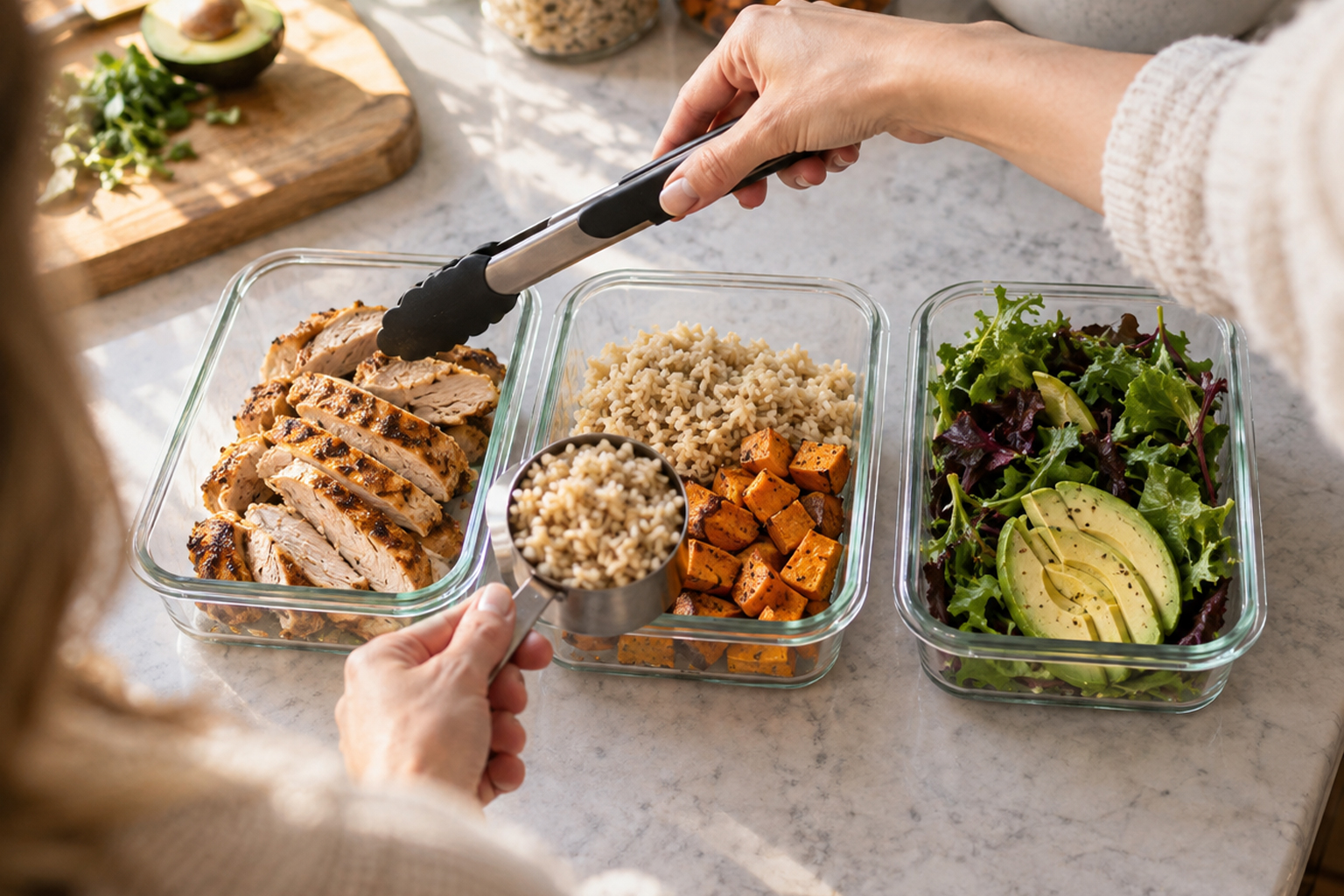
Creating a reliable system for everyday training nutrition removes decision fatigue and makes consistent fueling easier. By thinking in modular meal blocks instead of recipes you can mix and match based on ingredients and time. This approach helps maintain balanced macronutrients and steady energy across the day. The result is a sustainable routine that supports training, recovery, and general wellbeing.
What a meal block is
A meal block is a compact combination of food components designed to deliver a predictable balance of protein, carbohydrate, and vegetables or healthy fats. It’s intentionally flexible: the same block can be reused with different ingredients to keep meals interesting without extra planning. Meal blocks simplify portioning by focusing on the roles each component plays rather than exact recipes. Over time they make grocery shopping and meal prep more efficient and aligned with training goals.
Think of blocks as building pieces for plates and snacks. When you know how many blocks you need each day, adjusting overall intake becomes straightforward. This clarity helps with energy levels and recovery after workouts.
Sample modular blocks and practical swaps
Start with three core blocks: a protein block, a carb block, and a vegetable/fat block. Each block can be tailored to preferences and pantry staples so you rarely need new ingredients. For example, a protein block can be eggs, canned tuna, or legumes while a carb block can be rice, sweet potatoes, or whole-grain bread. The third block pairs non-starchy vegetables with a source of fat like olive oil, avocado, or a handful of nuts.
- Protein block: 4–6 oz cooked chicken, 3/4 cup beans, or 2 eggs.
- Carb block: 1/2–1 cup cooked rice, 1 medium sweet potato, or 2 slices whole-grain toast.
- Veg/fat block: 1–2 cups mixed salad greens with 1 tbsp oil, or roasted vegetables with a small avocado.
These swaps keep variety high without complicating shopping or prep. Rotate proteins and carbs across the week to cover different micronutrients.
How to assemble daily plates
Decide how many of each block you need based on training intensity and body size, then combine them into plates or snacks. A light training day might use two blocks at lunch and two at dinner, while heavier days may add an extra carb block post-workout. Use simple recipes and batch-cook components so assembly takes minutes. Keeping staples ready in the fridge or freezer reduces reliance on convenience foods.
Tracking how you feel after different block combinations helps refine portions and timings. Over a few weeks you’ll find patterns that support performance and recovery.
Conclusion
Modular meal blocks simplify daily fueling and reduce planning stress. They let you mix familiar ingredients into consistent, training-friendly plates. Start small and adjust blocks to suit your schedule and goals.