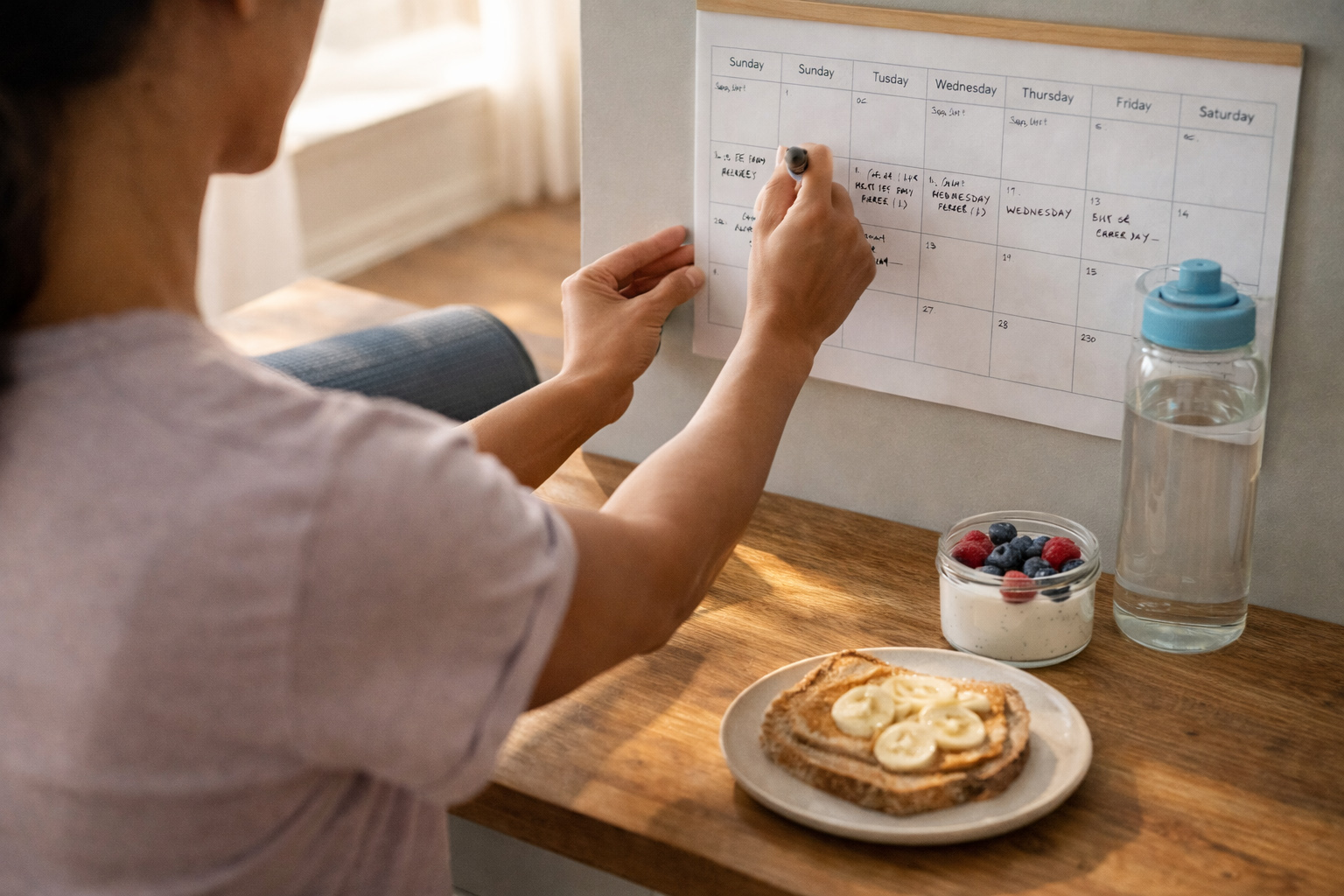
Timing what and when you eat can make at-home training feel easier and more productive.
Small shifts around your workout window help stabilize energy, improve focus, and support recovery.
You don’t need complicated diets to benefit — consistent patterns matter more than perfection.
This article outlines simple ways to plan meals and snacks around training so you feel ready each day.
Why meal timing influences energy and recovery
Meal timing affects available energy, blood sugar stability, and how your body prioritizes fueling versus recovery.
A light, carb-containing snack before a session can raise performance for moderate to intense workouts, while protein after training supports muscle repair.
Hydration and sodium balance also play a role, especially for sweat-heavy sessions in smaller spaces or hot environments.
Recognize that individual responses vary; experimenting with timing and portions lets you find what fits your routine and appetite.
Start with modest changes and track how you feel during and after workouts.
Adjustments over a few weeks reveal meaningful patterns without drastic overhaul.
Map your workout windows and simple meal patterns
Begin by mapping typical training windows—morning, midday, or evening—and align meals so larger portions land 2–3 hours before heavy sessions.
On lighter movement days, aim for balanced meals spaced every 3–5 hours to maintain steady energy.
If you train soon after waking, prioritize a small snack with carbs and some protein, then a fuller meal afterward.
Consistency in meal timing helps regulate appetite and reduces the temptation to overeat later in the day.
Use simple templates: carb+protein for pre-work fuel, protein+veg+fiber for recovery and satiety.
Over time, these patterns reinforce energy availability and better workout quality.
Practical snacks and swaps for consistent performance
Keep fast, portable snack options on hand to bridge gaps without heavy prep.
Good choices combine quick carbs and a little protein or fat to sustain effort—think yogurt with fruit, a banana and nut butter, or whole-grain toast with cottage cheese.
For evening sessions, lighter options can prevent discomfort while still supporting glycogen and amino acid availability.
Meal prep and a stocked pantry reduce decision fatigue and help you stick to the timing plan.
- Greek yogurt with berries and a sprinkle of oats
- Whole-grain toast with nut butter and banana slices
- Hummus with carrot sticks and whole-grain crackers
Rotate a few favorites so snacks stay appealing and accessible.
Small, predictable choices make it easier to align eating with training consistently.
Conclusion
Aligning meals and snacks with your training window is a practical step toward better sessions.
Focus on simple patterns that you can maintain rather than strict rules.
Start small and refine timing to match your energy and goals.