Consistent energy during at-home workouts starts with simple meal patterns rather than perfection. Small, repeatable choices across meals will support training frequency and recovery. This article outlines practical templates and timing tips that fit busy schedules. Use these ideas to make eating support your fitness without adding complexity.
Why predictable meals matter for home training
When workouts are scheduled around work and family, predictable meals help stabilize blood sugar and sustain focus. Regular patterns reduce decision fatigue and make it easier to meet protein and micronutrient needs that support muscle maintenance and repair. Over time, steady intake also helps you avoid energy crashes that undermine consistency. Adopting a simple framework for meals makes progress more reliable than chasing specific fad diets.
Start by designing meals you can repeat most days. Consistency breeds improvement and frees mental energy for training and recovery.
Practical plate templates you can prepare quickly
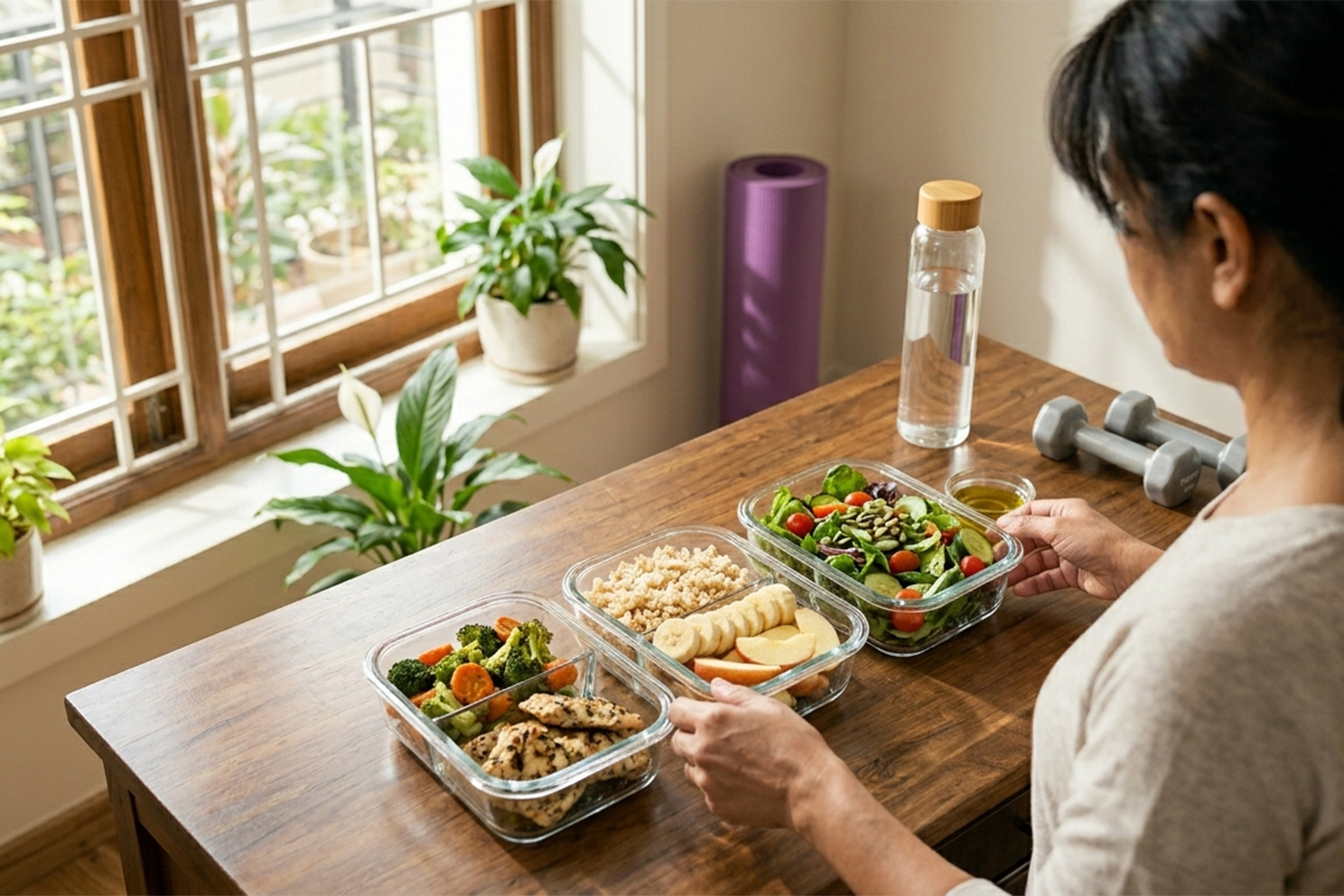
Three balanced templates cover most training days: a protein-forward plate for strength sessions, a carb-inclusive plate for longer cardio, and a lighter option for rest days. Each template centers on a palm-sized portion of protein, a fist of vegetables, and measured carbohydrate and healthy fats to match effort level. Focus on whole foods you enjoy to increase adherence and rotate items to keep meals interesting. These templates translate easily into batch cooking or quick assemblies when time is tight.
- Strength day: lean protein, whole grain, roasted vegetables, olive oil.
- Cardio day: moderate protein, larger portion of starchy carbs, fruit.
- Rest/light day: smaller carbs, higher vegetables, a source of healthy fat.
Apply the templates flexibly and adjust portion sizes based on hunger and workout intensity. They work well together with simple meal prep habits.
Timing, snacks, and hydration for session quality
A light snack 60–90 minutes before a workout can improve performance; think yogurt with fruit or a slice of whole-grain toast with nut butter. After training, aim to include both protein and carbohydrates within two hours to support recovery and glycogen replenishment. Consistent hydration across the day also influences perceived effort and recovery, so sip fluids regularly rather than only during exercise. Small, regular snacks help maintain energy on days with multiple short sessions.
Experiment with timing to find what feels best and build that into a weekly routine. Simple timing rules reduce guesswork on training days.
Conclusion
Adopt simple plate templates and predictable meal timing to support consistent home workouts. Prioritize protein, vegetables, and appropriate carbs around sessions while keeping hydration steady. Small, repeatable habits compound into better energy, recovery, and long-term progress.