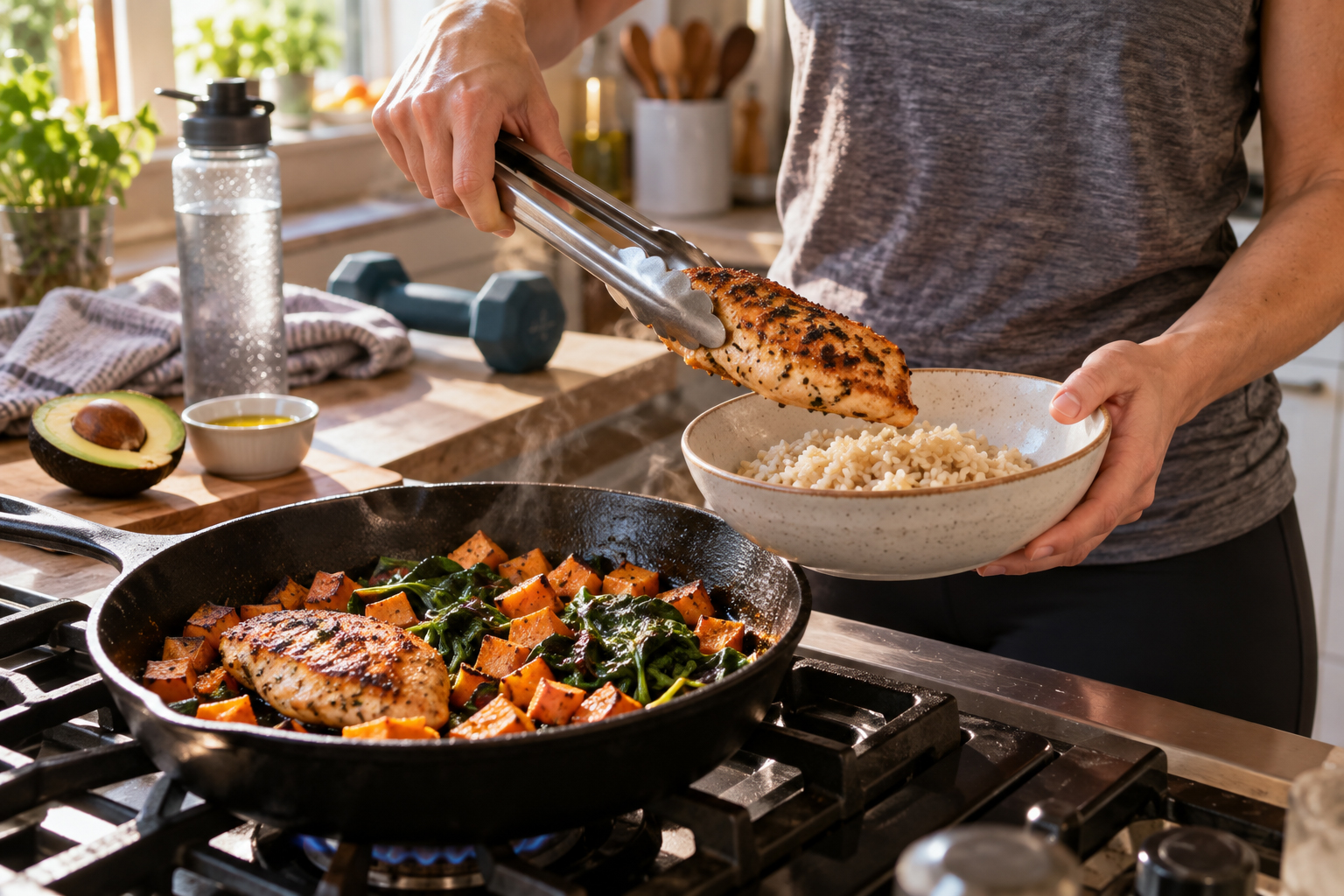
Short home workouts leave you wanting food that helps repair muscle without a lot of fuss. This piece lays out practical meal ideas you can prepare in a single pan or with a handful of staples. No extreme diets, no specialty ingredients — just straightforward plates that combine protein, carbs, and a little fat. Use these templates to get food back to working for your recovery instead of slowing you down.
Why balanced plates speed repair
A workout stresses muscle tissue and creates a demand for both building blocks and energy. Protein supplies amino acids for repair while carbohydrates refill glycogen and support recovery processes. A modest amount of fat helps with satiety and nutrient absorption, but it doesn’t need to dominate the plate. Pairing those three components in reasonable portions gives your body what it needs without overcomplicating dinner.
Think of the plate as a toolkit: protein for fix, carbs for fuel, and fat for support. Small, consistent doses after most sessions work better than infrequent, oversized meals.
Quick plate formulas to try tonight
Start with a simple template you can swap ingredients into: a palm-sized portion of cooked protein, a cupped-hand of starchy carbohydrate, and a thumb-sized portion of healthy fat plus vegetables. For example, grilled chicken, sweet potato cubes, and a drizzle of olive oil with steamed greens fits the formula. Another quick option is a tuna-and-bean salad over rice, or scrambled eggs with quinoa and avocado. These combos can be assembled in 15–25 minutes and scale up or down depending on appetite.
- Protein: chicken, fish, eggs, tofu, cottage cheese
- Carbs: rice, potatoes, whole-grain bread, oats, beans
- Fats & veg: olive oil, avocado, nuts, leafy greens, peppers
Rotate through different proteins and carbs to keep meals interesting and to cover a wider nutrient range. Use sauces and herbs to vary flavor without extra work.
Snack and timing tips that actually help
If you’re short on time, a recovery snack can bridge the gap until dinner: Greek yogurt with fruit and granola, a smoothie with milk and banana, or a whole-grain wrap with turkey are all useful. Aim to eat something containing protein within an hour after a workout when you can. If your session was late, keep the meal lighter and focused on easy-to-digest choices so sleep isn’t disturbed.
Hydration matters too; plain water or a salted beverage after a sweaty session helps transport nutrients. Small routines—consistent timing, simple formulas—make recovery more reliable than chasing perfect meals.
Conclusion
Focus on simple plates that blend protein, carbs, and a little fat. Keep preparation practical so you’ll actually eat the meals you plan. Small, regular improvements to what you cook will add up in recovery and performance.