Introduction
Good nutrition helps you get more from home workouts by improving energy, recovery, and consistency. Small, repeatable food choices are easier to sustain than extreme plans and can support steady progress. This article outlines straightforward principles for everyday meals, practical timing tips, and pantry-friendly combinations. Adopting a few reliable habits will reduce decision fatigue and make fitness goals more achievable.
Why nutrition matters for home workouts
Nutrition for home training emphasizes balance: protein for repair, carbohydrates for fuel, and healthy fats for hormonal support. Aim for a source of protein at each meal to sustain muscle and aid recovery between sessions. Carbohydrates timed around workouts replenish glycogen and provide immediate energy for higher-intensity efforts. Hydration and micronutrient variety matter too, since limited meal diversity can undermine performance over time.
You do not need perfect macronutrient ratios; aim for practical consistency instead. Small improvements repeated daily deliver more benefit than sporadic strict dieting.
Simple plate composition and timing
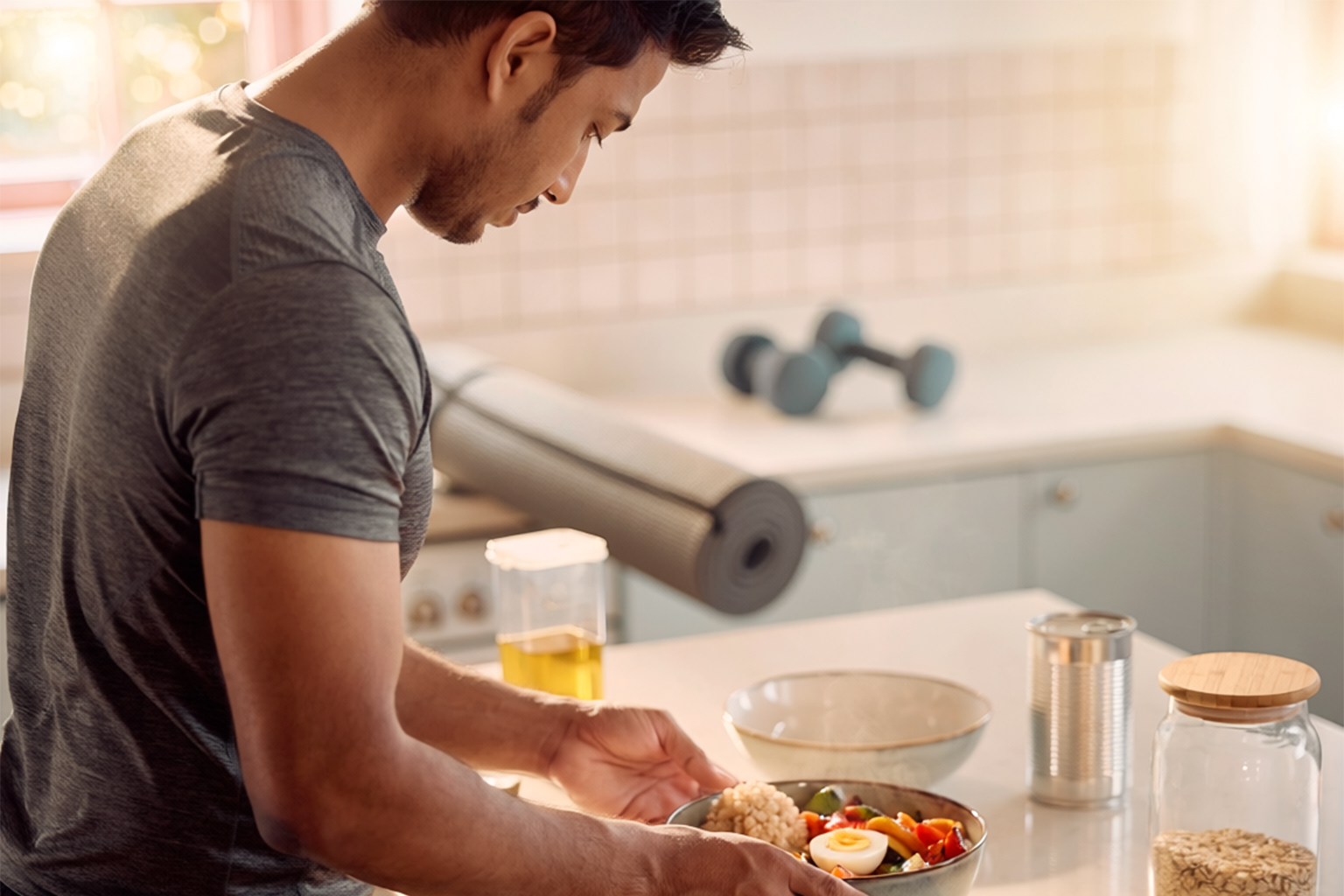
A simple plate model keeps meal prep fast and effective: half vegetables, a quarter lean protein, and a quarter whole grains or starchy vegetables. This visual approach makes it easy to portion meals without tracking every calorie or macronutrient. For pre-workout meals, choose easily digestible carbohydrates paired with moderate protein about 45–90 minutes before exercise. Post-workout, prioritize protein and some carbs to jumpstart recovery and replenish energy stores.
- Egg and veggie bowls with a side of whole-grain toast.
- Bean and rice salad with frozen corn and a vinaigrette.
- Oats with nut butter, fruit, and a scoop of protein powder.
Timing should fit your routine and digestive comfort rather than rigid windows. Experiment minimally to find what feels best for energy and recovery.
Pantry staples and quick meal combos
Stocking versatile staples reduces friction and makes balanced meals possible on busy days. Good items include eggs, canned beans, frozen vegetables, whole-grain rice, oats, and a few shelf-stable proteins. With those basics you can assemble bowls, stir-fries, or grain salads in 15–25 minutes. Prep techniques like batch-cooking grains and chopping vegetables ahead of time save effort later.
- Egg and veggie bowls with a side of whole-grain toast.
- Bean and rice salad with frozen corn and a vinaigrette.
- Oats with nut butter, fruit, and a scoop of protein powder.
Keep a short shopping list tailored to your favorite flavors to avoid waste. Reliable habits come from simplicity and repetition rather than elaborate recipes.
Conclusion
Practical food principles make home training easier to sustain while supporting energy and recovery. Focus on consistency, simple plate templates, and a few pantry staples to remove daily friction. Over time those small choices compound into noticeable fitness improvements and better well-being.