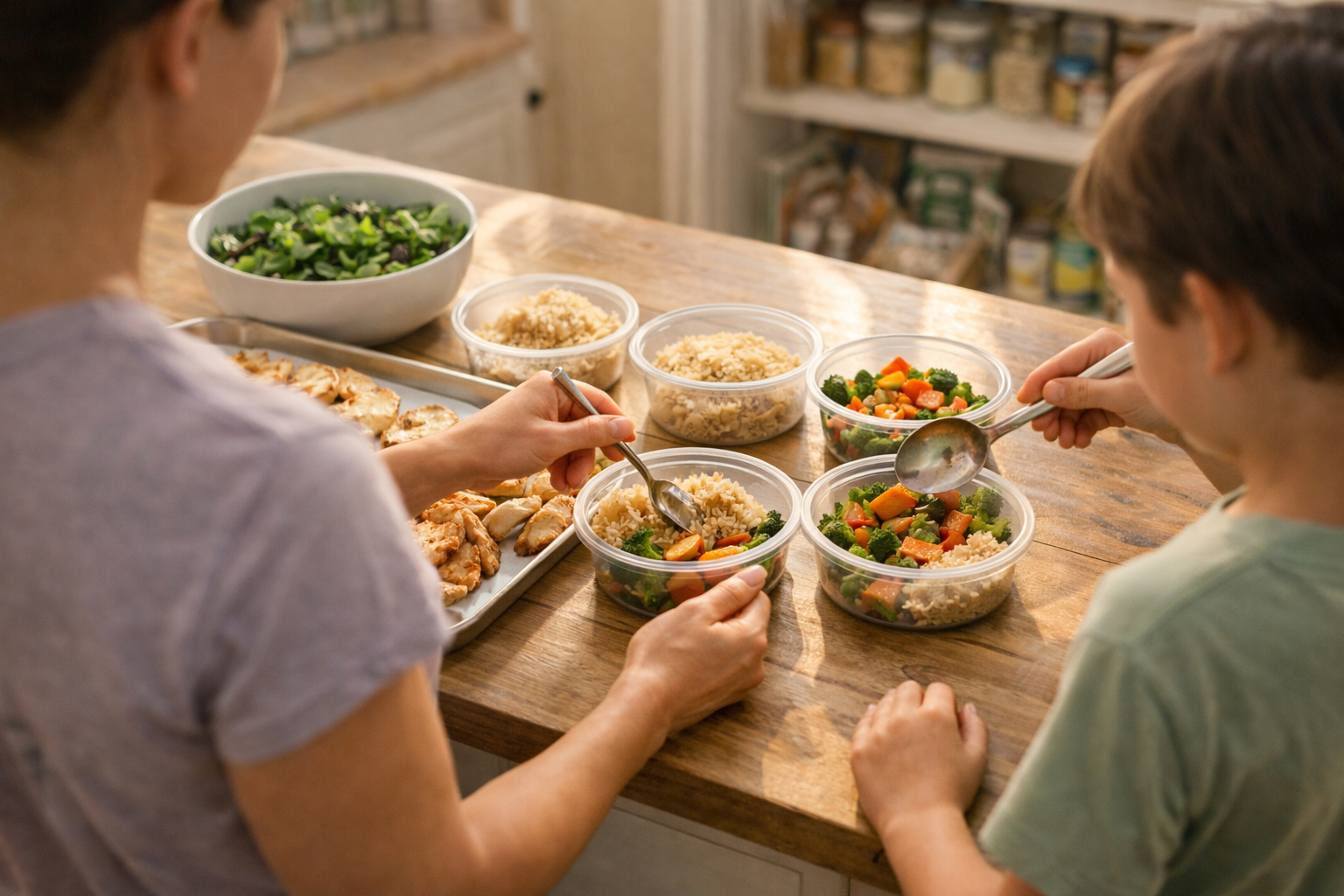
Feeding a busy household consistently doesn’t require complicated recipes or long grocery lists. Focused, repeatable choices make it easier to build meals that support energy, recovery and overall wellbeing. Small routines — like a rotating set of templates and a modest pantry of staples — reduce decision fatigue and raise the quality of everyday food. These practices reduce stress around meal decisions and support consistent energy across the day. This article outlines practical approaches to planning, ingredients, and simple plate structures that work for most families.
Planning Simple Meals
Start by creating a small rotation of breakfasts, lunches, and dinners that combine variety with familiarity. Choose two to three proteins, several vegetables, whole-grain or starchy sides, and a handful of flavoring options to mix and match across the week. Batch-cooking components like grains and roasted vegetables saves time and makes assembling meals quick on busy evenings. A short weekly checklist that maps picked meals to shopping prevents impulse buys and ensures ingredients are on hand. Scheduling one dedicated cooking session per week, even for 45–60 minutes, multiplies the return in convenience.
Keep plans flexible: swap sides, change sauces, or repurpose leftovers into bowls and wraps. This adaptability helps sustain healthy habits without strict rules. Adjust based on appetite, activity levels, and family schedules to keep it realistic.
Smart Ingredient Choices
Prioritize nutrient-dense ingredients that store well and can be used in multiple dishes to get more value from each shop. Items such as legumes, frozen vegetables, canned fish or tomatoes, and whole grains are versatile and resilient to variable schedules. Including colorful produce frequently adds fiber, vitamins, and visual appeal, while simple protein choices maintain satiety and recovery after activity. Budget-friendly swaps and seasonal produce can shift cost without sacrificing quality. Frozen herbs and citrus zest are small pantry tricks that elevate simple meals.
- Lean proteins: beans, eggs, poultry, fish
- Versatile bases: brown rice, quinoa, whole-grain pasta
- Flavor boosters: citrus, herbs, low-sodium broths
Organize your pantry so those items are visible and accessible; that increases the likelihood they’ll be used. Rotate stock so older items are used first and plan for one variety-focused meal weekly. Little systems reduce waste and improve meal quality over time.
Quick Meal Structures
Use straightforward templates to assemble balanced plates in minutes: a protein, a vegetable, and a grain or starchy side with a small healthy fat or sauce. Bowls, sheet-pan dinners, and one-pot meals are especially efficient because they require minimal cleanup and encourage variety through simple swaps. Time-saving tools like an instant pot or oven can turn hands-off cooking into reliable midweek solutions without complicated steps. Teach family members these templates so meal assembly becomes a shared task rather than a solo chore. Portioning meals into reusable containers right after cooking simplifies reheating and helps control portions effectively.
Over time these structures make nutritious eating habitual and reduce the need for last-minute ordering or skipped meals. Sharing assembly tasks keeps dinners social and faster. Small rituals around meals encourage consistency.
Conclusion
Focusing on simple repertoires, versatile ingredients, and repeatable meal templates makes healthy home eating practical and sustainable. Small, consistent actions beat occasional extremes for long-term wellbeing and energy. Start with one template and two staple swaps, then build gradually.