

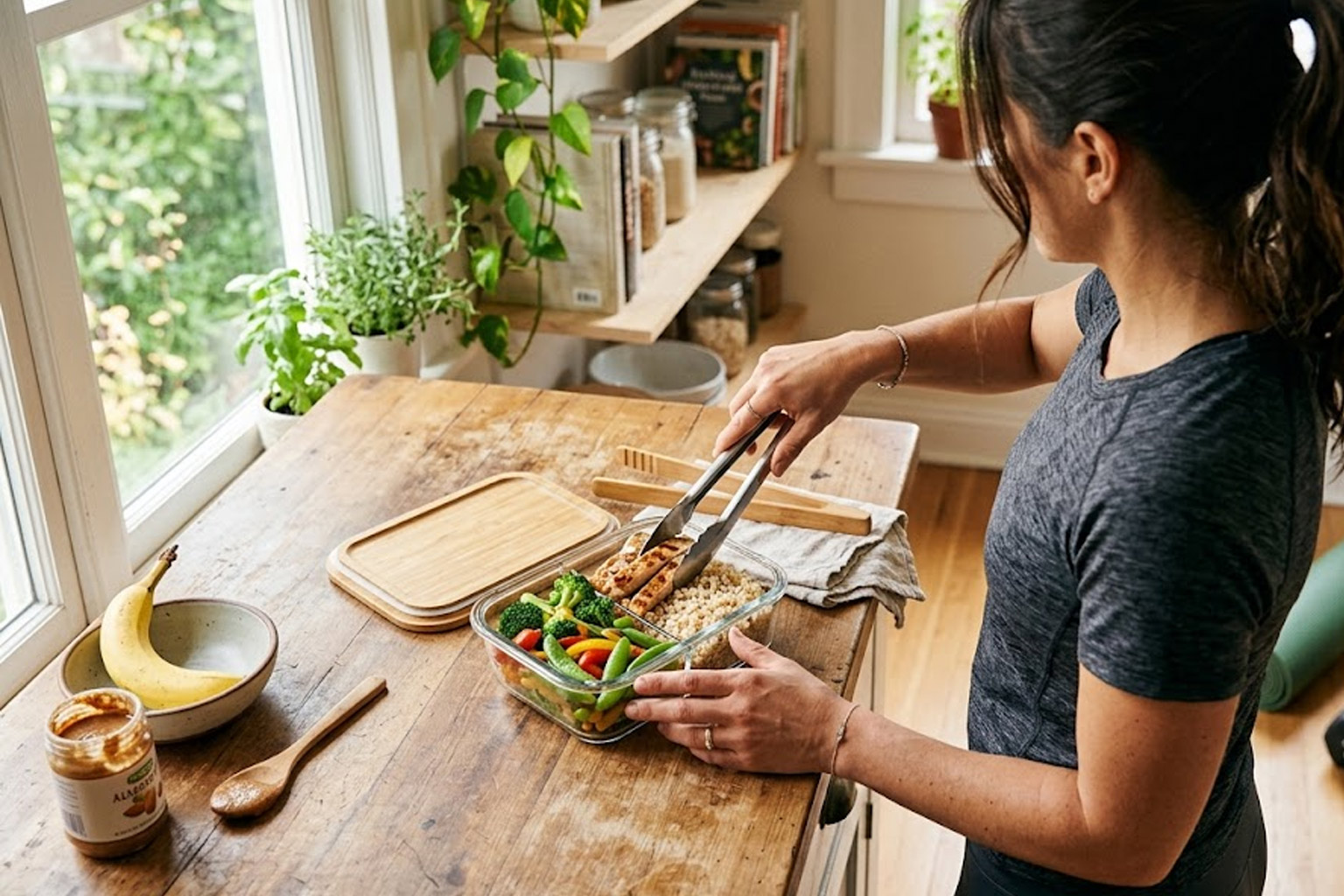
Good food choices amplify the impact of regular home workouts.
Simple adjustments in timing and composition can improve energy and recovery.
This guide explains practical macronutrient ideas, quick meal examples, and habits to stay consistent.
It is aimed at everyday exercisers who want straightforward, sustainable nutrition advice.
Why meal timing and portioning influence performance
Distributing calories and carbohydrates around your workout helps maintain steady energy and supports intensity. Eating a modest meal 1.5–3 hours before exercise supplies glucose without causing discomfort during movement. Small pre-workout snacks 30–60 minutes prior can be effective when time is limited, focusing on easily digestible carbs and a bit of protein. After exercise, a combination of protein and carbohydrates aids muscle repair and glycogen restoration. Pay attention to how your body responds and adjust accordingly.
Macronutrients that support home training
Protein is central for repair and should be included across meals to support recovery and satiety. Carbohydrates are the primary fuel for moderate-to-high intensity sessions and are useful to time around workouts for better performance. Healthy fats contribute to overall energy balance and hormone regulation, and they work well when not consumed in large amounts immediately before intense exercise. Aim for varied whole-food sources to keep micronutrients and fiber in the diet. Including vegetables and fruits ensures vitamins and minerals for recovery and immune support.
Practical snack and meal ideas
Selecting quick, balanced options makes nutrition manageable at home and reduces reliance on processed convenience foods. Below are simple examples that combine macronutrients for before, during, and after workouts. These require minimal preparation. These examples can be scaled to match caloric needs and training load.
– Pre-workout: banana with a tablespoon of nut butter or a small yogurt.
– During longer sessions: a sports drink or diluted fruit juice for quick carbs.
– Post-workout: grilled chicken with rice and steamed vegetables or a protein shake with fruit.
Rotate these options to avoid boredom and match portion sizes to your goals and workout intensity. Adjustments are normal; consistency matters more than perfection.
Practical habits to maintain consistency
Plan a weekly outline of meals and snacks to reduce decision fatigue and impulsive choices. Batch-cooking proteins and grains, and having pre-chopped vegetables on hand makes balanced meals more accessible. Keep a small stock of quick options like canned tuna, whole-grain wraps, and frozen fruit for emergencies. Regularly review how you feel during workouts and tweak timing or portions rather than overhauling your entire diet.
Conclusion
Small, consistent changes to meal timing and composition can noticeably improve home workout results.
Focus on balanced meals with protein, carbohydrates, and healthy fats timed around your sessions.
Use simple meal templates and planning to keep nutrition sustainable and supportive of your fitness goals.










