Consistent home training depends on steady energy and timely recovery, and what you eat plays a major role. Simple, kitchen-friendly meals let you fuel sessions without complicated planning or expensive ingredients. This article outlines practical meal building blocks and timing tactics that fit busy routines. Read on for actionable approaches you can use this week to feel stronger and recover faster.
Why balanced meals matter for home training
Balanced meals supply carbohydrates for energy, protein for muscle repair, and fats for hormonal support and satiety. When meals include a mix of these macronutrients alongside vegetables and fiber, workouts feel more sustainable and recovery timelines shorten. Consistent intake across the day prevents big energy dips that derail motivation and intensity. Prioritizing balance reduces the temptation to overeat or rely on empty calories after exercise.
Small shifts toward balance are often more sustainable than strict dieting. Begin by assessing one meal each day and improving its nutrient mix.
Practical plate-building tips you can use
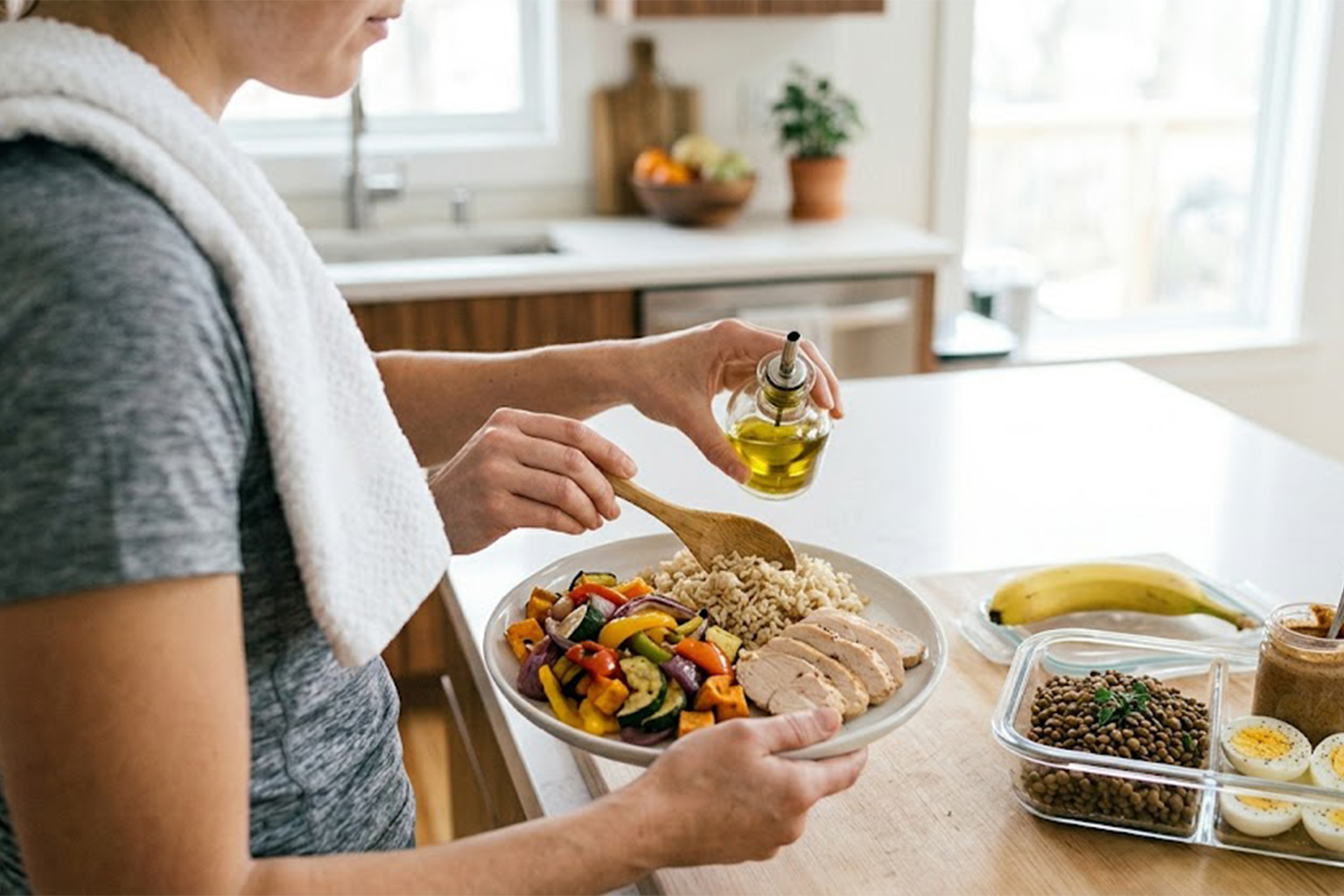
Start with a template: half the plate vegetables, a quarter lean protein, and a quarter whole grains or starchy vegetables. This simple framework works at breakfast, lunch, or dinner and can be adjusted for portion size depending on training intensity. Aim for proteins like eggs, canned fish, beans, or lean chicken, and choose whole grains such as oats, brown rice, or whole wheat bread to maintain steady energy. Include a portion of healthy fat—olive oil, nuts, or avocado—to support fullness and nutrient absorption.
- Batch-cook staples like grains and roasted vegetables once or twice weekly.
- Keep portable proteins ready for quick assembly, such as hard-boiled eggs or cooked lentils.
These habits reduce prep friction and make balanced plates the default choice on training days.
Simple meal timing and snack strategies
For most people, eating a light balanced meal 1.5–3 hours before training supports performance without discomfort. If time is short, a small snack of fruit and yogurt or a banana with nut butter 30–60 minutes prior can provide quick fuel. After exercise, prioritize 20–30 grams of protein within an hour to jumpstart recovery alongside a carbohydrate source to replenish glycogen for repeated sessions. Hydration and electrolytes should not be overlooked, especially during longer or sweaty workouts.
Prepare grab-and-go snacks that pair protein with carbs to streamline pre- and post-workout timing. Consistent timing helps stabilize energy and supports training frequency.
Conclusion
Kitchen-friendly meals make it far easier to stick with home training and maintain steady progress. By using a simple plate template, planning basic staples, and timing snacks strategically, you can boost energy and recovery without overcomplicating your routine. Small, consistent changes in meal habits deliver measurable improvements to training consistency and results.