Recovery after a home workout depends on more than the exercises you do.
It includes what you drink and eat in the hours that follow.
Small, consistent hydration and food habits can accelerate muscle repair and restore energy.
This article outlines practical steps to hydrate well and choose recovery-friendly meals.
Hydration Basics
Fluid balance is a foundation for recovery because water supports circulation, nutrient transport, and temperature regulation. Start rehydrating as soon as possible after exercise by sipping plain water; aim to replace obvious losses rather than chasing an exact volume. For longer or sweat-heavy sessions, include a source of electrolytes to help restore sodium and potassium along with fluids. Pay attention to thirst, urine color, and how you feel the next day as simple indicators of hydration status.
Choose beverages that you will actually drink consistently and avoid sugary sports drinks unless the session was prolonged or intense. Cold water can be more palatable after exercise and adds a small cooling benefit. Keep a reusable bottle handy to make refilling effortless.
Macronutrients for Efficient Repair
After exercise, prioritize a balance of protein and carbohydrates to support muscle repair and glycogen restoration. Protein supplies amino acids for rebuilding tissues while carbohydrates refill energy stores; including a modest amount of healthy fats can make meals more satisfying without slowing recovery when consumed in moderation. Whole foods that combine these macronutrients tend to be more nutrient-dense and keep you full longer. Timing matters less than making sure a recovery-focused meal or snack appears within a few hours of training.
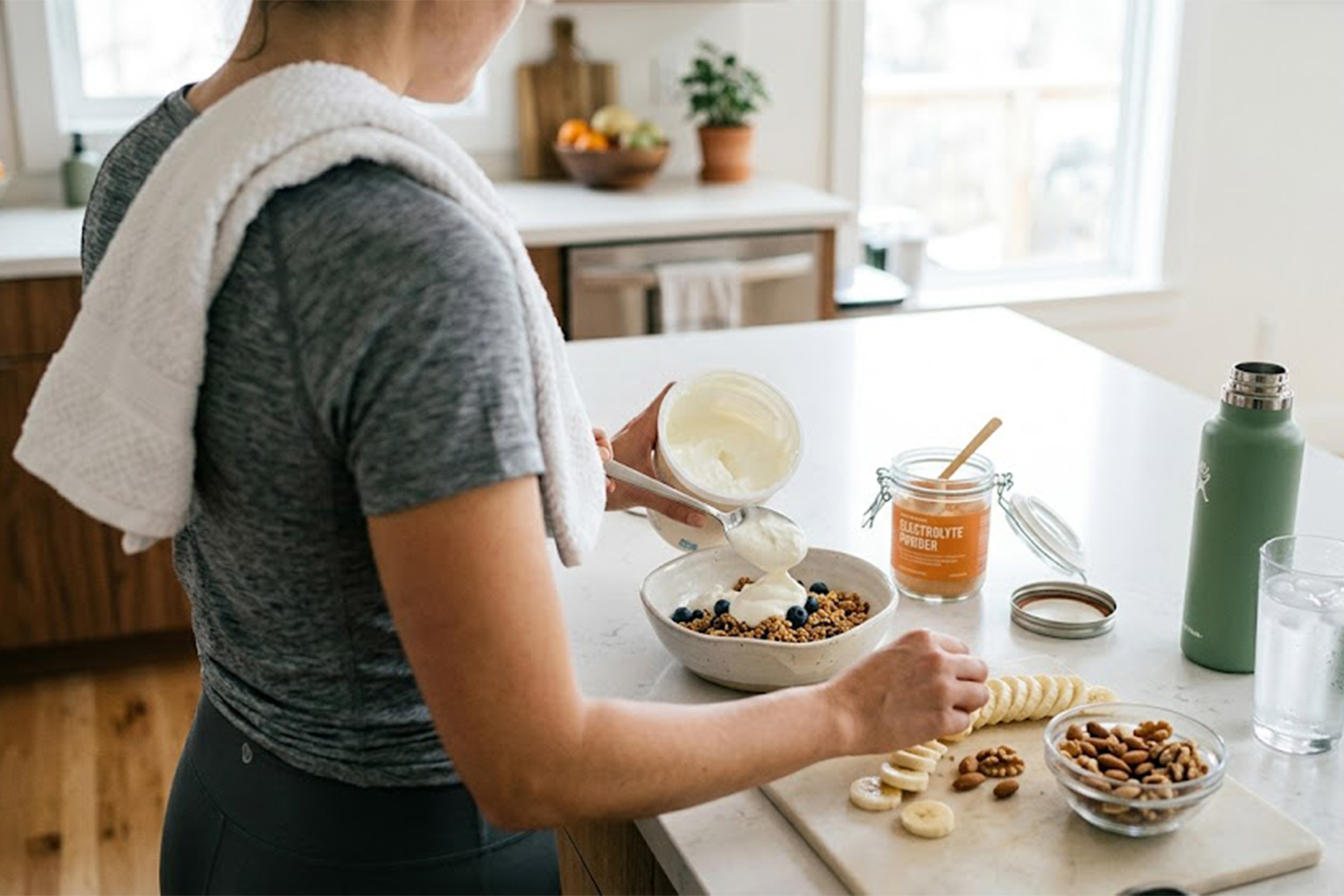
- Quick options: yogurt with fruit and nuts, turkey and avocado on whole grain toast, or a simple tuna and rice bowl.
- Portable snacks: a nut butter sandwich, a cottage cheese cup with berries, or a homemade trail mix.
Mix and match options so you have practical choices ready for different days and workouts. Preparing a few staples in advance reduces the temptation to skip a recovery meal.
Meal Timing and Smart Snacks
Structuring meals around training can be flexible: a full meal after moderate workouts and a compact snack after shorter sessions is often sufficient. Aim for a recovery-focused bite within 30–90 minutes if possible, and follow with a balanced meal at the next opportunity. Snacks that pair carbohydrate with protein are especially useful when a full meal isn’t practical. Consider texture and convenience—smoothies, wraps, or bowls are easy to assemble and digest.
Plan one or two post-workout combos you enjoy so habit replaces decision-making. Keep shelf-stable and refrigerated options at hand to match different schedules and effort levels.
Conclusion
Focus on steady hydration and balanced meals to support repair and energy restoration.
Choose practical, repeatable food and drink habits that fit your routine.
Small, consistent actions lead to better recovery and more productive home workouts.