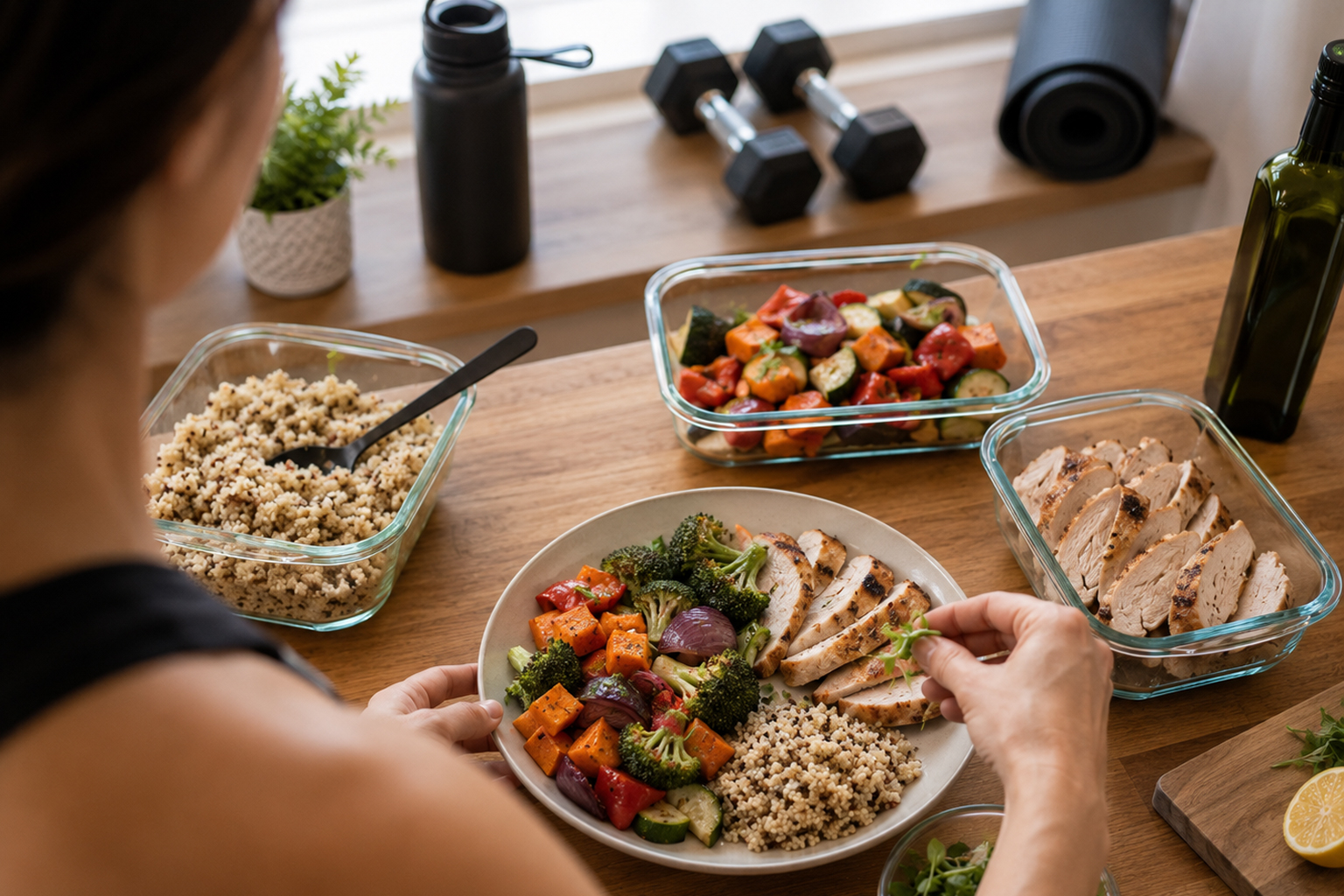
Consistent nutrition is often the missing link for progress when training at home. A few straightforward plate patterns and reliable ingredients can make it easy to eat for energy, recovery, and long-term consistency. This article outlines practical approaches to designing meals that fit busy schedules and varied goals without elaborate recipes. The focus is on simplicity, balance, and small habits that add up over time.
Start with a Balanced Plate Template
Choose a basic template to simplify meal decisions: half vegetables, one quarter protein, and one quarter carbohydrates or starchy vegetables. This pattern supports steady energy, a range of micronutrients, and enough protein to assist recovery after resistance or conditioning sessions. It also adapts to breakfast, lunch, or dinner by swapping specific foods while keeping proportions consistent. Relying on a template reduces decision fatigue and keeps most meals nutritionally adequate.
Use this template as a default rather than a strict rule. Over time, it becomes intuitive and requires less planning while still covering core nutrient needs.
Choose Practical Proteins and Carbohydrates
Select protein sources that are easy to prepare and store: eggs, canned fish, legumes, tofu, or lean cuts that roast well. For carbohydrates, favor whole grains, potatoes, squash, or quick-cook options like quinoa and brown rice that can be batch-cooked. Prioritizing shelf-stable or quick-cook items helps maintain consistency on busy days. Variety matters, but reliability keeps you on track.
- Protein options: eggs, yogurt, canned beans, tofu, pre-cooked chicken.
- Carb options: rolled oats, brown rice, whole-grain pasta, sweet potato.
Rotate a few favorites weekly so meals feel familiar but not monotonous. This approach balances nutrition and convenience while reducing grocery waste.
Batch Cooking and Smart Timing
Batch cooking key components—grains, roasted vegetables, and a simple protein—saves time and makes balanced meals accessible during the week. Prepare salad bases and dressings separately to keep textures fresh, and portion meals into containers for grab-and-go options. Meal timing should match your training: a moderate meal 2–3 hours before sessions and a protein-containing snack soon after promotes recovery. Small, repeatable routines around prep and timing reduce stress and improve adherence.
Keep staples on hand and plan two or three meal combos you enjoy. When food prep is routine, eating for performance becomes effortless.
Conclusion
Simple, repeatable meal patterns make consistent fueling achievable for anyone training at home. Focus on a balanced plate template, reliable protein and carbohydrate choices, and routine batch cooking to lower barriers. Small habits maintained over weeks are the most effective way to support progress and recovery.