Cooking and eating at home is one of the most effective and controllable ways to support regular exercise and steady energy through the day.
Small, consistent choices in meal composition influence recovery, mood, and performance as much as workout frequency or duration.
This guide explains practical, achievable principles for building balanced meals without complicated recipes or expensive specialty ingredients.
You’ll find straightforward planning tips and simple ingredient swaps to make home food reliably fuel fitness goals.
Principles of a Balanced Meal
A balanced meal is built around four components: protein, vegetables or fruit, whole grains or starchy vegetables, and healthy fats, each contributing specific benefits.
Protein supports muscle repair and lasting satiety, while carbohydrates replenish glycogen and provide readily available energy for workouts.
Fiber-rich vegetables and fruit supply vitamins, minerals, and digestive support that influence how other nutrients are absorbed and used.
Healthy fats aid hormone production and nutrient absorption, and they help meals feel satisfying over longer periods.
Aim for a palm-sized portion of lean protein, a fist or more of vegetables, and a cupped handful of whole grains at most meals as a starting template.
Adjust portions and ratios by your activity level, training intensity, and personal preferences to keep meals both practical and enjoyable.
Meal Planning for Busy Home Routines
Meal planning reduces decision fatigue and makes balanced eating easier when life gets busy, especially with training or irregular schedules.
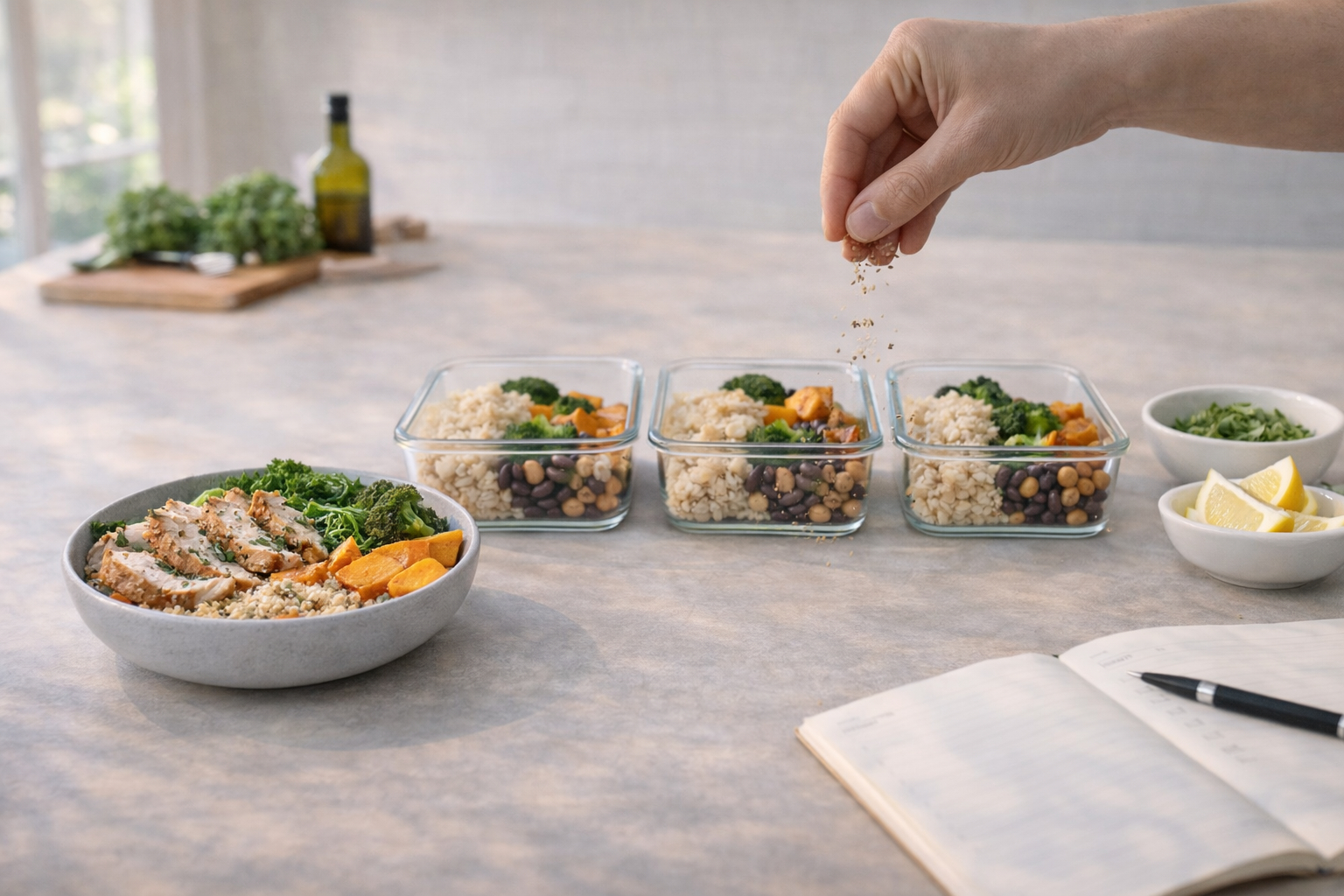
Reserve one or two weekly prep sessions for batch-cooking staples like grains, roasted vegetables, beans, and an adaptable protein to mix and match.
Rely on simple meal templates — grain + protein + vegetables + sauce or dressing — to create variety without extra cooking time.
Keep quick options on hand such as canned fish, frozen vegetables, and prewashed greens to assemble nourishing plates in minutes.
Labeling containers and rotating staples based on what you enjoy prevents boredom and waste.
Even small prep habits transform hurried evenings into consistent opportunities for nutritious meals.
Simple Swaps to Boost Nutrition
Introduce easy swaps to raise nutrient density without overhauling favorite recipes, which improves adherence over time.
Choose whole grains instead of refined ones, replace sugary snacks with protein-rich yogurt or nuts, and add a handful of leafy greens to smoothies or sandwiches.
Prefer cooking methods like roasting, steaming, or grilling instead of deep frying to keep texture and flavor while cutting excess oil.
Flavor meals with herbs, citrus, vinegar, and spices rather than relying on heavy sauces or salt for taste.
These modest swaps support steadier blood sugar, improved recovery, and better overall health markers without sacrificing enjoyment.
They also encourage creativity in the kitchen by opening new combinations of familiar foods.
Conclusion
Building balanced meals at home does not require perfection, just consistent, practical choices that fit your routine.
Start with one simple template and one small swap this week, then build gradually as habits stick.
Over time those choices compound into reliable fuel for fitness and daily life.