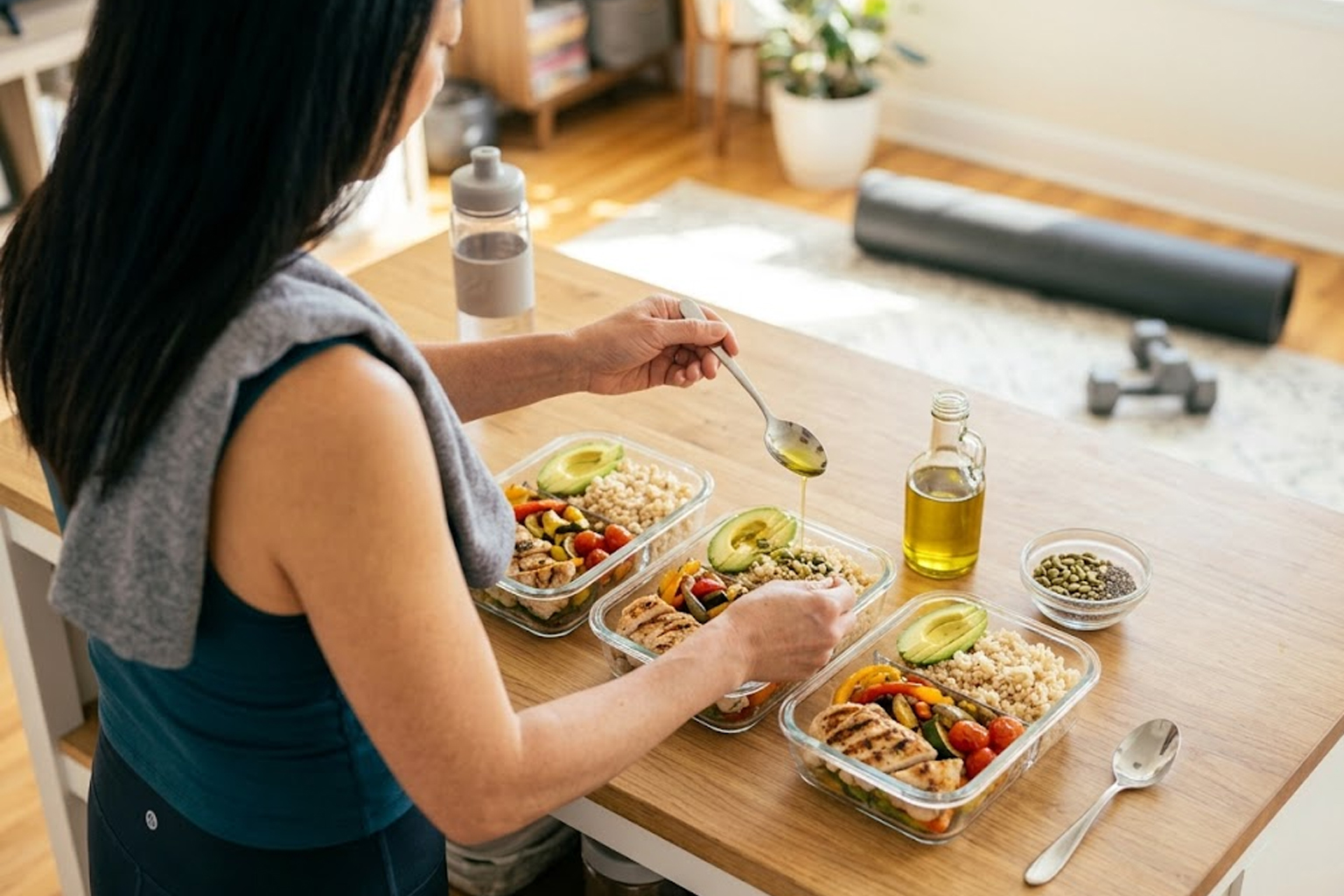
Consistent meals make at-home workouts easier to sustain and more effective. With a few simple templates you can reduce daily decision fatigue and keep energy steady. This piece outlines practical plate patterns and quick strategies you can use around your training schedule. The goal is to make balanced eating straightforward without complicated recipes or strict rules.
Why a Template Approach Works
Templates simplify choices so you spend less time planning and more time training. When meals follow a consistent pattern you avoid energy dips and ensure a steady supply of protein, carbs, and fats. Templates also make grocery shopping and batch cooking more efficient, which supports long-term adherence. Over time, this repeatability leads to better recovery and more reliable workout performance.
By standardizing foundations you can easily adapt portions to match your goals. Small adjustments often beat radical overhauls because they’re sustainable.
Core Components to Include
A useful meal template centers on three components: a protein source, a neutral or starchy carbohydrate, and fiber-rich vegetables or fruit. Include a source of healthy fat at most meals to support satiety and nutrient absorption. Timing matters less than overall balance, so aim for these components across the day rather than obsessing over single meals. Keeping pantry staples on hand helps you assemble balanced plates quickly.
- Protein: eggs, canned fish, poultry, beans, Greek yogurt
- Carbs: rice, potatoes, oats, whole-grain bread
- Veggies/Fruit: leafy greens, broccoli, berries, apples
- Fats: olive oil, nuts, avocado, seeds
These elements create flexible combinations that fit vegetarian or omnivore preferences. Rotate items weekly to avoid boredom while keeping the template consistent.
Quick Meal Examples
Examples make templates tangible and fast to implement at home. Each sample follows the three-component rule and can be scaled up or down based on hunger and training load. Preparing components in batches accelerates assembly and reduces cleanup time. Use seasoning and simple sauces to add variety without extra effort.
- Bowl: grilled chicken, brown rice, roasted vegetables, olive oil drizzle
- Breakfast: scrambled eggs, whole-grain toast, sautéed spinach, avocado
- Snack/mini-meal: Greek yogurt, mixed berries, handful of almonds
These quick builds work before or after workouts and can be adapted into wraps, salads, or bowls. Keep portions aligned with your energy needs for optimal results.
Putting Templates into Practice
Start by choosing two breakfast, two lunch, and two dinner templates that you enjoy. Schedule one prep session each week to cook proteins and grains and chop vegetables. Track how you feel in workouts and adjust portion sizes or timing as needed. Small, regular improvements will compound into better performance and recovery.
Consistency beats perfection, so aim for reliable patterns rather than strict adherence. With simple templates you’ll spend less time planning and more time progressing.
Conclusion
Simple meal templates reduce decision fatigue and help maintain steady energy for home training. Focus on a protein, a carbohydrate, and vegetables at most meals while adjusting portions to fit your goals. Small, repeatable habits produce meaningful gains over time.