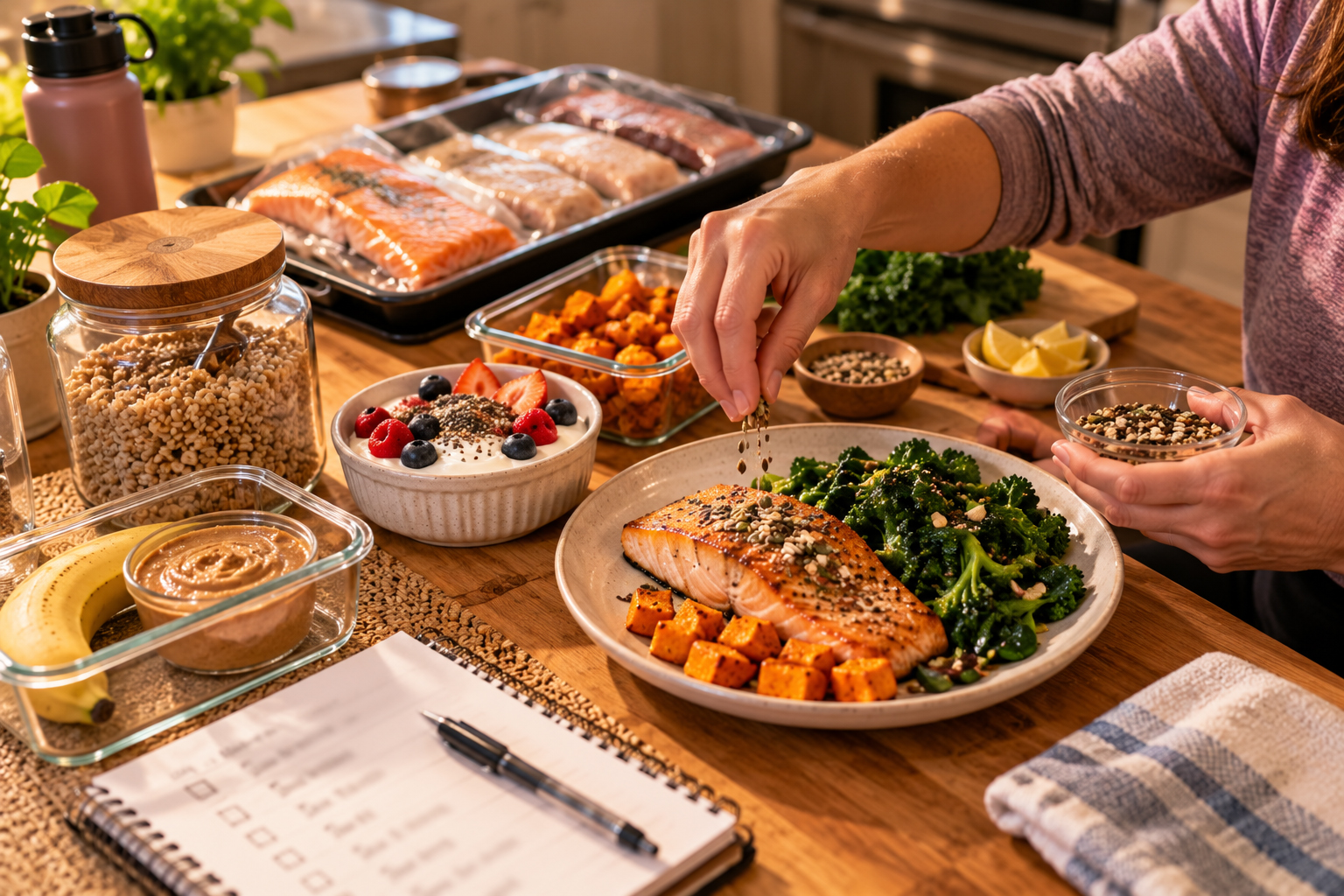
Small adjustments to what you eat at dinner and snacks can noticeably affect how you feel during and after home workouts. This guide focuses on practical, repeatable plate tweaks that take minutes to implement and use common ingredients. You won’t find strict meal plans here — just reliable swaps and combinations that support energy, repair, and sleep. Use them as a framework and adapt to your schedule and tastes.
Focus on Protein First
Start each main meal with a clear protein portion: a palm-sized piece of fish, poultry, tofu, or a serving of beans or Greek-style yogurt. Protein stops muscle breakdown and provides amino acids needed for repair, especially after resistance work or high-intensity sessions. Aim for 20–35 grams at dinner if you train later in the day; that typical range supports recovery without making meals feel heavy. Protein also helps stabilize appetite so you’re less likely to raid the pantry an hour later.
Choosing familiar, versatile proteins makes this simple: grill extra on the weekend, or keep canned fish and eggs handy for quick plates. Even modest increases in protein at dinner add up across the week. Pair protein with easy sides to finish the plate.
Balance Carbs for the Right Kind of Energy
Carbohydrates aren’t the enemy; they refill glycogen and give the fast energy your muscles need for repeat efforts. Match carb type and portion to workout timing: whole grains, starchy vegetables, or fruit for heavier sessions; smaller portions of quinoa, roasted sweet potato, or brown rice for lighter or evening workouts. Quality carbs paired with protein improve muscle glycogen restoration and reduce late-night hunger that disrupts sleep.
Think in plate ratios rather than exact grams—roughly a quarter to a third of the plate can be carbs for most evening training days. Adjust up or down based on how you feel during workouts and how quickly you recover afterward.
Practical Swaps and Smart Snacks
Make quick swaps that upgrade nutrition without extra cooking: swap white rice for farro, chips for air-popped popcorn, or soda for sparkling water with a splash of juice. For pre- or post-workout snacks, choose a small combo of carb plus protein — a banana with nut butter, cottage cheese with berries, or a turkey roll-up with a slice of apple.
- Keep a batch-cooked grain on hand for fast plates.
- Freeze single portions of lean proteins for quick thawing.
- Portion snacks into small containers to avoid overeating.
These habits reduce decision friction and keep meals aligned with training without much thought. Over time they create a steady foundation for more consistent progress.
Conclusion
Small, sustainable plate changes produce better workouts and faster recovery than drastic, short-lived diets. Focus on a reliable protein portion, tuned-carb choices, and a few convenient swaps to make healthy defaults easy. Consistency with these tweaks is what moves the needle for at-home training.