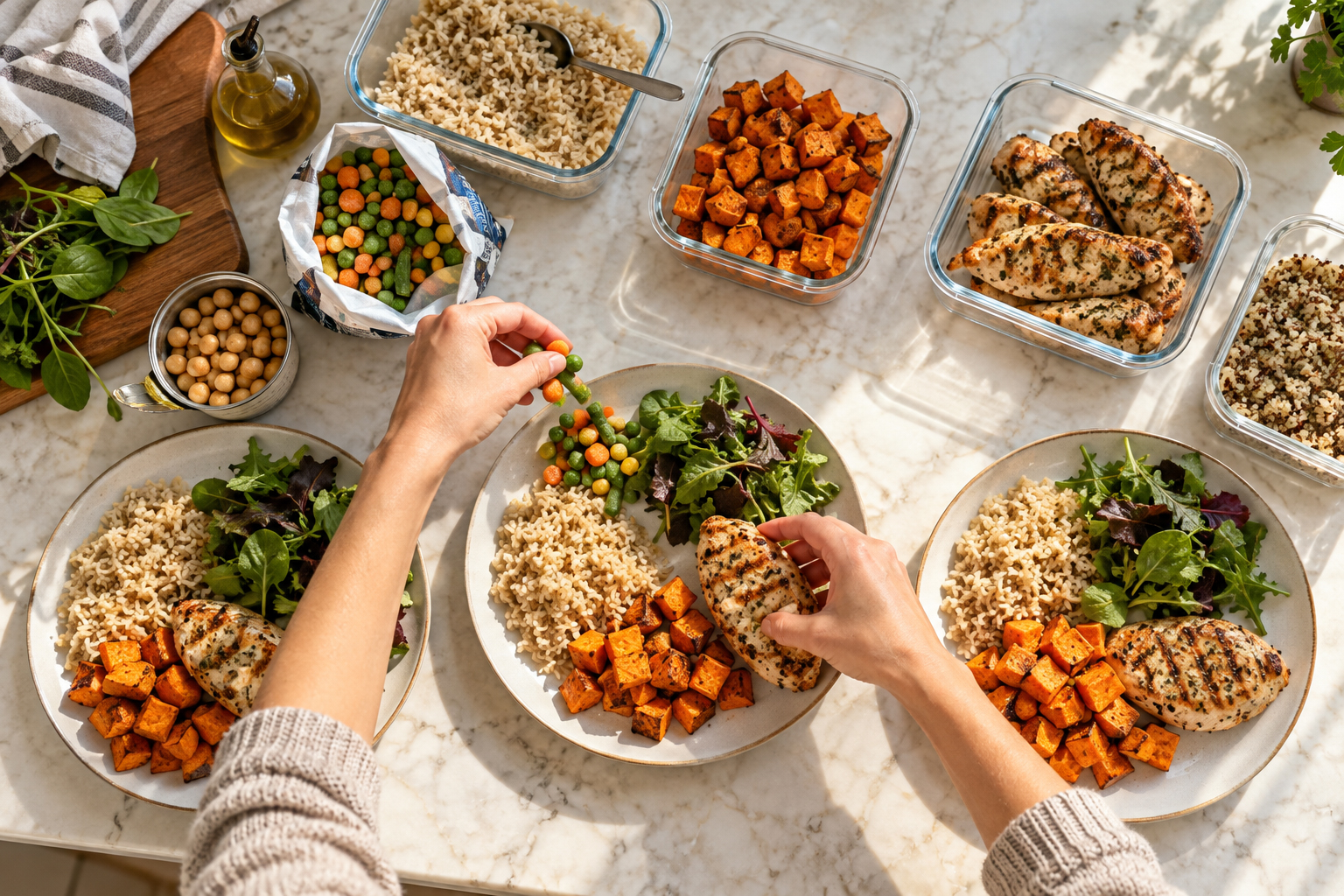
Simple, repeatable meals keep home training sustainable without adding kitchen stress. Focus on three building blocks—protein, a starchy or fibrous carbohydrate, and vegetables or healthy fats—and you have a dependable template that adapts to any schedule. Small changes in portion or timing around workouts can alter energy and recovery noticeably, so planning a few go-to plates pays off. Below are practical blueprints and swaps you can use tonight with things already in your pantry.
A Three-Component Plate
Think of each meal as a balance of protein, a carb source, and produce or healthy fats. Protein helps repair muscle and supports fullness; aim for a palm-sized portion for most meals and adjust larger after intense sessions. Carbs like rice, potato, toast, or oats restore glycogen for repeated training days, while vegetables or a drizzle of olive oil provide micronutrients and satiety. This simple frame prevents overthinking and keeps shopping lists short.
Start by pairing one protein with one carb and one veg each dinner to reduce decision fatigue. You can rotate within that frame to keep meals interesting while ensuring consistent fuel.
Pantry Swaps to Keep It Fast
Lean on shelf-stable and frozen staples when time or energy is low: canned beans, frozen fish fillets, and whole-grain pasta are quick winners. Swapping ingredients keeps bowls varied without extra shopping—canned tuna for shredded chicken, lentils for ground meat, or quinoa for brown rice all work. With a handful of options you can mix and match and still hit macro targets. Relying on frozen veg also cuts prep time dramatically and reduces waste.
- Swap grilled chicken for canned chickpeas in salads.
- Use frozen mixed vegetables in stir-fries or omelets.
- Replace white rice with quick-cook couscous or bulgur.
These small swaps keep meals ready in under 20 minutes and reduce the temptation to skip proper recovery food.
Timing, Portions, and Practical Tips
If your workout is under an hour, a modest carb-plus-protein meal 1–2 hours before will suffice; for longer or intense sessions, add a bit more starchy fuel. After training, prioritize a protein-containing meal or snack within 60–90 minutes to support repair, and include some carbohydrates if you’ll train again within 24 hours. Portion size should reflect your goals and hunger—use your palm and fist as simple portion checks rather than scales. Keep a few ready-made components in the fridge to assemble meals quickly when you’re pressed for time.
Small, consistent habits—batch-cooked grains, roasted veggies, and pre-portioned proteins—make following these blueprints realistic for busy home trainers. That predictability is what helps you train more often and feel better while doing it.
Conclusion
Simple meal blueprints remove decision fatigue and keep your workouts fueled without much planning. Use the three-component plate, smart pantry swaps, and basic timing rules to build reliable dinners and snacks. Consistency with easy choices is the most effective way to support regular home training.