Short workouts, repeated several times a week, don’t need elaborate meals to be effective. A few dependable plates built from pantry staples can supply energy during a session and provide the protein and carbs needed after. With basic portion rules and simple swaps you can stop overthinking food and still make steady fitness progress. This piece lays out practical plate ideas and small habits that make recovery easier without extra time in the kitchen.
Why simpler meals work for home training
When workouts are short and frequent, consistency beats complexity. Meals that balance protein, a starchy carb, and some micronutrient-rich produce deliver the building blocks for repair and sustained energy. Keeping ingredients interchangeable reduces decision fatigue and helps you eat predictably around training. The goal is reliable nutrition, not culinary perfection.
Pantry-first plate formulas
Choose one protein, one starch, and one vegetable or fruit as a repeatable pattern you can assemble in minutes. Proteins can be canned fish, tofu, eggs, or rotisserie-style cooked meats; starchy bases include rice, potatoes, oats, or whole-grain pasta; veg might be frozen broccoli, salad greens, or a simple tomato salad. Below are quick combinations that cover most post-workout needs and are easy to scale up or down.
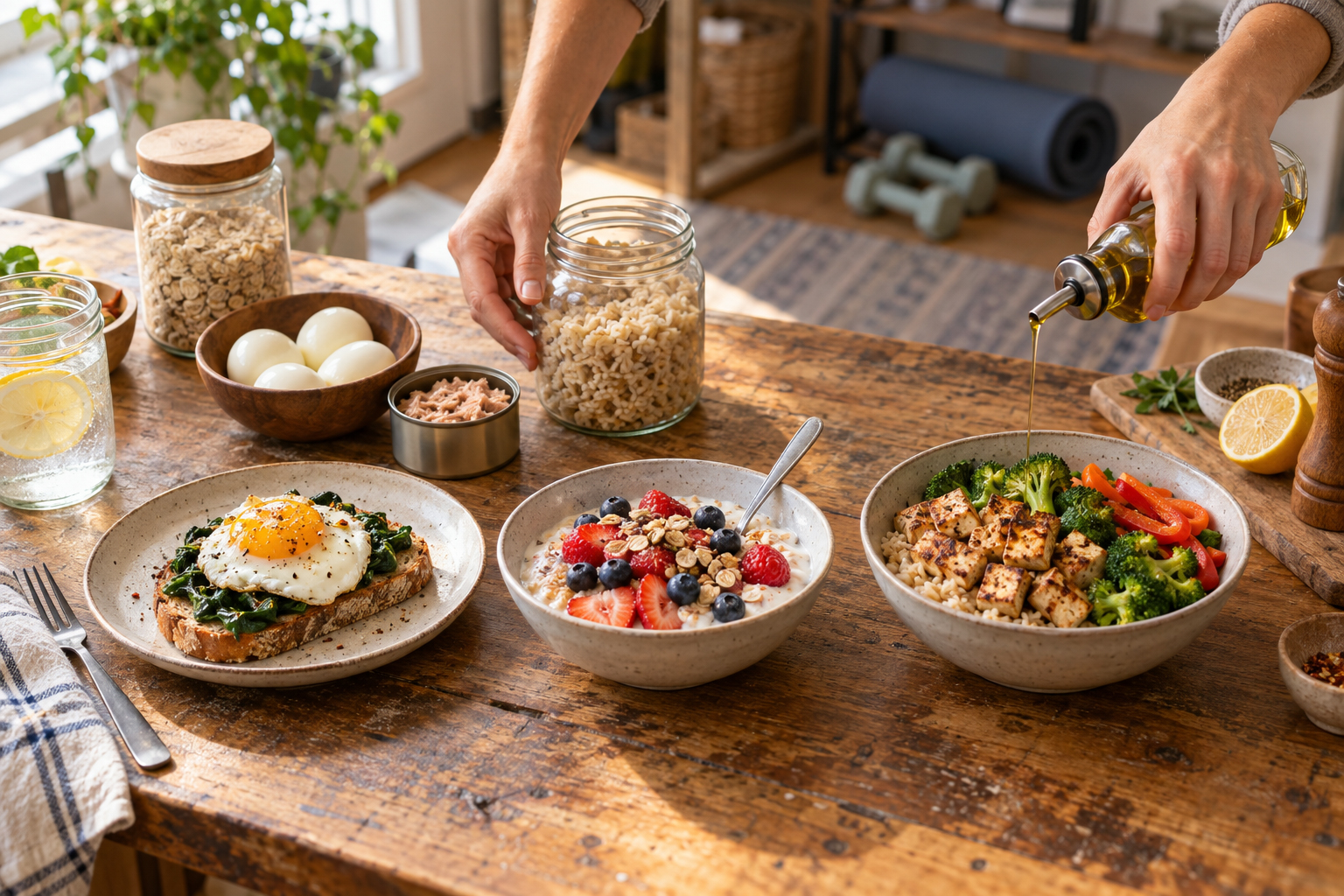
- Egg + toast + spinach: quick, high-quality protein and easy carbs.
- Greek-style yogurt + oats + berries: gentle on digestion and portable.
- Grilled tofu + brown rice + steamed mixed veg: plant-first repair plate.
- Bean salad + quinoa + roasted peppers: fiber-rich and sustaining.
Each combo gives roughly the same functional outcome: protein for synthesis, carbs to restore glycogen, and plants for vitamins and fluid. Rotate these based on what’s in your kitchen and how you feel after workouts.
Timing and portions for short sessions
Aim for a modest meal 60–90 minutes before a light session or a small snack 20–30 minutes before if you need a quick lift. After training, target 20–30 grams of protein and a moderate portion of carbohydrate to speed repair and refill energy. Portion sizes depend on your size and goals, but practical measures—one palm-sized protein portion, a cupped handful of carbs, and a fist of vegetables—work for most people. Drinking water with the meal helps digestion and rehydration without complications.
Small habits that improve recovery
Prep one element each night: cook a batch of rice, roast a tray of vegetables, or boil eggs for the week to cut friction before meals. Keep simple seasonings and a reliable fat source such as olive oil or nut butter to round plates and aid calorie absorption. Track how you feel and tweak portions rather than chasing perfect macros; small, consistent changes are what sustain progress. These habits keep food practical and prevent skipped meals after a tiring session.
Conclusion
Simple, repeatable meals make it easier to fuel frequent home workouts. Stick to a protein, a starch, and a vegetable, and use small prep habits to save time. Over time, consistency with these plates will support energy, repair, and steady progress.