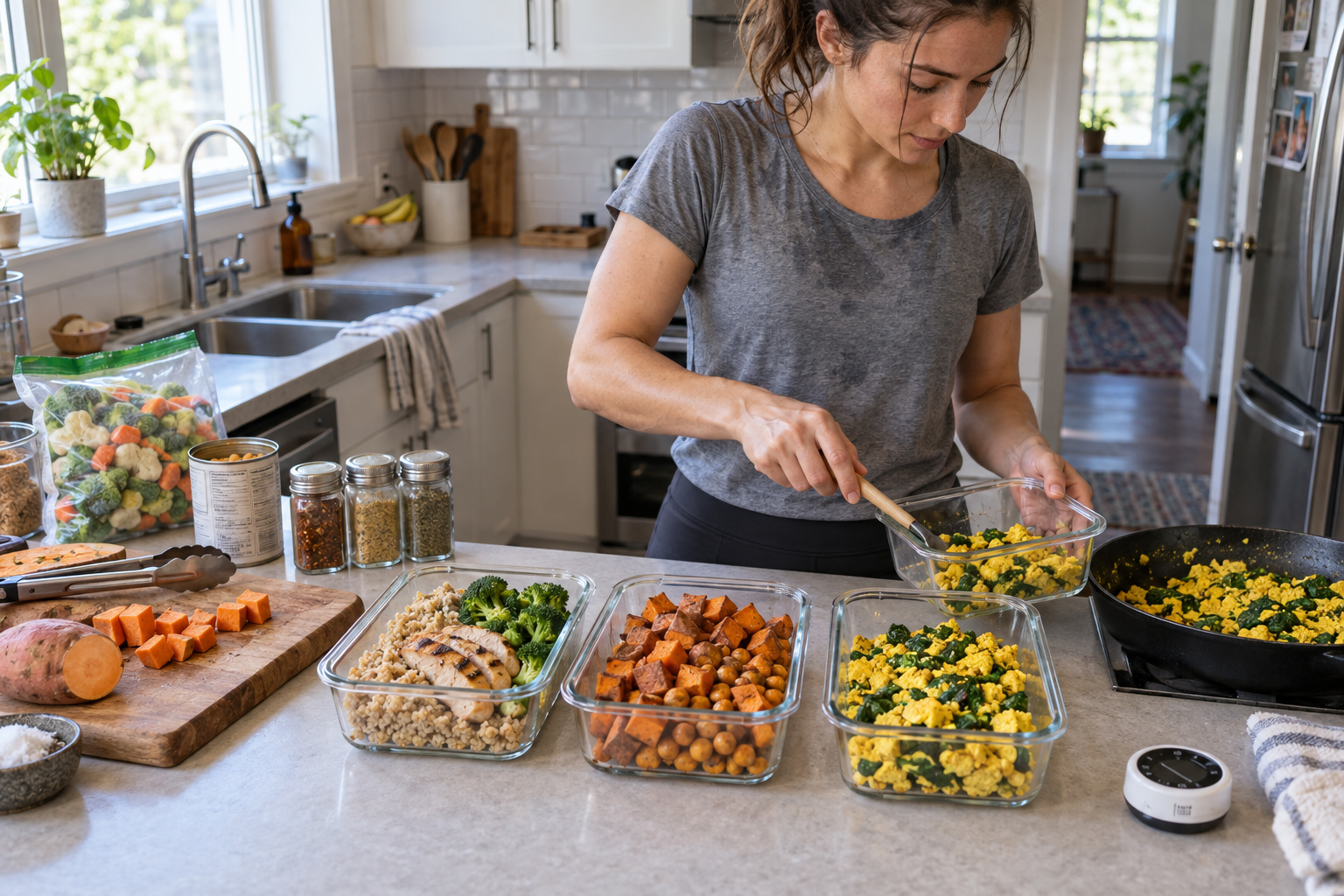
If you want to exercise more frequently, your kitchen should be an ally, not a chore. Small, reliable dinners that combine protein, carbs, and a bit of fat make it easier to recover and feel ready for the next session. The goal is to shave time off prep while keeping portions sensible and ingredients familiar. With a few habits you can eat simply and still support steady training progress.
Why simple dinners increase training consistency
Complex recipes and long shopping lists become excuses; plain, repeatable meals remove that friction. When dinner takes under 30 minutes or can be assembled from leftovers, you’re more likely to refuel properly instead of skipping meals or grabbing convenience food. Consistent nutrition means fewer energy dips and steadier recovery across the week. That reliability directly translates to having the energy and motivation for another workout.
Keep meals predictable: a familiar template reduces decision fatigue and helps you match portions to how hard you trained. Over time, small, frequent wins at the table add up to more consistent training sessions.
Three building blocks every recovery dinner needs
Think of each plate as three parts: a protein source, a starchy or fibrous carbohydrate, and a small portion of healthy fat. Protein supports muscle repair, carbs refill glycogen, and fat helps with satiety and nutrient absorption. You don’t need fancy ingredients — lean animal proteins, legumes, eggs, whole grains, and a handful of vegetables cover most needs. Aim for a serving of each block and adjust quantities based on the length or intensity of your workout.
- Swap: canned beans for meat in one-pot stews to save time and add fiber.
- Swap: frozen veggies for fresh when short on prep time without losing nutrients.
- Swap: quick-cooking grains like bulgur or couscous for longer brown rice on busy nights.
These swaps keep variety without adding complexity, and they make it easier to eat right more often.
Timing and portions for busy evenings
Eating within 60–90 minutes after a workout helps recovery, but practical timing matters more than exact minutes. If you train late, keep dinner lighter but protein-rich — for example, an omelet or Greek yogurt with fruit and nuts. On heavier training days, increase the carbohydrate portion and include a full protein serving, such as grilled chicken with sweet potato. Portioning food into reusable containers after cooking saves time and avoids last-minute poor choices.
Plan two or three core dinners and rotate them through the week to simplify grocery lists and speed prep. The fewer decisions nightly, the more likely you’ll stick to training plans.
Recipe frameworks to rotate without boredom
Use repeatable templates: bowl (grain + protein + veg + sauce), sheet-pan (protein + veg + starch roasted together), and skillet (one-pan stir with a legume or egg). Each framework takes different prep but similar shopping lists, so you can swap flavors with spices or condiments. Keep three sauces or spice blends on hand to change character without new ingredients.
These frameworks let you vary meals without relearning recipes, making recovery-focused dinners both doable and interesting. Stick to simple templates and you’ll find training more sustainable.
Conclusion
Small, predictable dinners reduce decision fatigue and help you refuel consistently after workouts. Rotate simple templates and a few smart swaps to keep meals quick and varied. When your evening routine supports recovery, training more often becomes much easier.