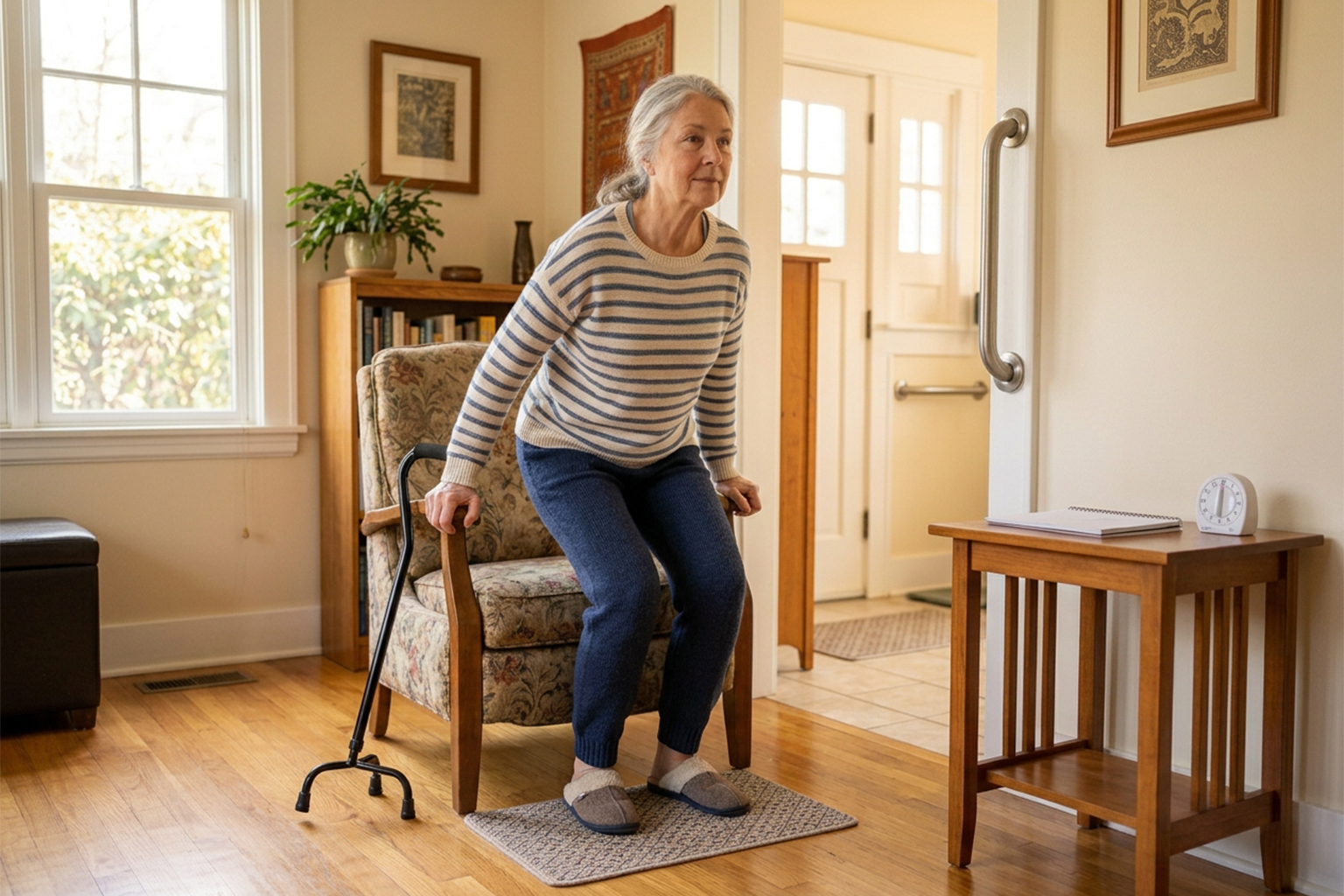
Recovering movement at home doesn’t require dramatic workouts or expensive equipment. Small, consistent habits often produce the biggest gains in balance, strength, and confidence. This piece focuses on practical, everyday steps you can take inside your living space to move more comfortably and reduce the risk of setbacks. Read on for room-by-room adjustments, short routines, and simple signals that tell you when to get extra help.
Keeping progress steady and safe is the goal. These suggestions are practical rather than prescriptive. Use them as a starting point and adapt to your comfort and guidance from clinicians.
Begin with steady foundations
Start each day with a few low-impact movements that wake up joints and muscles. Simple standing weight shifts, seated marches, and ankle circles increase circulation and teach your body how to balance gently. Aim for brief sets—20 to 60 seconds per exercise—so you build tolerance without provoking pain. These micro-sessions are easy to repeat and keep you moving multiple times during the day.
Progress by adding a little time or another repetition when the movements feel easy. Small, frequent practice beats occasional long sessions for lasting improvement.
Adjust your rooms for safer movement
Tidy walkways, secure loose rugs, and move commonly used items to reachable heights to prevent awkward reaching and twisting. Good lighting and a stable chair with armrests make transfers and standing safer. Consider a non-slip mat in frequently wet areas and a simple grab bar near the shower or toilet if balance feels uncertain. These changes reduce surprises and let you focus on controlled movement rather than compensating for hazards.
Rearranging a few key items can remove many daily obstacles. Think like a physical therapist: simplify patterns that force you into unsteady positions.
Short focused sessions that help
Design two to three small movement windows in your day: morning, midday, and evening. Each window can include one mobility exercise, one strength move (like sit-to-stands), and one balance challenge (such as standing on softened ground near support). Keep total time under 10 minutes per window so consistency feels manageable. Use a chair or countertop for safety when trying more challenging tasks.
Consistency matters more than intensity at this stage. Track what you do so you can celebrate small gains and adjust gradually.
Know when to get professional input
If pain increases, new numbness appears, or a routine suddenly feels unsafe, pause and reach out to a clinician or therapist. Professional assessment helps identify underlying causes and tailored progressions that respect healing limits. Telehealth or a home visit may be options depending on mobility and access. Early input can prevent setbacks and refine the plan for better outcomes.
Don’t wait for a crisis to ask for help. Timely guidance preserves gains and keeps recovery moving forward.
Conclusion
Start with tiny, consistent steps and adjust your space to make movement safer. Keep sessions short and track progress so gains build without strain. Seek professional advice when you notice worsening symptoms or uncertainty about exercises.