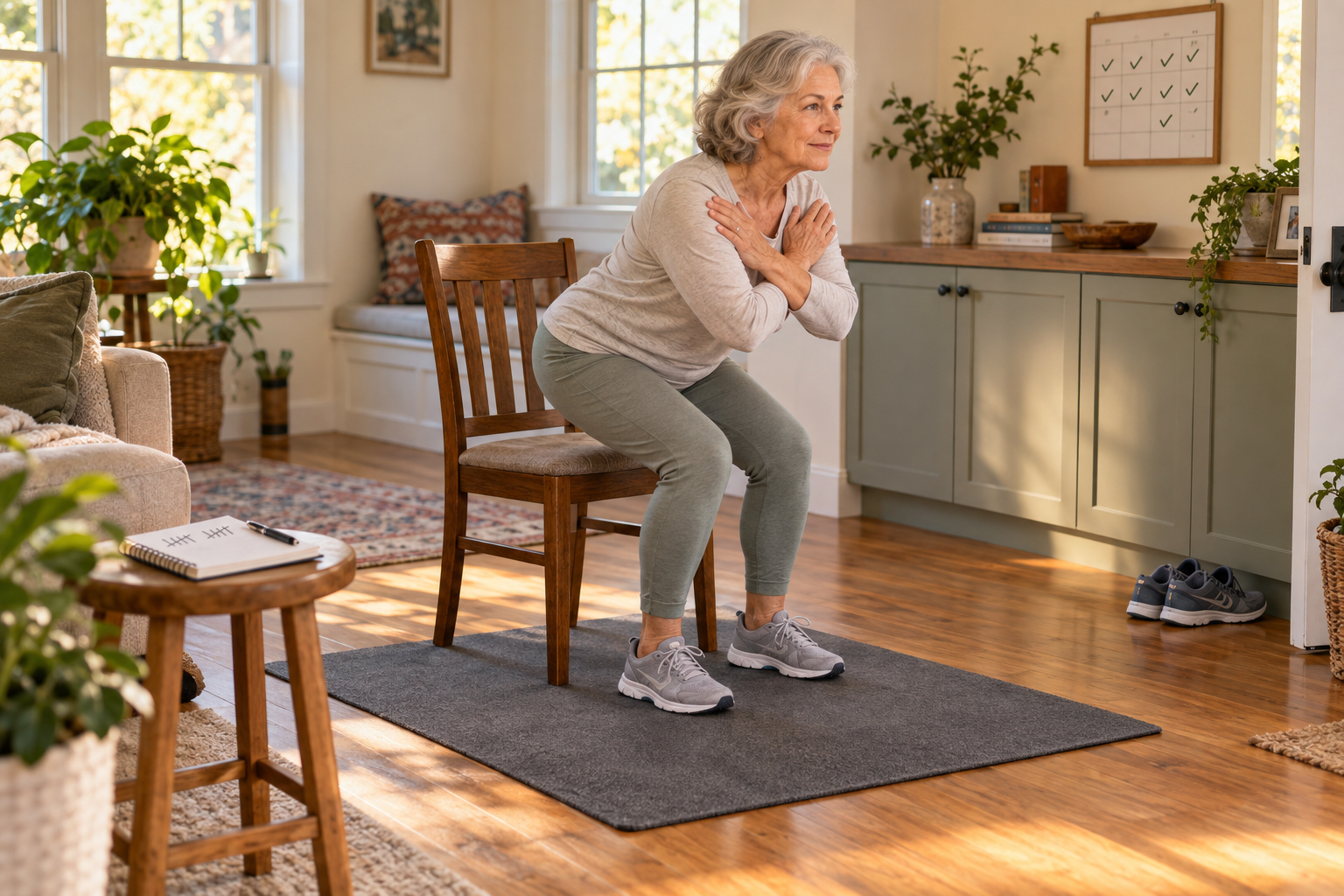
Recovering movement or wanting steadier daily balance is easier if tasks are small and consistent.
Instead of long workouts, short focused habits reduce fatigue and lower reinjury risk.
This approach fits into ordinary days and helps strengthen the specific actions you use most.
Below are accessible steps for setting up routines, exercises, and tracking to make steady gains.
Start Small and Be Specific
Pick one concrete action you can repeat daily, like five sit-to-stands after waking or a two-minute standing balance by the counter. Small, measurable goals make progress visible and keep motivation steady. Aim for technique over speed: controlled movement builds usable strength without excess strain. Consistency matters more than duration at this stage.
Log the action and how it feels—notes help you adjust. Increase repetitions gradually when the movement becomes easy.
Create a Safe, Repeatable Space
Designate a short stretch of floor near a stable surface so the same cues and layout become routine. Remove loose rugs, ensure good lighting, and keep a chair for support or rest within reach. Use shoes with grip or go barefoot if comfortable and recommended by a clinician. The goal is reliability: fewer barriers make it easier to do the habit every day.
- Clear 3–4 feet of space
- Place a non-slip mat or keep supportive footwear nearby
A predictable environment reduces hesitation and improves safety. Small changes often have outsized effects on whether a habit sticks.
Short Sessions That Target Strength and Balance
Combine very brief strength moves with balance practice to mirror daily demands like standing up, reaching, or stepping. Examples include sit-to-stand repetitions, single-leg stands at the counter, heel-to-toe walking for a few steps, and wall push-offs. Keep sessions under ten minutes initially, split across the day if needed. Short, specific sets reduce pain flare-ups while building functional capacity.
- Sit-to-stand: 5–10 reps, twice daily
- Single-leg balance: 20–30 seconds each side, repeat 2–3 times
- Heel raises: 8–12 reps for ankle strength
If an exercise increases sharp pain, stop and reassess technique or intensity. Progress slowly and celebrate small wins.
Track Progress and Respect Limits
Measure what matters: time standing without support, number of sit-to-stands, or a short walk distance. Simple tracking—on paper, a phone note, or a habit app—shows trends and flags plateaus. When fatigue or pain increases, back off intensity or frequency for a few days and focus on recovery activities. Communicate changes with a clinician if you have a medical condition or unusual symptoms.
Progress isn’t linear, and short setbacks are part of steady gains. The aim is safer, more reliable movement over months, not instant returns.
Conclusion
Small, focused habits done in a safe space build everyday strength and balance.
Keep sessions brief, track what you do, and adjust when needed.
Over time these steady steps create more confident, safer movement at home.