Coming home after treatment or a period of inactivity can feel both hopeful and a little intimidating. Small, repeatable actions tend to matter more than dramatic efforts when the goal is safe, steady improvement. This article lays out practical approaches you can use around the house to move with less fear and more confidence. The emphasis is on manageable sessions, sensible environmental tweaks, and gradual progression.
Begin with brief, predictable movement sessions
Short, consistent practice beats occasional long workouts when rebuilding everyday mobility. Aim for multiple five- to ten-minute sessions across the day focused on standing up, controlled stepping, gentle reach-and-bend patterns, and balance holds that feel challenging but not overwhelming. Start each session with a simple warm-up—marching in place, ankle circles, or shoulder rolls—to cue your body that movement will follow. Keep the pace steady and prioritize smooth, controlled motions rather than speed or heavy load.
Set a realistic daily target and use alarms or a checklist to keep things predictable. When sessions are short and scheduled, they become habits rather than chores.
Adapt your rooms and daily tasks
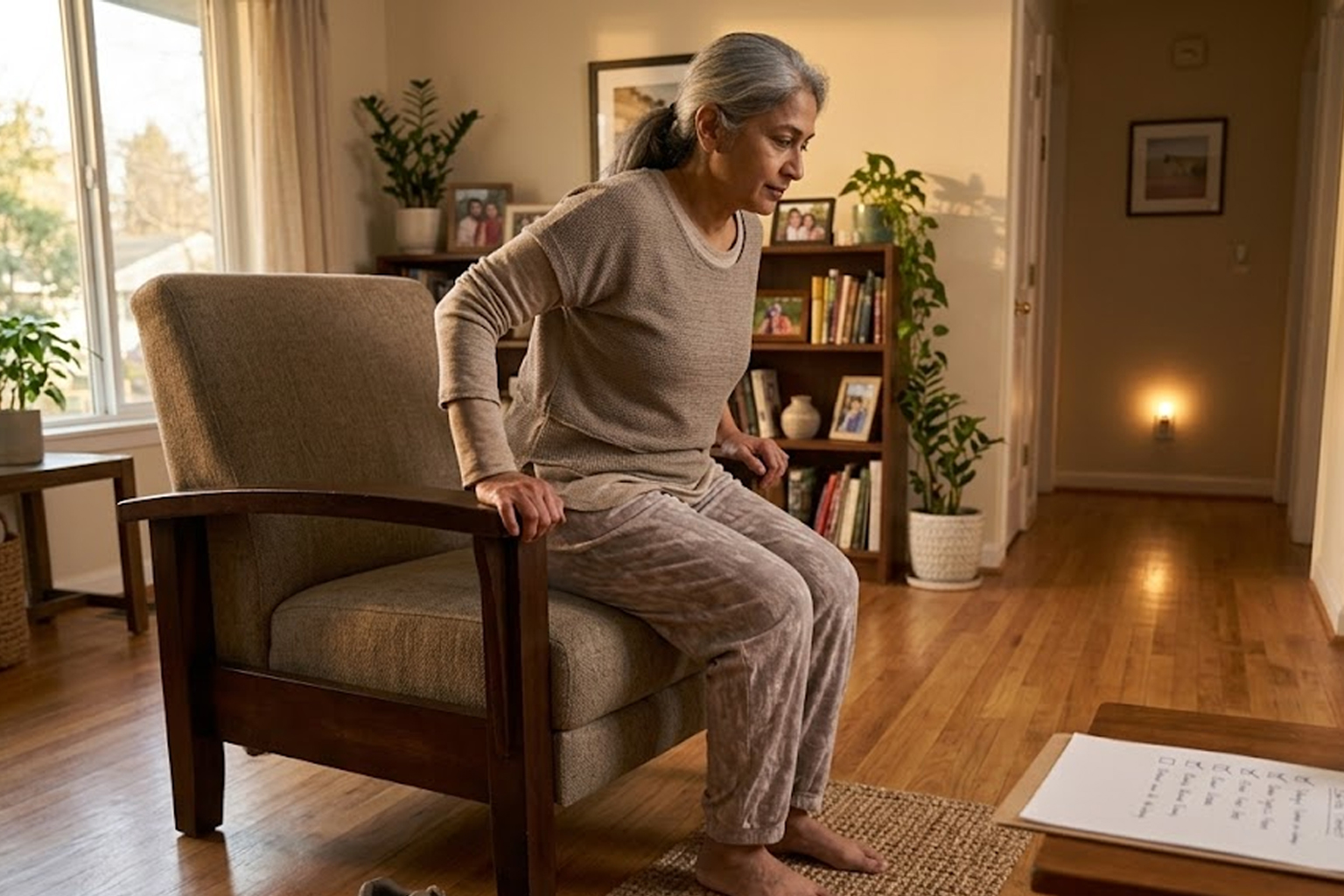
Rearranging a few items at home reduces risky manoeuvres and makes practice safer and more comfortable. Clear a 2–3 foot pathway in high-traffic zones, add a stable chair with armrests near the bed or sofa for supported sit-to-stand practice, and improve lighting in hallways and stairs for better visual cues. Simple footwear with good grip and non-slip mats in bathrooms significantly reduce slips, and keeping frequently used items at waist height prevents awkward reaching.
- Place a small lamp or nightlight along key routes.
- Keep a pair of supportive shoes by the bed or door.
- Store everyday items within easy reach to avoid twisting.
These modest changes cut down on unnecessary strain and let you focus energy on purposeful movement practice. Small environmental wins make daily tasks safer and encourage independence.
Monitor effort, rest, and gradual progression
Track how a movement feels using simple cues like breath, control, and whether effort increases over repetitions. Distinguish normal muscle tiredness from sharp or unusual pain, and stop or modify any activity that produces alarming sensations. Build load slowly: increase repetitions, reduce support, or add a short extra walk once a week rather than all at once. Rest and sleep are part of the plan; recovery days help the body adapt to new demands.
Celebrate small gains such as fewer pauses when walking or easier transfers out of a chair. Regular, modest progress is the safest route back to stronger, more confident daily movement.
Conclusion
Rebuilding mobility at home works best when changes are simple, measurable, and repeatable. Focus on short movement sessions, sensible room adjustments, and gradual increases in challenge to protect progress. Small steady steps often lead to the most lasting improvements.