Home workouts are convenient, but when an injury happens the paperwork and policies can feel like a second challenge. Knowing what to collect, who to call, and how treatment choices affect a claim makes the difference between a smooth process and unexpected bills. This short guide focuses on practical steps you can take right after an incident and how typical policies respond to common home exercise injuries. Read on for clear actions that keep care timely and claims credible.
Common Coverage After a Home Workout Injury
Most health plans treat injuries from ordinary exercise the same as other accidental injuries, so emergency care, imaging and initial specialist visits are usually covered under standard benefits. What matters next is whether follow-up services—physical therapy, durable medical equipment, or surgery—require prior authorization or fall under separate outpatient rules. Plans often have different in-network requirements, copay structures and rehabilitation limits that affect out-of-pocket cost. Check your summary of benefits quickly to spot any special rules for outpatient rehab or specialist referrals.
Knowing typical coverage patterns helps you make choices that keep costs down without delaying necessary care. Confirm whether an urgent care visit will meet your plan’s criteria before seeking non-emergency treatment if you can safely wait.
Documentation That Helps a Claim
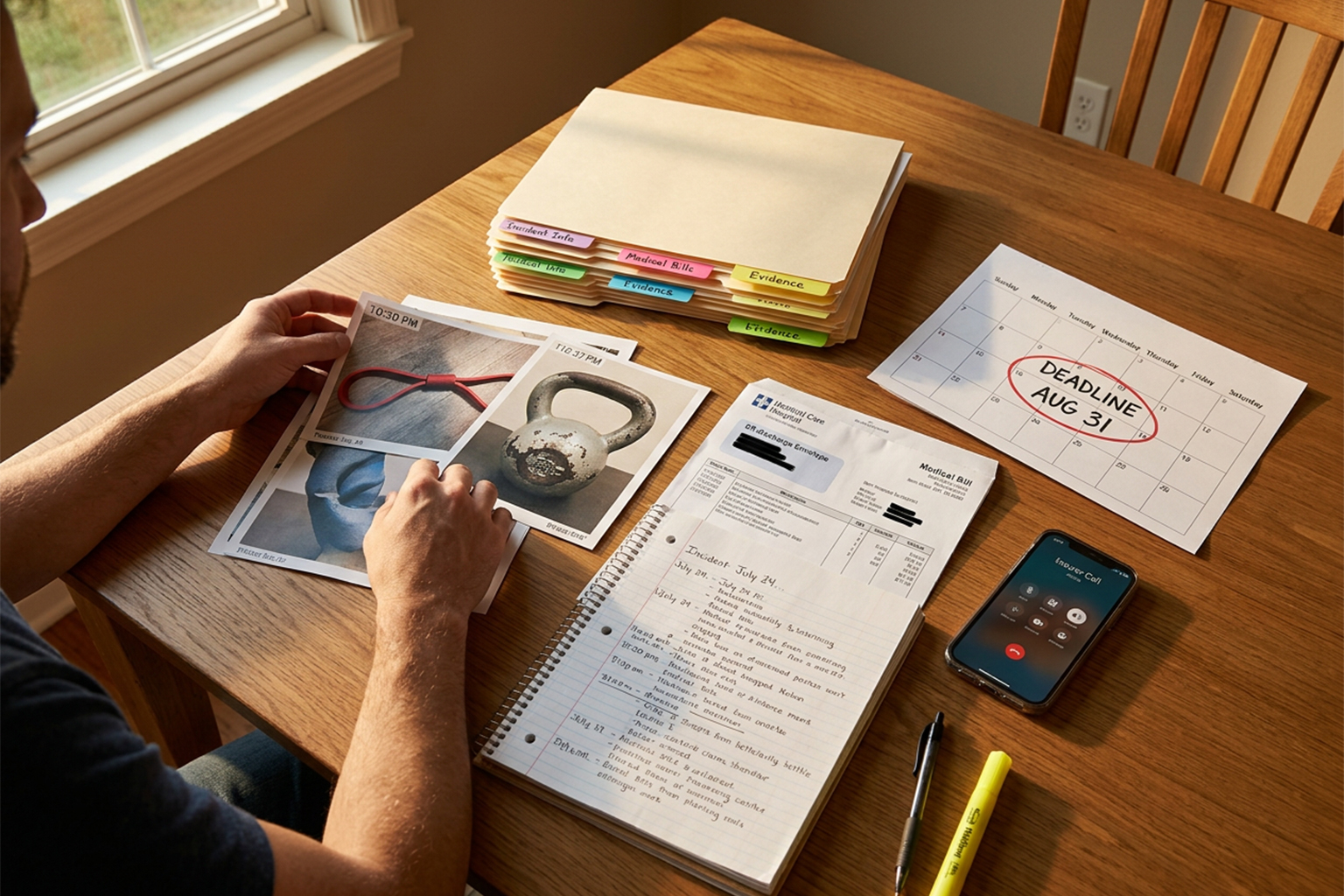
Good documentation is the single most helpful thing when filing a claim. Record the date and time of the event, describe what you were doing and preserve photos of the environment and any damaged equipment. Keep copies of visit notes, imaging results, itemized bills and receipts for related expenses such as braces or rental equipment.
- Incident notes with the mechanism of injury.
- Provider records and codes, when available.
- Photographs, equipment serial numbers, and witness contact information.
Submit organized documentation to your insurer promptly and keep a digital copy for yourself; many denials happen because the carrier can’t verify what occurred or when.
Choosing Care and Understanding Costs
Choosing an in-network provider and obtaining required referrals or prior authorizations are practical steps that often reduce surprise bills. If a specialist or facility is out-of-network, ask for an estimate and whether the insurer offers any out-of-network reimbursement options. For rehabilitation, check visit limits, any day-one waiting periods and whether telehealth or home-based therapy is an acceptable alternative under your plan.
When cost estimates are unclear, request an itemized estimate in writing and discuss payment plans with your provider while the claim is pending. Staying proactive helps prevent unexpected balances.
Conclusion
After a home workout injury, quick documentation and choosing in-network care will protect both your health and your wallet. Review coverage details like prior authorization and rehab limits before agreeing to non-urgent services. Being organized and asking the right questions makes filing smoother and reduces the chance of surprise costs.