Recovering movement after medical treatment often feels slow and uncertain, but small, intentional changes at home make a measurable difference. Start with brief activities you can repeat several times a day, and pair them with simple environmental fixes that reduce strain and risk. This approach prioritizes consistency over intensity so progress builds without setbacks. Read on for concrete routines, room tweaks, and easy ways to check your progress safely.
Keep expectations realistic: steady small gains add up, and making the home supportive will let you practice more often with less worry. The tips below are meant to be practical and adaptable to different living situations.
Start with short, reliable movement sessions
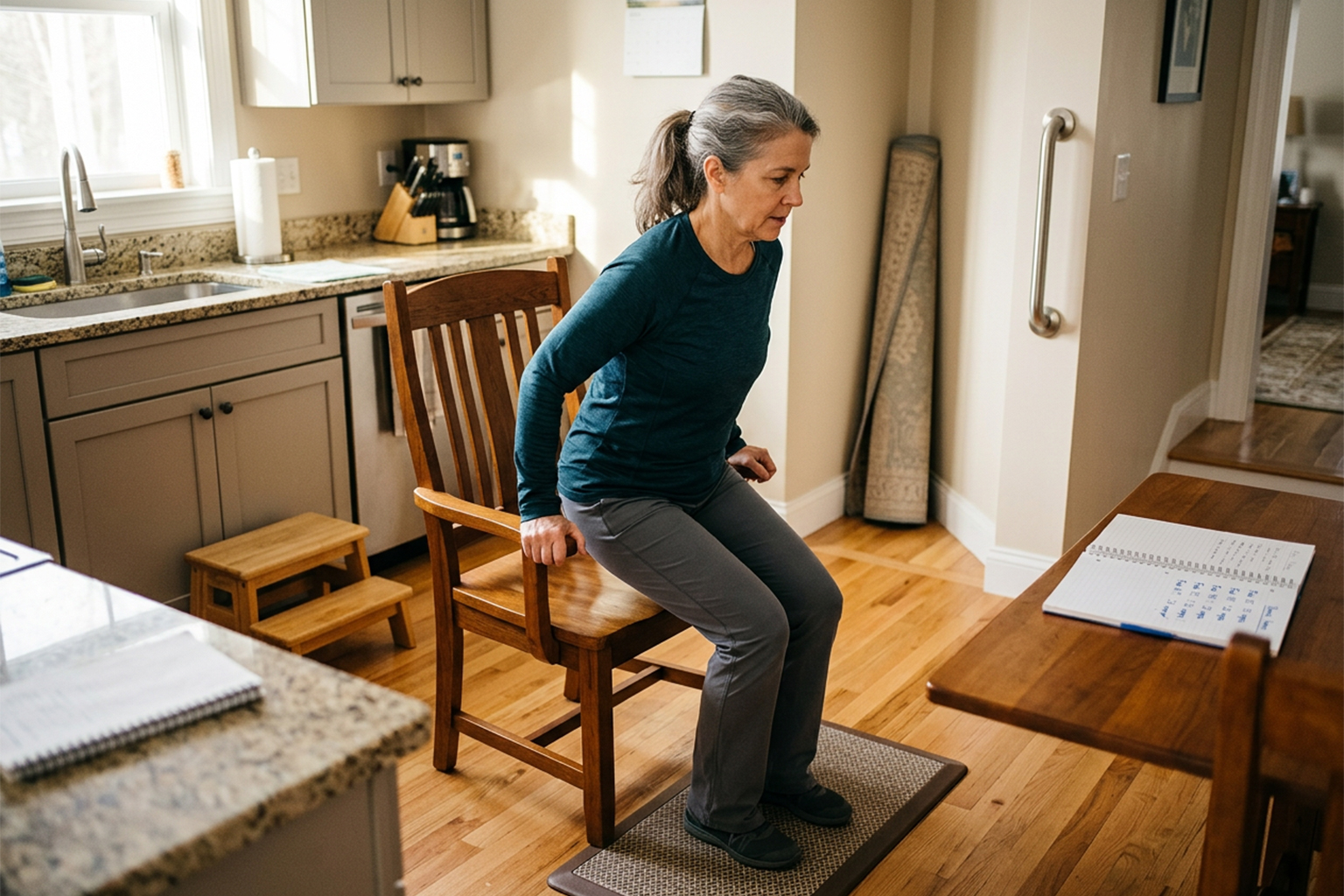
Begin by choosing two or three brief exercises you can do every day: seated leg lifts, heel-to-toe stands, or gentle sit-to-stand repetitions. Aim for sessions lasting five to ten minutes, done in the same place and at roughly the same time to build a habit. Focus on controlled form, not speed; slower, deliberate movements train balance and confidence better than rushing through reps. If fatigue is a factor, break sessions into one-minute sets spread across the day.
Track what you do in a simple notebook or phone note so small improvements—extra seconds standing, more repetitions—are visible. Consistency beats intensity early on, and these short bursts reduce the chance of overexertion.
Make targeted home adjustments to reduce risk
Small changes to the immediate environment remove barriers to safe movement and encourage practice. Put non-slip mats in key spots, move loose rugs out of walking paths, and place sturdy chairs where you pause most often. Improve lighting in hallways and stairways so steps and thresholds are easier to see, and keep frequently used items within arm’s reach to avoid unnecessary reaching or twisting.
- Secure handrails near stairs and in bathrooms where possible.
- Add a stable stool by sinks to allow short rests while standing.
- Use clear pathways and store cords and clutter out of walking routes.
These changes don’t need professional installation in most cases, and they make it safer to repeat short practice sessions throughout the day. Removing small hazards is often the simplest way to prevent setbacks.
Monitor progress and prioritize safe escalation
Regularly review how movements feel and whether tasks are getting easier; simple self-checks help you decide when to add challenge. Increase difficulty gradually—longer standing times, fewer supports, or slightly more repetitions—only when tasks feel consistently manageable. If pain, dizziness, or sharp discomfort occurs, pause and consult a clinician before advancing routines.
Keep a line of communication open with any care team members and adjust the plan based on feedback. Slow, measurable progress combined with a safer home environment sets up lasting improvements in balance and daily function.
Conclusion
Short, consistent movement sessions plus basic home adjustments create a safer foundation for rebuilding balance and everyday function. Track small wins and increase challenge gradually, staying alert for warning signs that require professional input. With steady habits and a supportive space, daily tasks become easier and more secure over time.