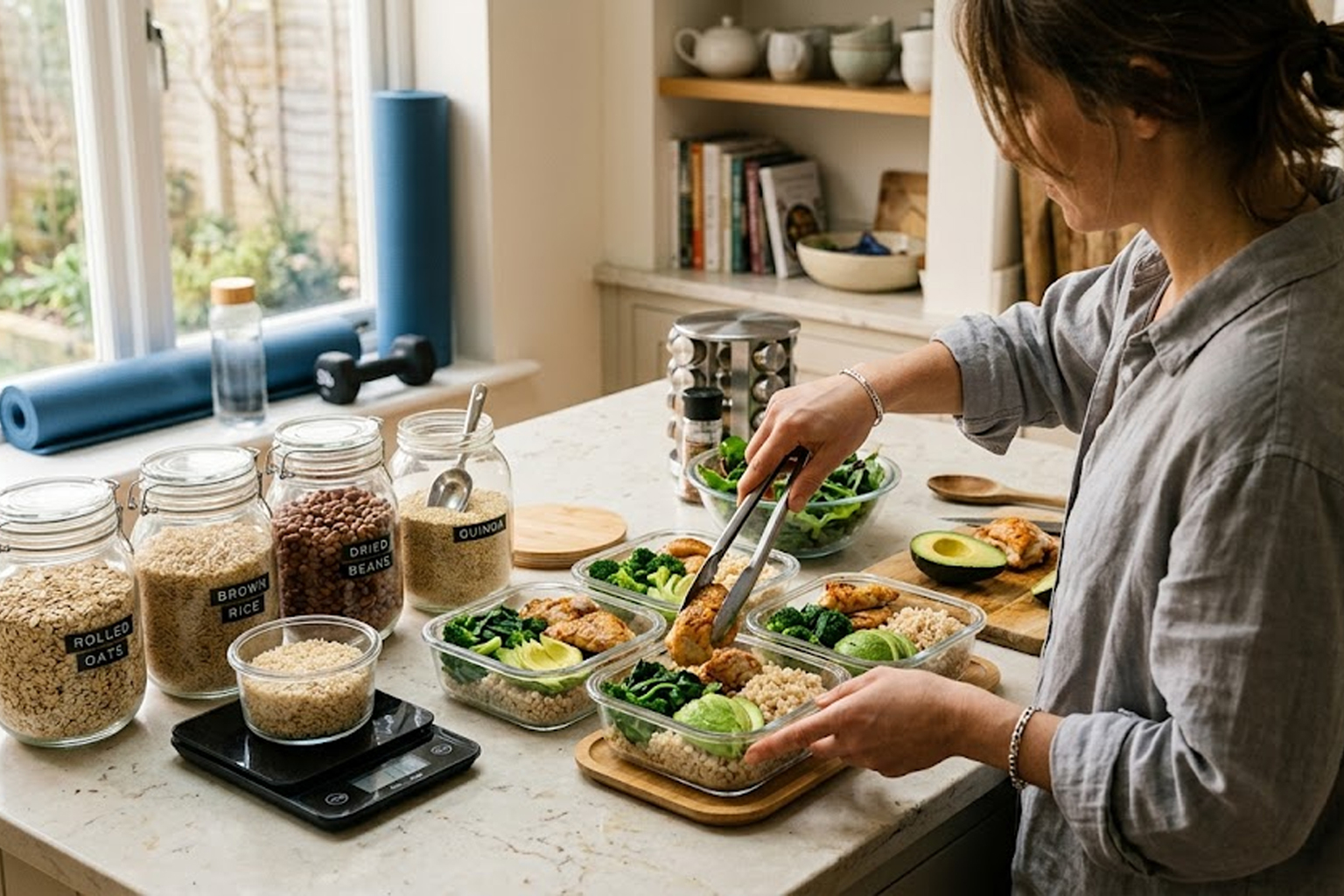
Consistent nutrition is one of the easiest levers to improve performance and recovery for people who train at home. Structured meal templates take the guesswork out of daily choices so you can focus on consistency rather than perfect recipes. This guide presents plate formulas, simple prep rhythms, and smart snack ideas that fit around home workouts. Use these templates to match energy needs before and after sessions without extra stress.
Quick Balanced Plate Formula
A reliable plate starts with three components: a lean protein, a fiber-rich carbohydrate, and a source of healthy fat. Aim for roughly a palm-sized protein portion, a cupped-hand of carbohydrates, and a thumb-sized fat portion at each main meal to keep portions sensible. Vegetables should fill at least half the plate to boost micronutrients and satiety while keeping calories controlled. Adjust sizes based on activity level: increase carbs around intense sessions, and favor slightly larger proteins on strength days.
- Protein: grilled chicken, tofu, canned fish, or legumes.
- Carbs: sweet potato, brown rice, quinoa, or whole-grain bread.
- Fats and greens: avocado, olive oil, nuts, and mixed salad or steamed vegetables.
These combinations are flexible and adapt to dietary preferences. Rotate staples to avoid boredom and keep grocery lists short.
Simple Meal Prep Rhythms
Adopt a twice-weekly prep rhythm to save time: batch one protein source and two carbohydrate bases, then vary vegetables daily. Use one-pot recipes, sheet-pan meals, or a slow cooker to make multiple portions with minimal cleanup. Label portions for quick grab-and-go options around training windows so you won’t skip meals. Planning three main templates reduces indecision and streamlines shopping.
- Batch proteins: roast a tray of chicken thighs or cook a pot of lentils.
- Grain and tuber rotation: prepare rice one day, roast sweet potatoes another.
- Fresh elements: quick salads, steamed greens, and simple dressings.
Keeping a short template list accelerates meal assembly and improves adherence. Small upfront effort yields consistent fuel for workouts all week.
Snack and Recovery Choices
Snacks should complement meals and target workout timing: choose a carbohydrate-forward snack before long sessions and a protein-plus-carb option after. Examples include yogurt with fruit, a sandwich on whole-grain bread, or a smoothie with protein powder and banana. Hydration and electrolyte balance matter too, especially for sweat-heavy workouts, so include water and salty snacks when needed. Prioritize whole foods, but use convenient staples when short on time.
Smart snacks bridge energy gaps without bloating or poor sleep. Keep portable options accessible to maintain momentum between sessions.
Conclusion
Use simple plate templates to reduce decision fatigue and ensure balanced intake. Batch a few staples twice weekly to streamline meal prep and adapt portions around training. These practical habits sustain energy, recovery, and progress for at-home fitness routines.