Regaining practical movement after a medical event often feels overwhelming, but consistent, structured home practices can make progress steady and measurable. This article outlines approachable steps that focus on safety, gradual load, and daily relevance to routine tasks. Readers will find guidance on goal-setting, environment adjustments, and simple tracking methods that respect recovery limits. The emphasis is on small, repeatable actions that build confidence and functional ability.
Set realistic, measurable goals
Begin by translating broad recovery aims into specific, achievable activities such as standing for a set time, climbing a few steps, or carrying a light object across a room. Use short-term milestones to maintain motivation: aim for daily increments that challenge but do not overwhelm. Record baseline ability and update goals weekly to reflect progress, ensuring targets remain attainable and relevant to everyday tasks. Consulting with a clinician for safe parameters is useful when available.
Clear, measurable goals make it easier to plan and adjust home practices without guessing how much effort is appropriate. They also help prioritize which movements will most improve independence and quality of life.
Create a safe, adaptable home environment
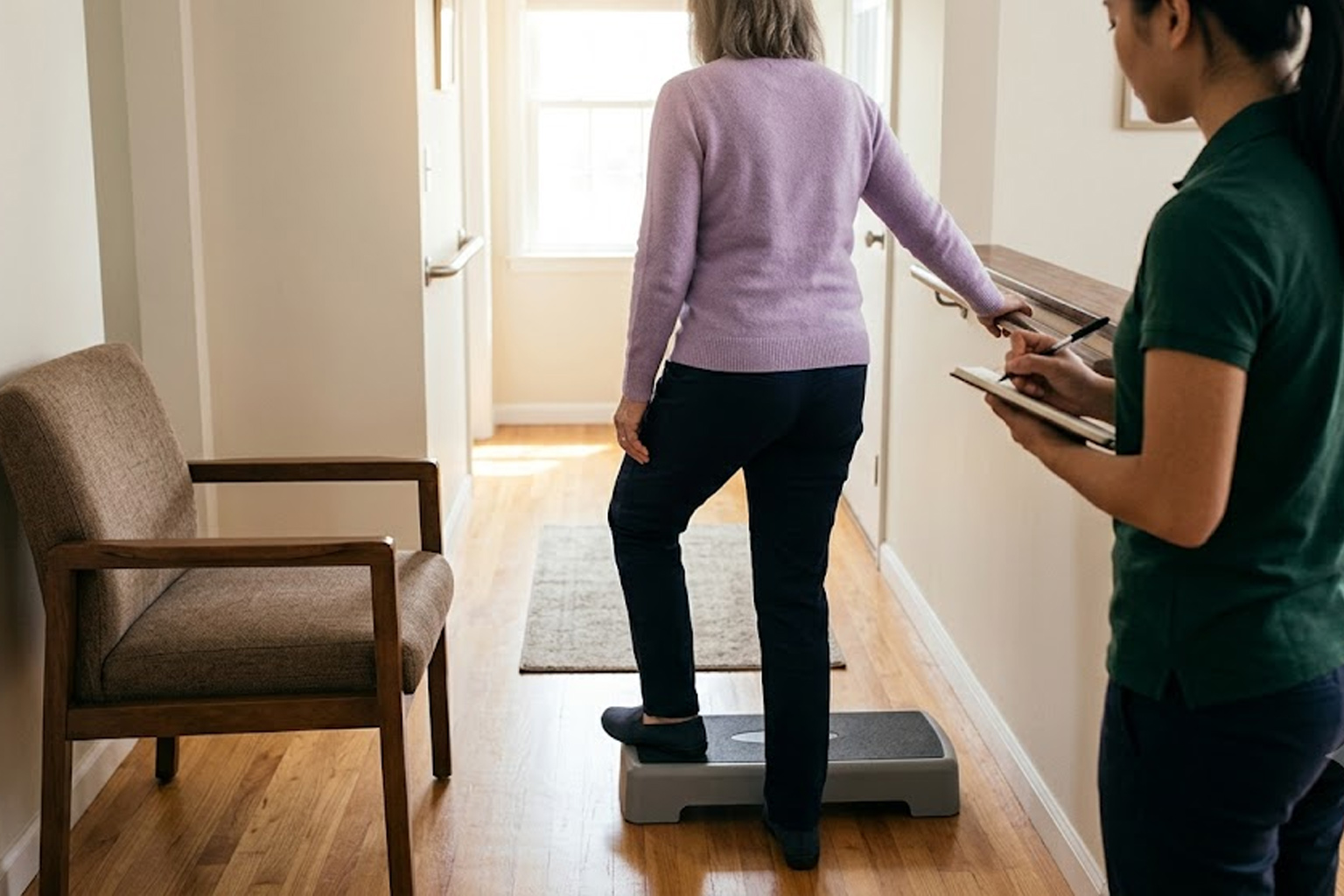
Modify the space to reduce fall risk and support practice sessions: remove loose rugs, secure cords, and ensure adequate lighting in practice areas. Arrange furniture so exercises can be performed with reliable supports nearby and keep frequently used items at reachable heights to avoid risky stretches. Consider inexpensive tools such as a stable chair, non-slip mats, or a rail by stairs to provide balance assistance during progressions.
- Clear pathways for walking practice.
- Keep a chair or counter for steadying during balance work.
- Store essential items within comfortable reach.
These adjustments allow safe repetition of movements and reduce anxiety about attempting new tasks, which encourages consistent practice.
Track progress and adapt routines
Use a simple journal or app to note daily practice, perceived effort, pain levels, and achievements; patterns reveal what helps and what needs change. When improvements plateau, adjust frequency, intensity, or task complexity rather than stopping practice altogether. Include rest days and vary activities to avoid overuse, and celebrate small wins to reinforce adherence. If unexpected pain or new symptoms appear, pause and consult a professional.
Regular review of progress makes it easier to refine practices so they remain effective, realistic, and aligned with evolving needs.
Conclusion
Structured, measurable practices combined with a safer home setup and routine tracking support steady gains in everyday movement. Start small, prioritize tasks that improve daily independence, and adapt as capability changes. Consistency and sensible progression are the most reliable paths to regaining functional mobility at home.