Good nutrition is the foundation that turns home workouts into measurable progress.
You don’t need elaborate diets to get results—consistency, food quality, and portion control matter most.
This article breaks down practical meal ideas, timing strategies, and small prep habits that support strength, recovery, and energy.
Apply these building blocks to fit your schedule and equipment at home.
Planning Balanced Meals for Home Workouts
Focus meals around a balance of protein, moderate carbohydrates, and healthy fats to support energy and muscle repair. A serving of lean protein at each meal helps sustain recovery and reduces muscle breakdown between workouts. Carbohydrates timed around workouts replenish glycogen and improve performance, while fats support overall satiety and hormone balance. Choose whole foods—vegetables, whole grains, legumes, nuts, and quality proteins—to maximize nutrient density.
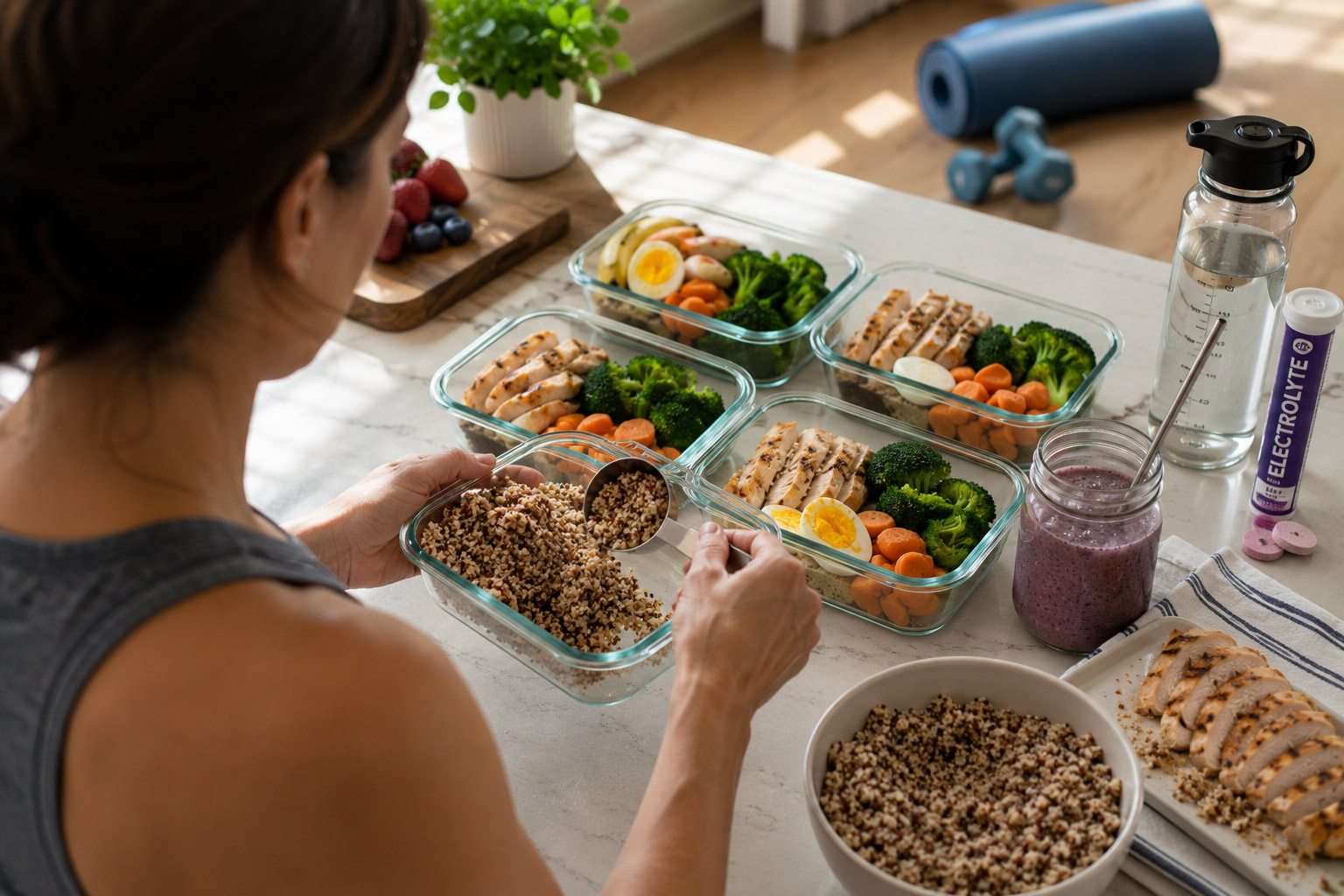
– Example plate: grilled chicken or tofu, quinoa or brown rice, and roasted vegetables.
– Swap refined snacks for nuts, fruit, or yogurt to stabilize blood sugar.
– Include a simple salad or steamed vegetable with most meals to boost volume and micronutrients.
Start by planning plates rather than recipes. Simple swaps like Greek yogurt for sour cream or beans for processed meats boost nutrients without complexity.
Quick High-Protein Options and Meal Prep
High-protein options don’t require hours in the kitchen; a few versatile staples can cover meals and snacks for the week. Eggs, canned tuna or salmon, Greek yogurt, cottage cheese, and legumes are affordable, shelf-stable or quick-cook choices. Preparing a few protein-rich bases lets you assemble meals in minutes and avoid reliance on takeout after training sessions.
– Batch-roast chicken breasts, tofu, or chickpeas to top salads and bowls.
– Pre-portion boiled eggs, hummus with veggies, or yogurt parfaits for grab-and-go snacks.
– Cook a large pot of whole grains to mix with proteins through the week.
Batch-cook grains and roasted vegetables at the weekend and portion proteins into containers for four or five days. This reduces decision fatigue and keeps nutrition consistent.
Hydration and Timing for Performance
Hydration and meal timing are underrated components of performance and recovery at home. Aim to drink regularly throughout the day and include a source of fluids and electrolytes around intense sessions. Consume a carbohydrate-protein snack within 30 to 90 minutes after workouts to accelerate recovery and support muscle synthesis. If your schedule limits full meals, emphasize protein-rich snacks and balanced smoothies to maintain nutrient intake.
Conclusion
Small, consistent changes to meal composition and timing yield steady fitness gains over weeks and months.
Focus on whole foods, regular protein, and simple prep routines that you can sustain alongside home workouts.
With these practical habits, nutrition becomes a tool that amplifies every session you complete.