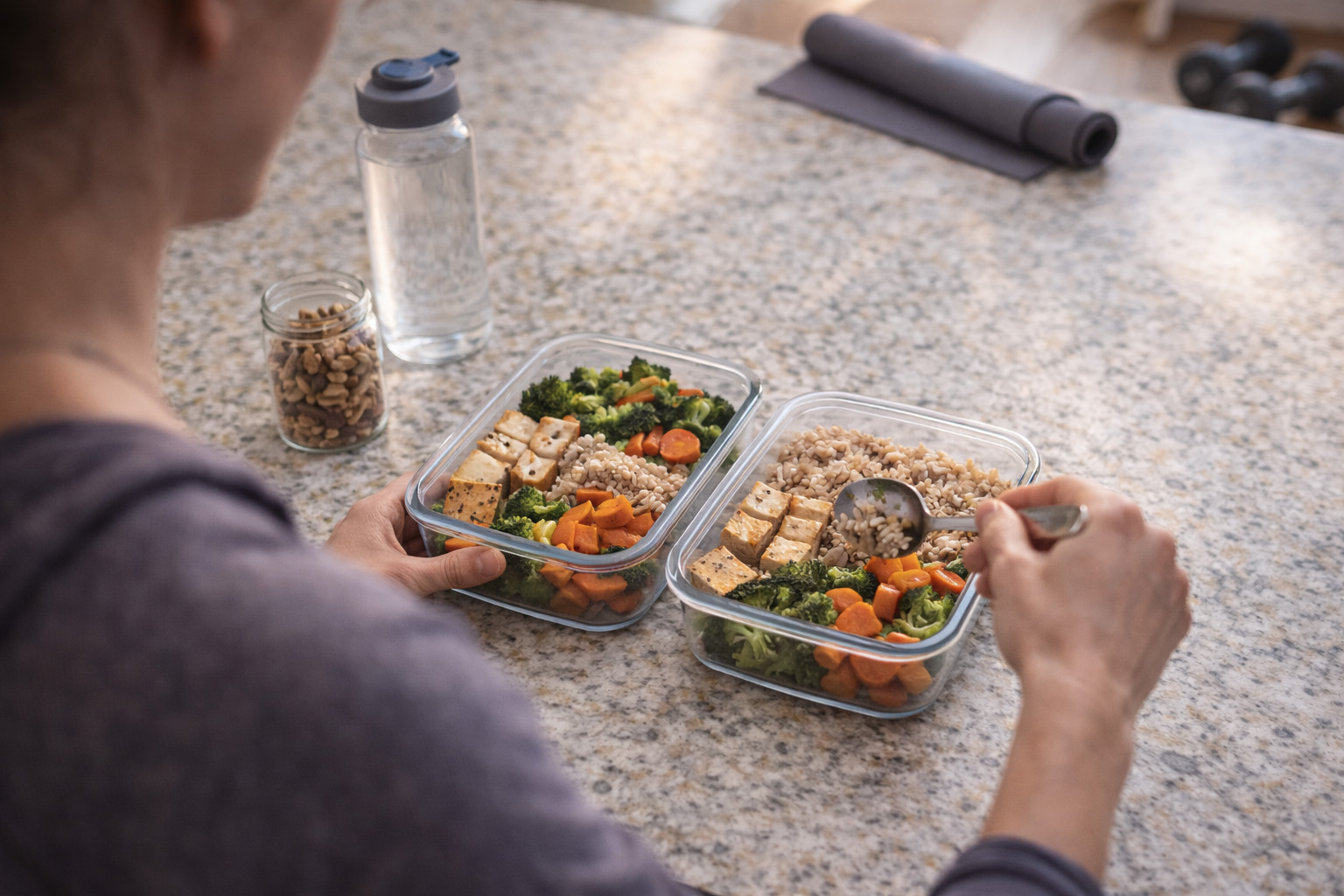
Eating well is a cornerstone of effective at-home training, but simple choices often make the biggest difference. Focused nutrition supports energy, recovery, and consistent performance without complicated plans. Small, repeatable habits in the kitchen translate to steady progress on the mat or with weights. This article breaks down practical foundations that fit busy routines and limited equipment.
These sections will cover timing, composition, pantry staples, snacks, and hydration. The aim is to give usable guidance you can apply today.
Align Meals with Workouts
Timing meals and snacks around training helps stabilize energy and recovery. Aim for a carbohydrate and protein-containing meal two to three hours before exercise, or a smaller snack 30–60 minutes prior if time is short. After sessions, prioritize a 20–40 gram protein serving combined with carbohydrates to support muscle repair. Adjust portion sizes according to workout intensity and personal appetite.
Consistent pre- and post-workout fueling reduces fatigue and speeds adaptation. Experiment to find combinations that feel comfortable and energizing.
Build Balanced Plates
A balanced plate pairs a lean protein source with whole grains or starchy vegetables and plenty of colorful produce. Proteins support muscle maintenance while fiber-rich carbs provide steady energy and satiety. Include healthy fats in moderate amounts to support hormones and absorption of fat-soluble vitamins. Simple swaps, like brown rice for white rice or adding a handful of vegetables, improve nutrient density without extra complexity.
Think in portions rather than perfection: aim for half the plate vegetables, a quarter protein, and a quarter grains or starch. This visual rule helps sustain variety and balance.
Stock a Functional Pantry
Keep versatile staples that enable fast, nutritious meals: canned beans, whole grains, frozen vegetables, nut butters, and simple proteins like eggs or tofu. These items are shelf-stable, budget-friendly, and adapt to many recipes. Batch-cooking grains and proteins once or twice weekly reduces decision fatigue on busy days. Flavor essentials—herbs, spices, citrus—make healthy meals more enjoyable and easier to repeat.
Organize the pantry so go-to ingredients are visible and accessible. A prepared environment encourages consistent eating habits.
Smart Snacking and Recovery
Snacks can bridge hunger and maintain performance when chosen deliberately. Pair carbohydrates with protein or fat—such as yogurt with fruit or whole-grain toast with nut butter—to stabilize blood sugar and prolong energy. Post-workout options that are portable and simple prevent skipped recovery meals after busy home sessions. Avoid overly processed snacks that spike energy then crash it.
Use snacks to support training frequency rather than replace meals. Small, planned choices help with adherence and cravings.
Hydration and Sleep
Hydration influences strength, endurance, and cognitive focus; prioritize water throughout the day and around workouts. Electrolyte drinks can be helpful after long or very sweaty sessions but are unnecessary for typical home routines. Adequate sleep is equally important for recovery, appetite regulation, and performance gains. Nutrition and rest work together to amplify training results.
Establish simple habits like a water bottle near your workout area and a consistent evening routine to improve sleep quality. Incremental changes compound over time.
Conclusion
Good nutrition for at-home training relies on consistent, manageable choices rather than perfection. Focus on timing, balanced plates, a supportive pantry, smart snacks, hydration, and sleep to create a sustainable routine. Small habits build steady progress and make training more productive and enjoyable.